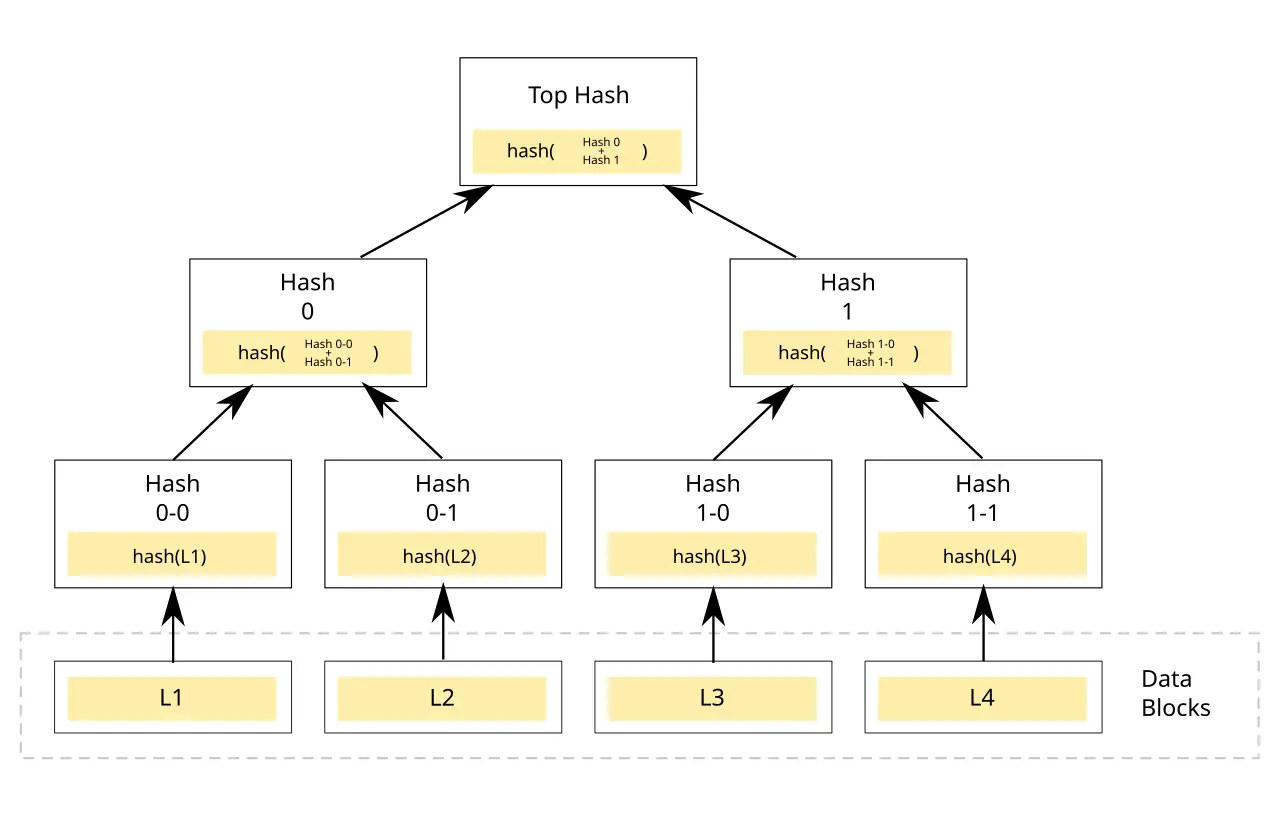
Cryptographic hash functions and Merkle trees (MD5 to SHA-3)
One-way 'fingerprints' of data in which any change gives a different digest; they underpin digital signatures, password storage, Git, software updates and blockchains.
- 1979
First version
Ralph Merkle (Stanford); later Ivan Damgård, Ron Rivest (MD5), NSA and NIST (SHA family) and the Keccak team (SHA-3)
Image: Azaghal · CC0 · Wikimedia Commons - 1992

MD5
Rivest's fast 128-bit hash (RFC 1321) becomes the default checksum for downloads and security protocols.
Image: RSA Data Security, Inc. · Trademark drawing filed with the USPTO (public record); mark owned by RSA Data Security; unclear reuse licence · USPTO TSDR mark drawing for serial 74220629, filed 12 Nov 1991 ('RSA Data Security, Inc. The Keys to Privacy and Authentication', reg. 1752991); cropped to the logo, removing the tagline panel - 2001

SHA-2 (SHA-256, SHA-512)
NSA-designed hashes published by NIST become the workhorses of TLS certificates and Bitcoin.
Image: U.S. government · Public domain · Wikimedia Commons - 2004
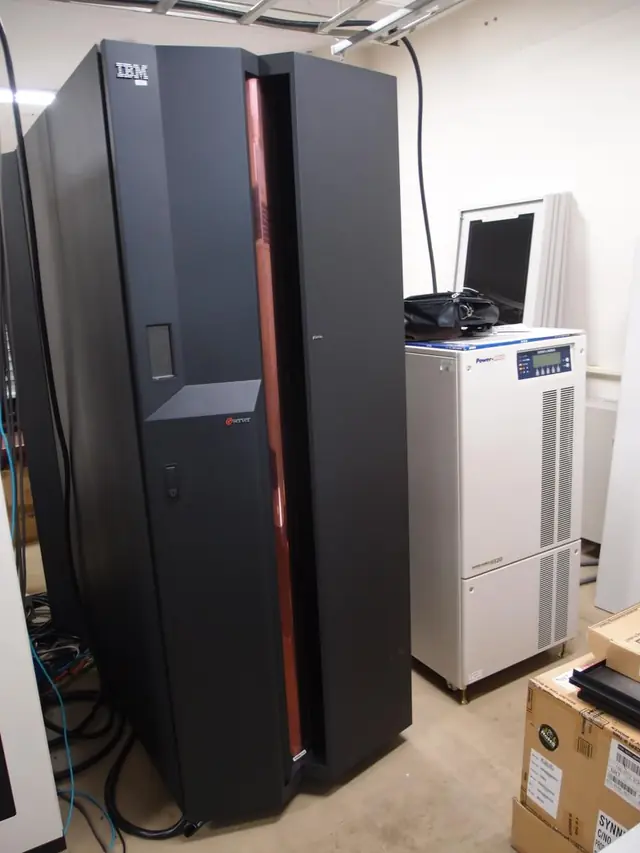
Practical collision attacks
Wang Xiaoyun's team finds MD5 collisions and then weakens SHA-1, forcing the industry to migrate to stronger hashes.
Image: okqubit.net (Classical Computer Society), photographer not named · Unclear; no licence stated on page · okqubit.net - 2015

SHA-3 (Keccak)
NIST standardises the winner of an open competition, a new 'sponge' design unlike the Merkle–Damgård hashes before it.
Image: STMicroelectronics · Public domain (Commons; simple geometri… · Wikimedia Commons