Calculator (arithmometer to electronic pocket calculator)
Machines that do arithmetic for people: the first commercially successful mechanical calculator (built 1820, sold from 1851) led to electronic and pocket calculators that made fast maths personal and retired the slide rule.
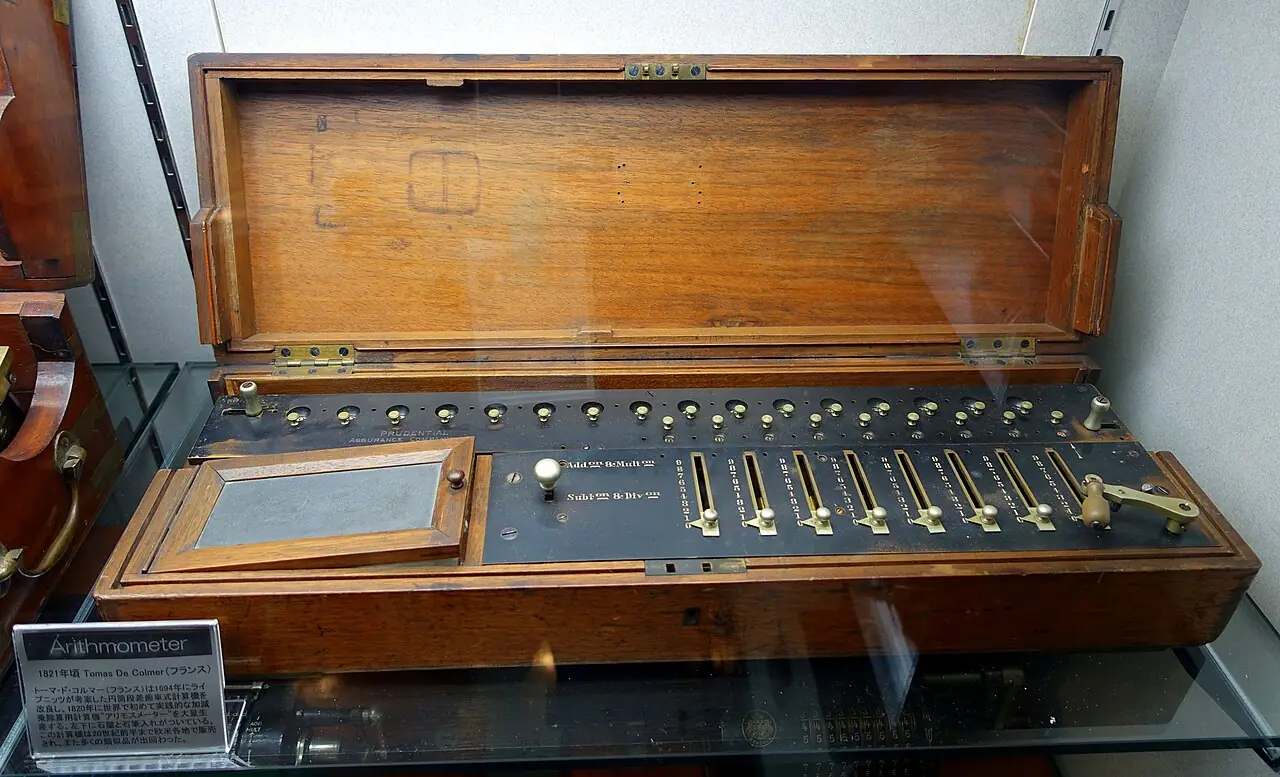
- 1820
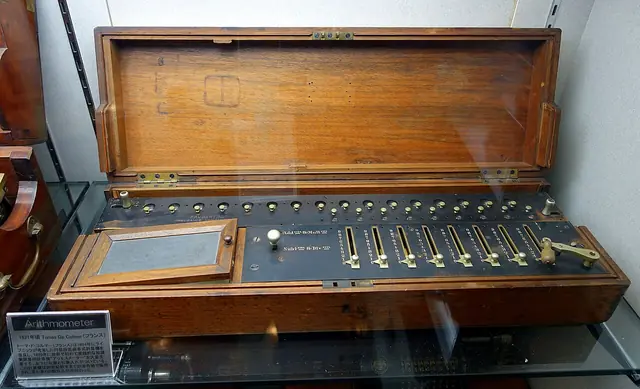
First version
Charles Xavier Thomas de Colmar (arithmometer); Dorr Felt (Comptometer); Sumlock (ANITA); Busicom, Mostek, HP and Casio
Image: Daderot · CC0 · Wikimedia Commons - 1887
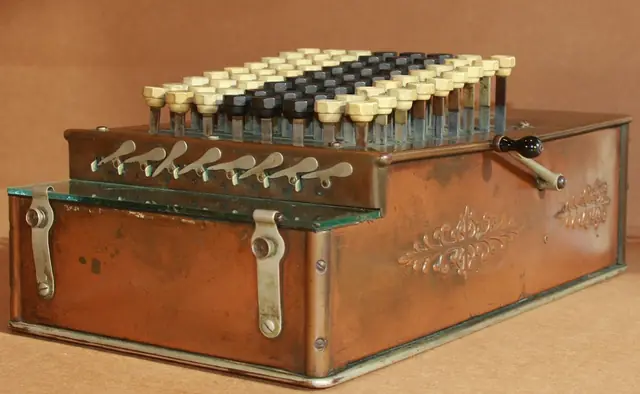
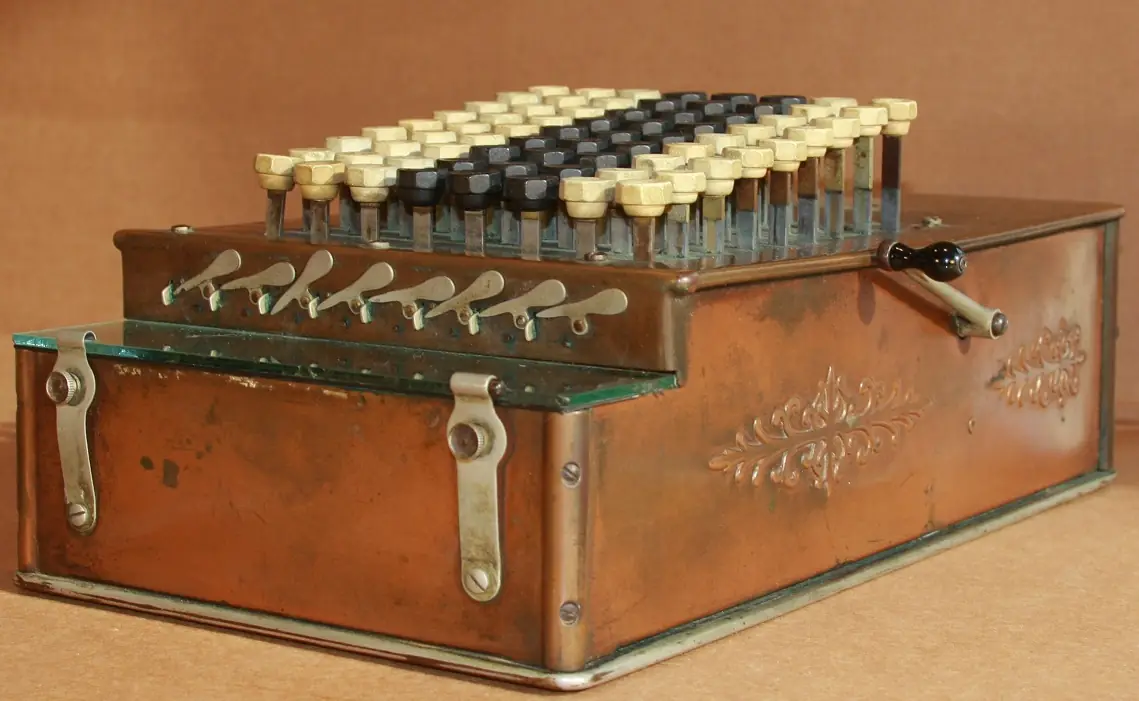
Comptometer (key-driven adding machine)
Felt's keyboard machine adds as each key is pressed, with no crank to turn, making office arithmetic fast.
Image: Ezrdr · Public domain · Wikimedia Commons - 1961
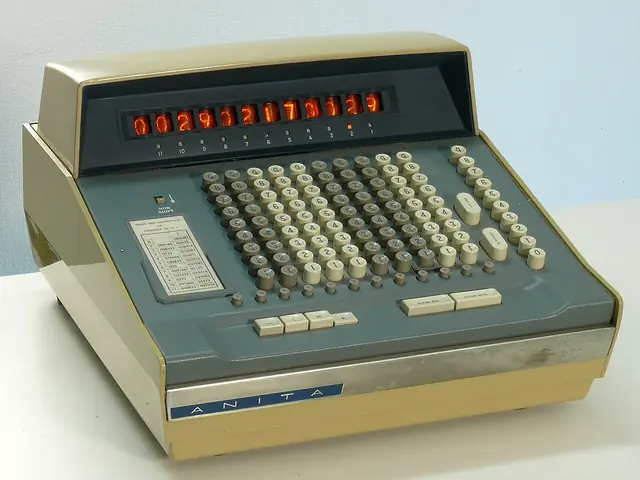
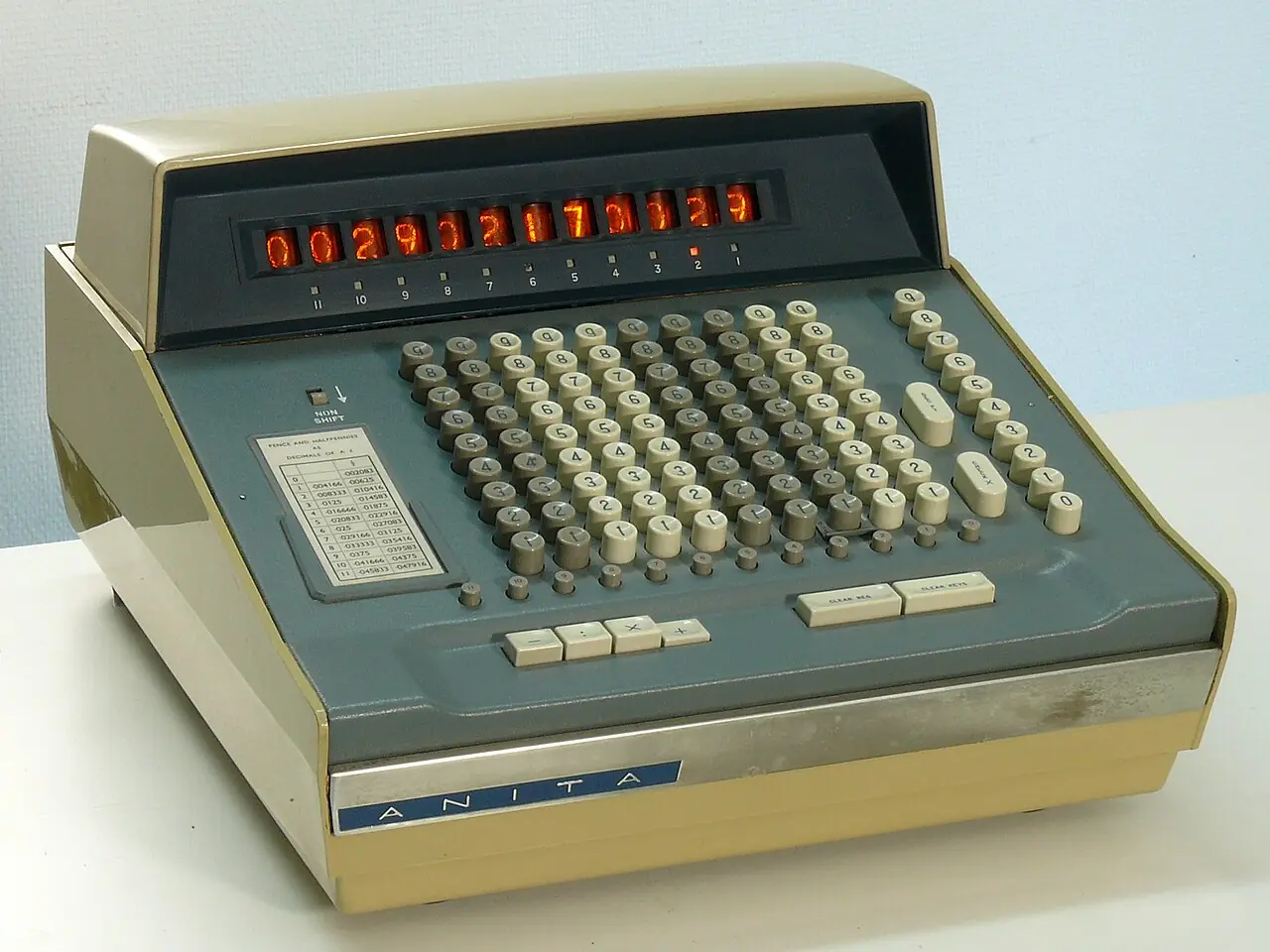
ANITA, first all-electronic desktop calculator
Sumlock's ANITA swaps gears for vacuum tubes and Nixie-tube digits: silent, fast and with no moving parts.
Image: Sven · CC BY 4.0 · Wikimedia Commons - 1971
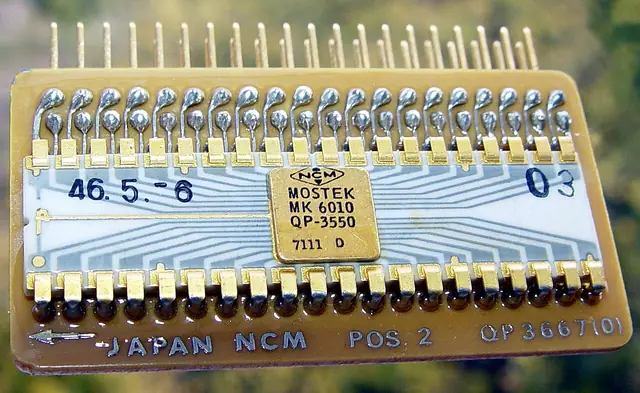
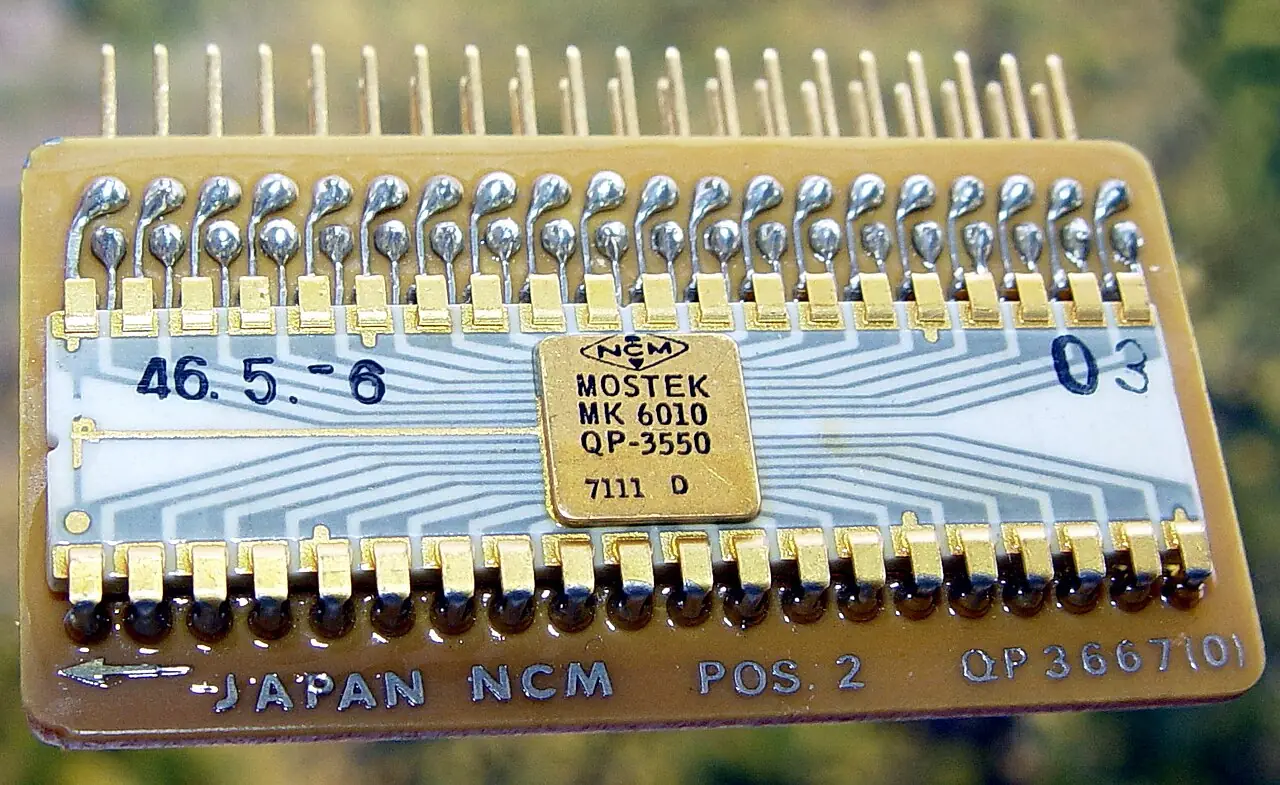
Pocket calculator on a chip (Busicom LE-120A)
Busicom's LE-120A 'HANDY' is the first truly pocket-sized calculator, with an LED display, made possible by one-chip calculator ICs such as Mostek's MK6010.
Image: Mister rf · CC BY-SA 4.0 · Wikimedia Commons - 1972
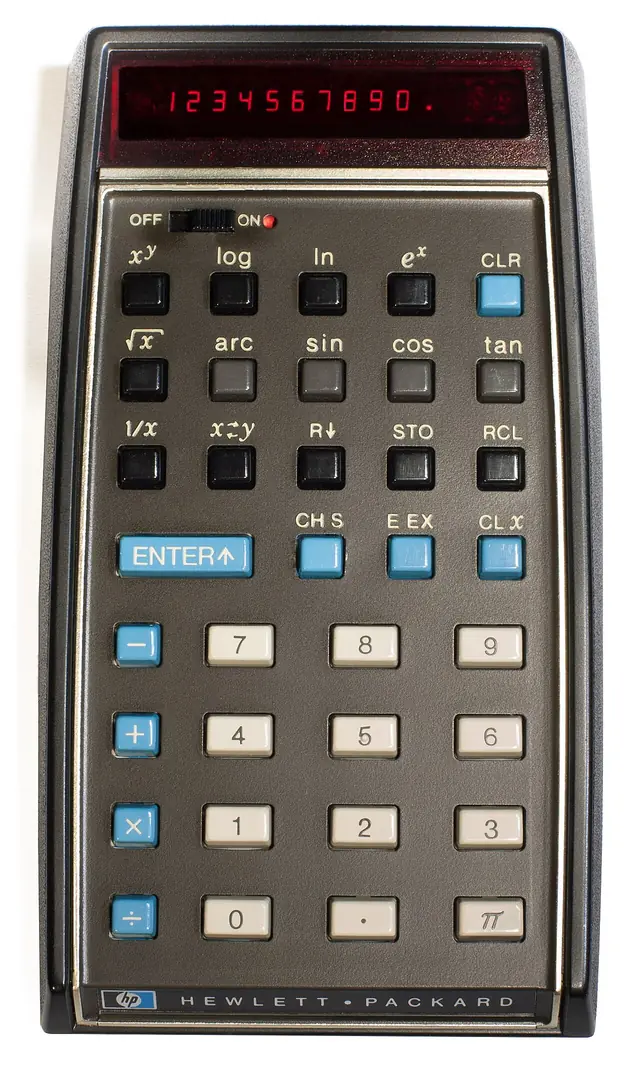
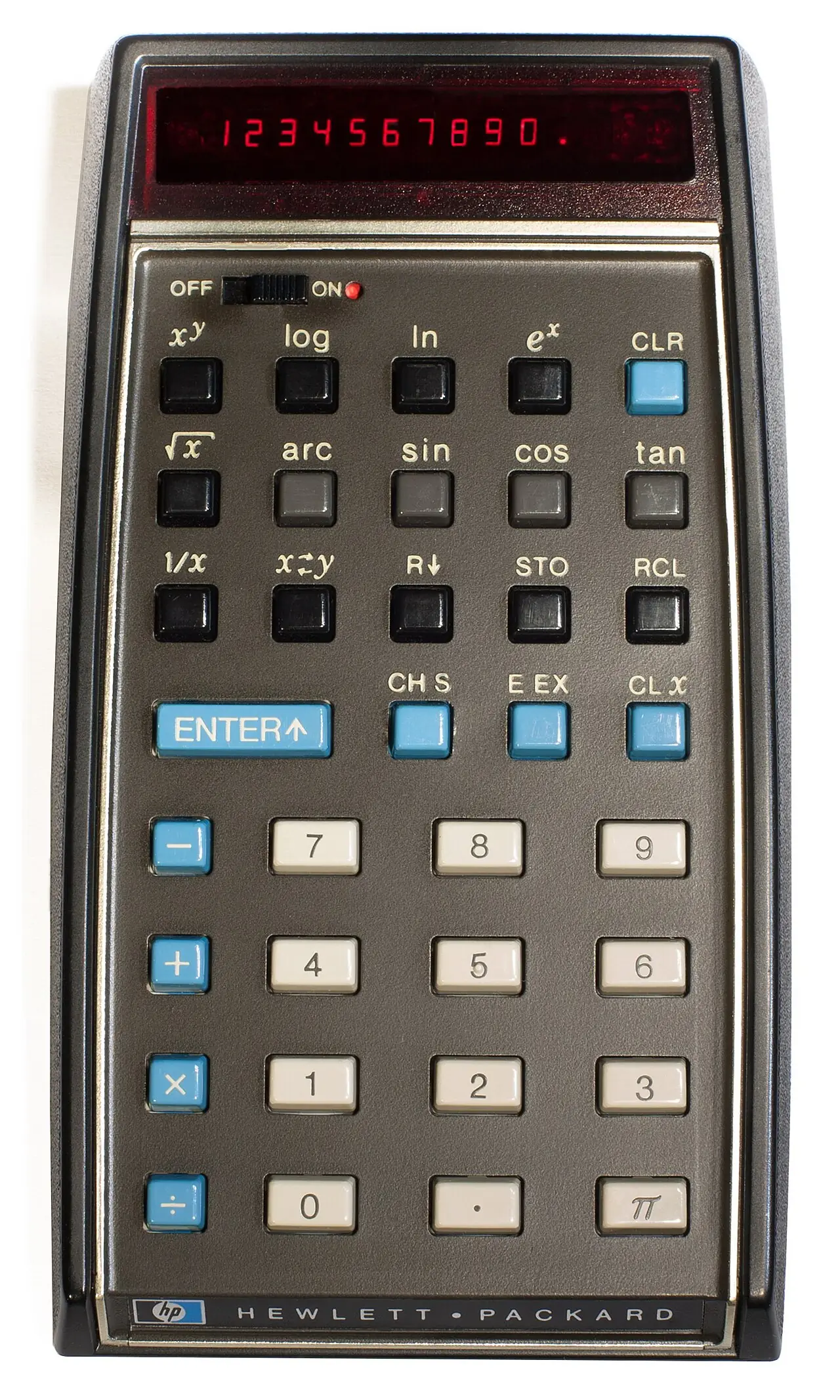
HP-35, first pocket scientific calculator
Logarithms and trigonometry in a shirt-pocket device; engineers abandon the slide rule.
Image: Mister rf · CC BY-SA 4.0 · Wikimedia Commons - 1985
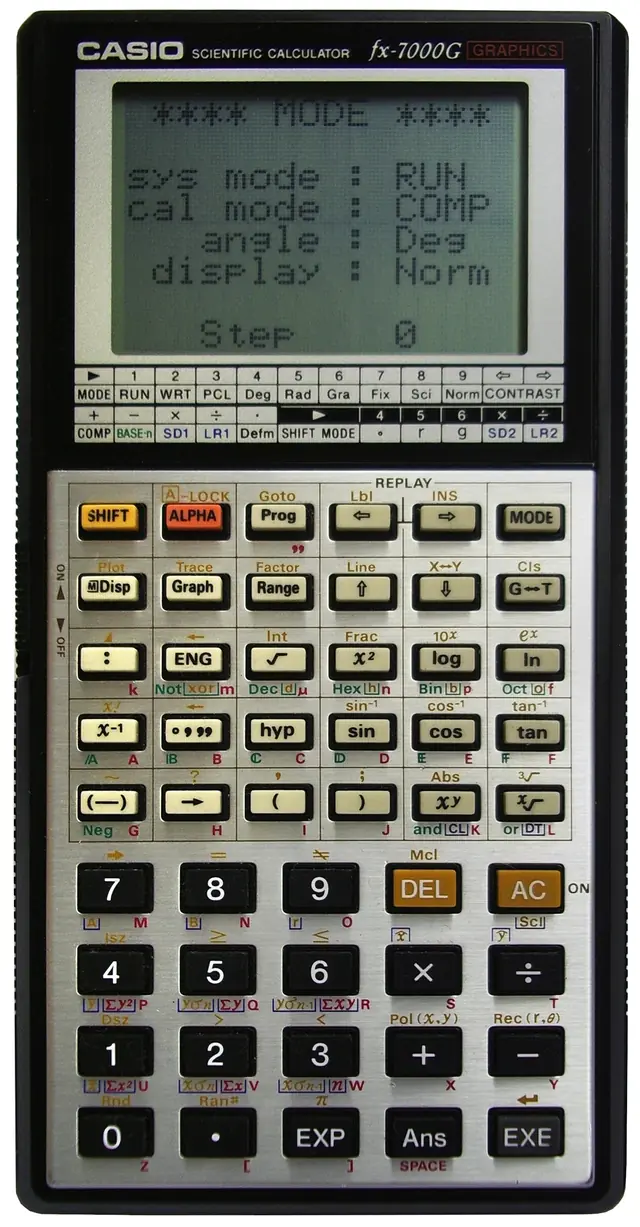
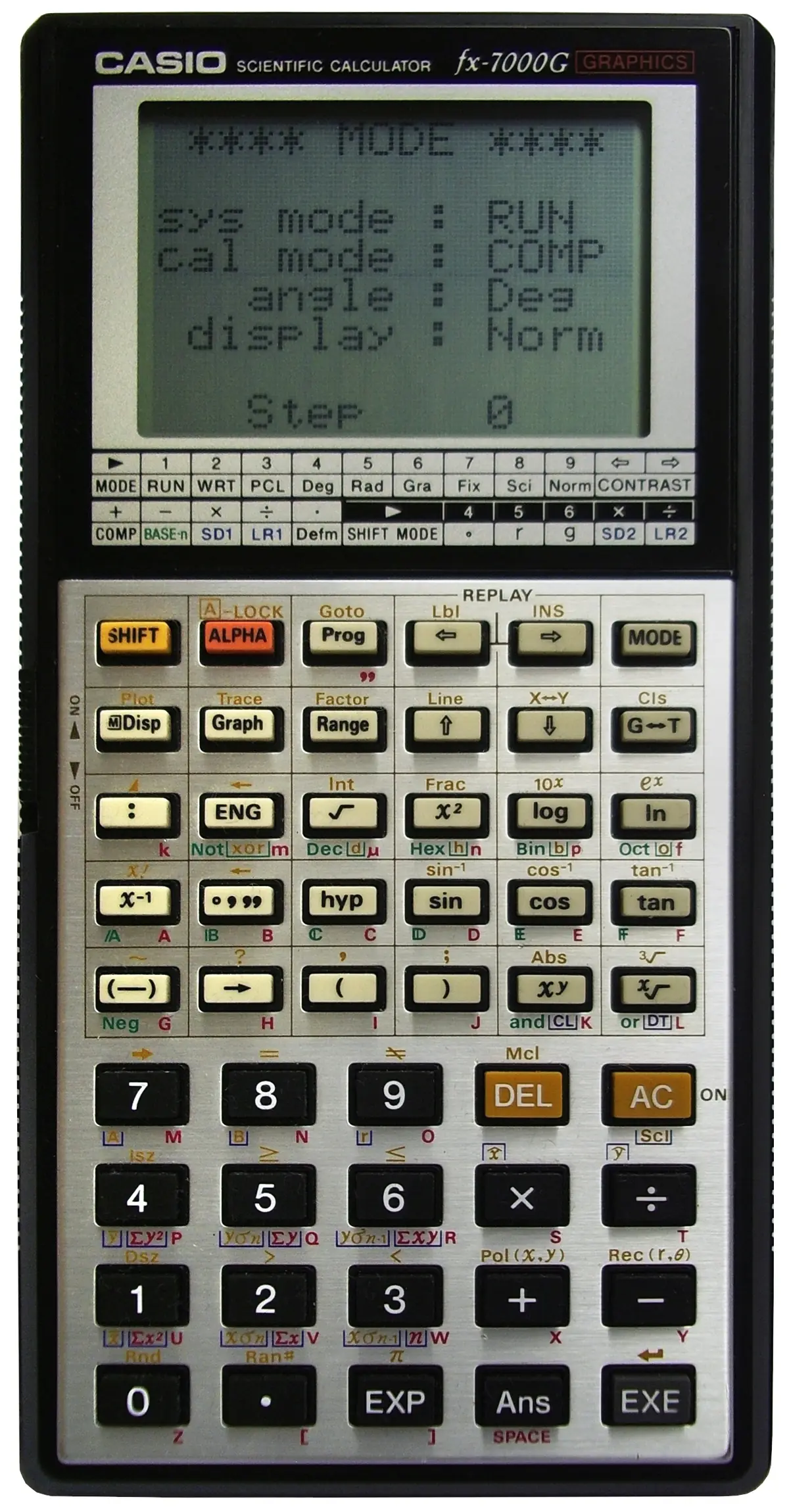
Casio fx-7000G, first graphing calculator
A dot-matrix screen plots functions, turning the calculator into a programmable pocket computer for maths classes.
Image: Originally uploaded file: ML5 at English Wikipedia The improved, derivative ver… · Public domain · Wikimedia Commons