Whirlwind and SAGE (real-time interactive computing)
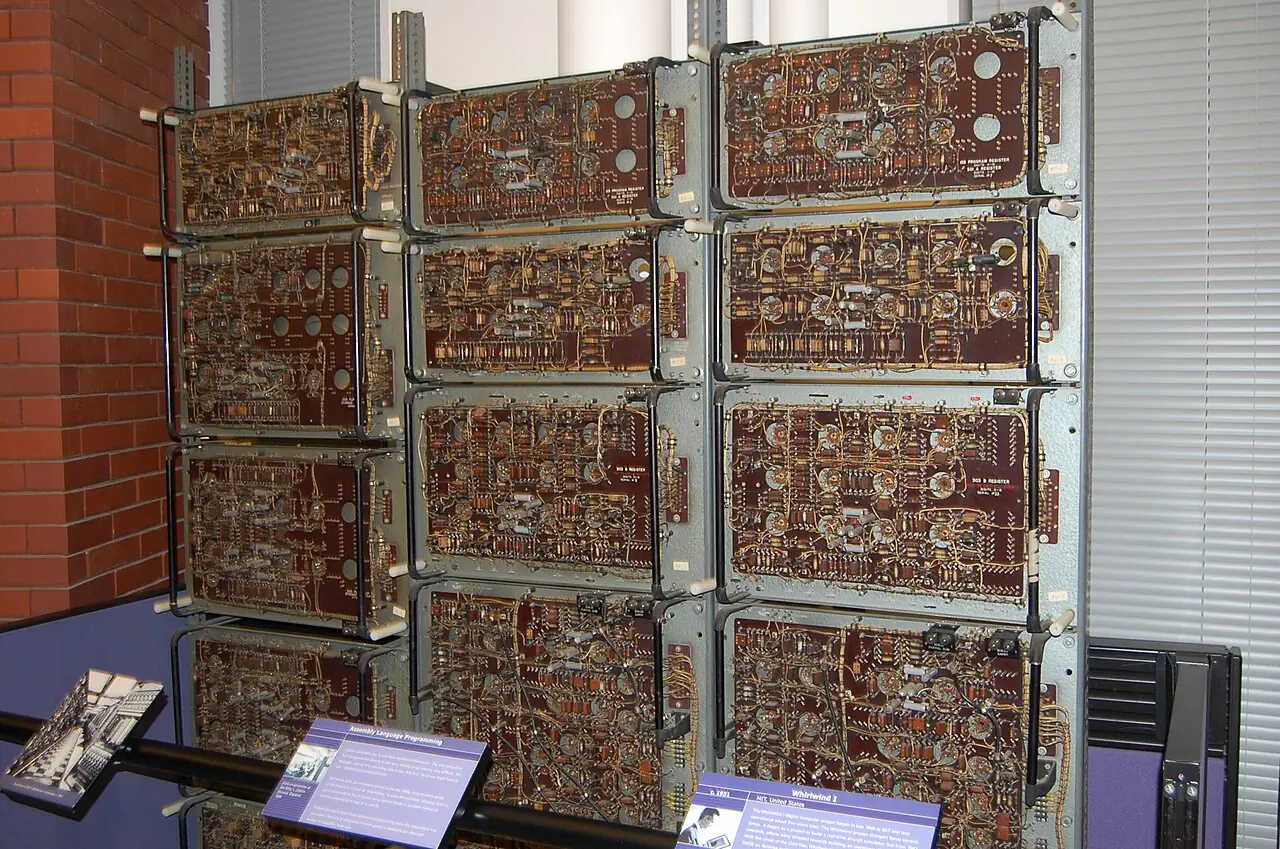
MIT's Whirlwind, online from late 1949 and computing interception courses live in April 1951, was the first digital computer built to respond in real time, with screen output; scaled up into the SAGE air-defence network, it seeded interactive, networked and online transaction computing.
- 1951
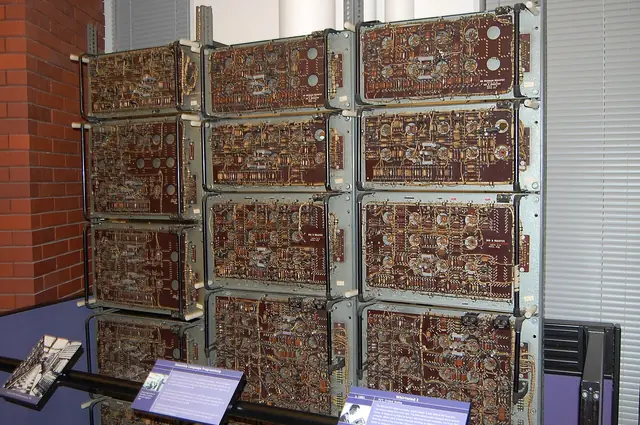
First version
Jay Forrester, Robert Everett and team (MIT); IBM (SAGE AN/FSQ-7)
Image: vonguard from Oakland, Nmibia · CC BY-SA 2.0 · Wikimedia Commons - 1956
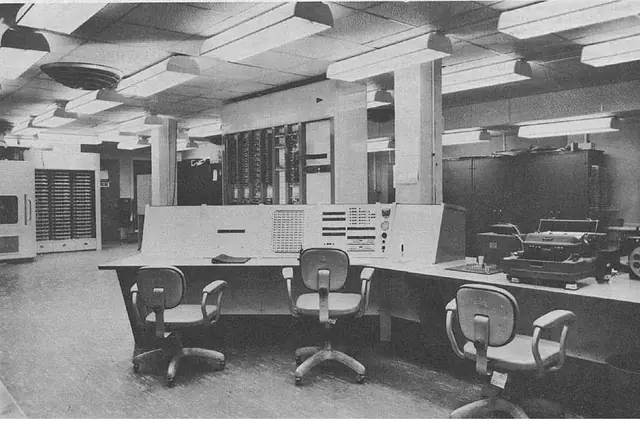
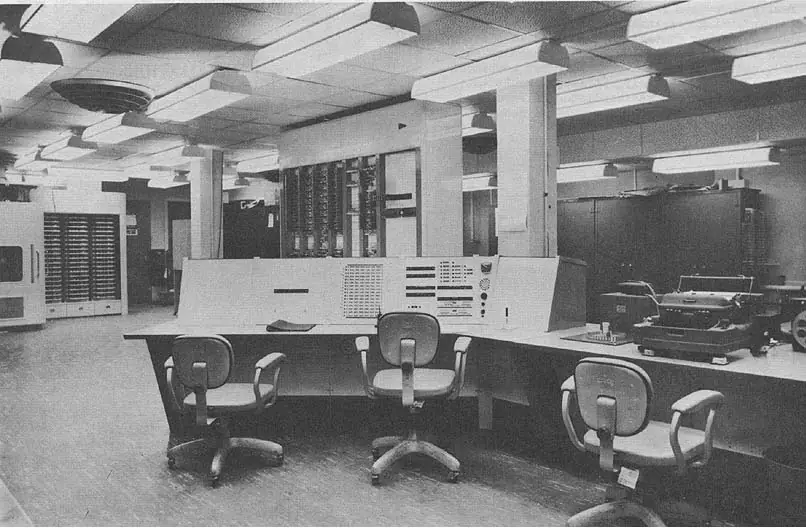
TX-0 (transistorised successor)
Lincoln Lab's transistor machine gives MIT users a hands-on console; its design becomes DEC's PDP-1.
Image: MIT Lincoln Laboratory (photo), published by US Army Ballistic Research Laborat… · Public domain, inferred: published in t… · Ed Thelen's transcription of BRL Report 1115, '… - 1958
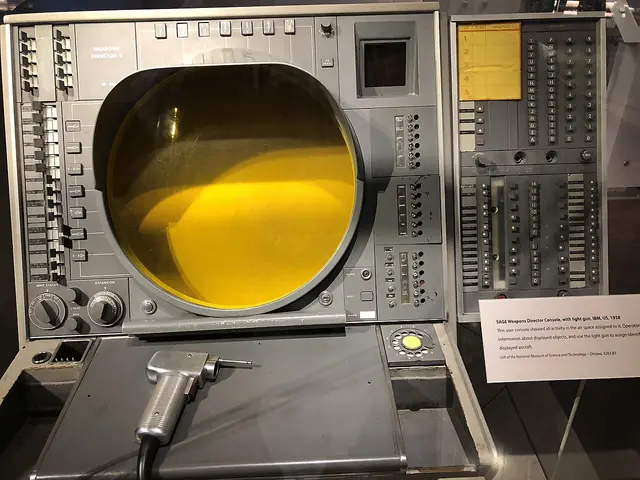
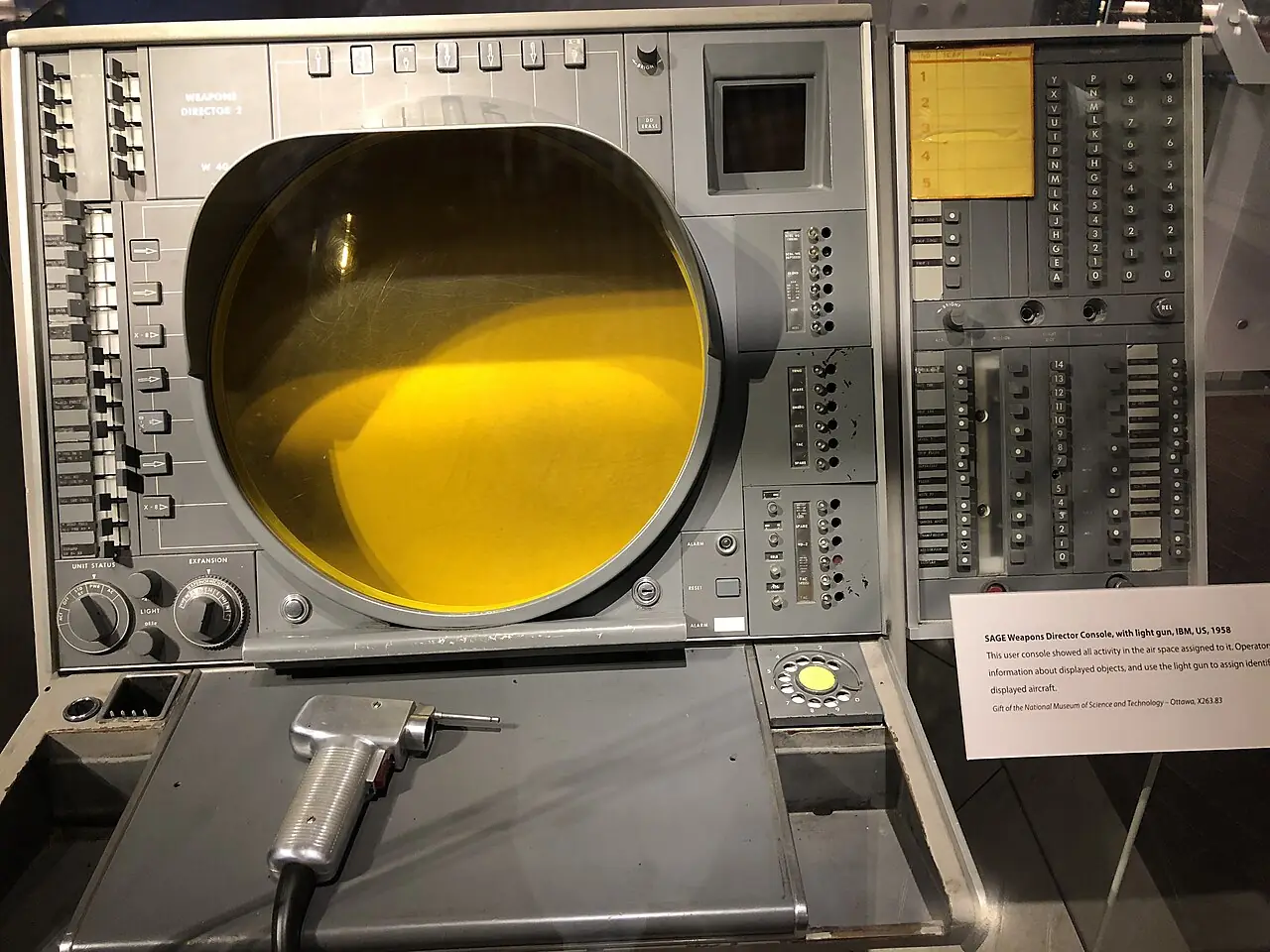
SAGE AN/FSQ-7 network goes live
First SAGE direction centre opens: paired IBM computers with screens and light guns, linked over phone-line modems across North America.
Image: ArnoldReinhold · CC BY 4.0 · Wikimedia Commons - 1964
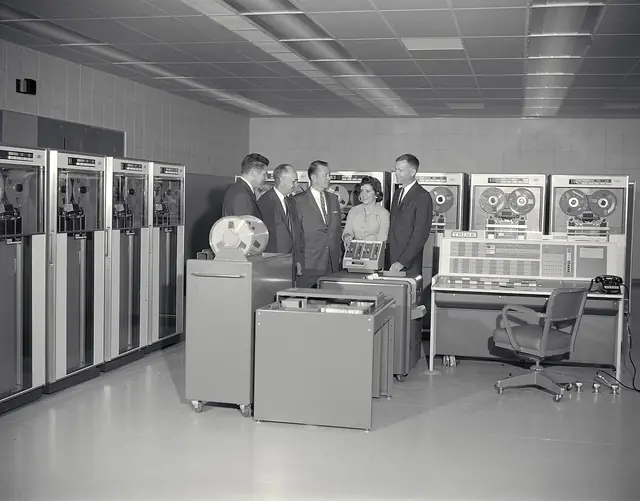
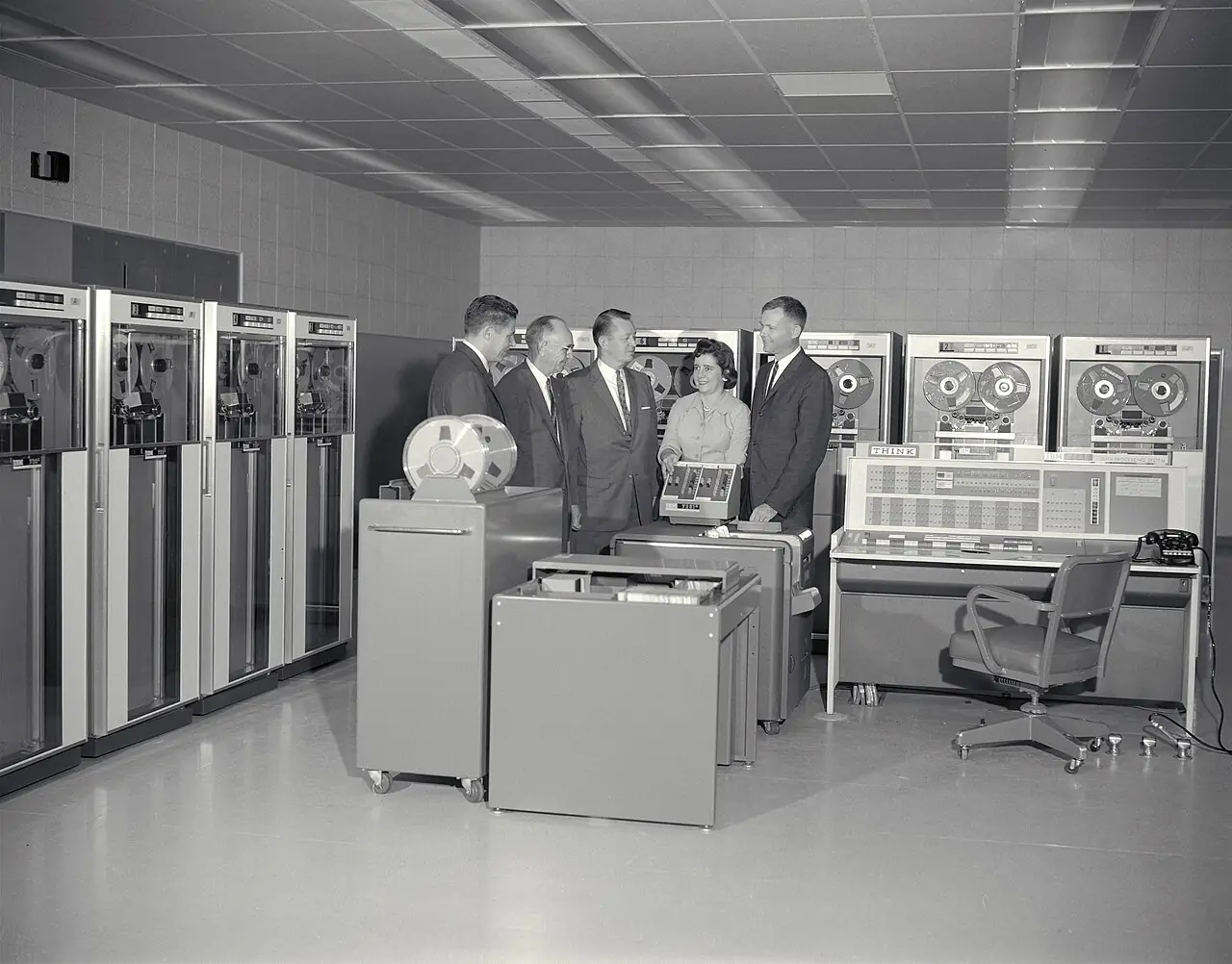
SABRE online reservations
IBM and American Airlines apply SAGE's ideas to booking seats: a nationwide real-time network on dual IBM 7090s, the model for online transaction processing.
Image: NASA Ames Research Center / Emerson Shaw · Public domain · Wikimedia Commons