Lithium-ion battery
Light, rechargeable, energy-dense battery that powers phones, laptops and EVs; 2019 Nobel Prize in Chemistry.
- 1976
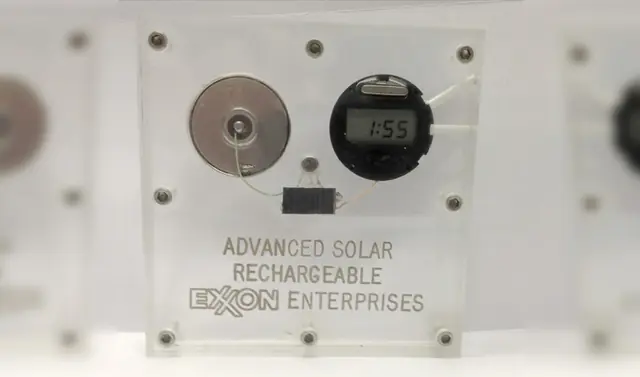
First version
M. Stanley Whittingham (Exxon), John B. Goodenough (Oxford), Akira Yoshino (Asahi Kasei); commercialised by Sony
Image: Image credited by AIP Inside Science to Pereira et al., J. Power Sources 2015 (… · Copyright Elsevier 2015 (as credited by… · AIP Inside Science - 1980

Goodenough lithium cobalt oxide cathode
Cathode roughly doubles voltage to about 4 volts.
Image: University of Oxford (arms); SVG emblazon by ChevronTango · Public domain (Commons) · Wikimedia Commons - 1985

Yoshino carbon-anode Li-ion cell
Petroleum-coke anode removes lithium metal; first commercially viable, safe design.
Image: Asahi Chemical Industry (Asahi Kasei) · Unclear; no licence stated (company wor… · Wayback Machine capture of asahi-kasei.co.jp, 1… - 1991
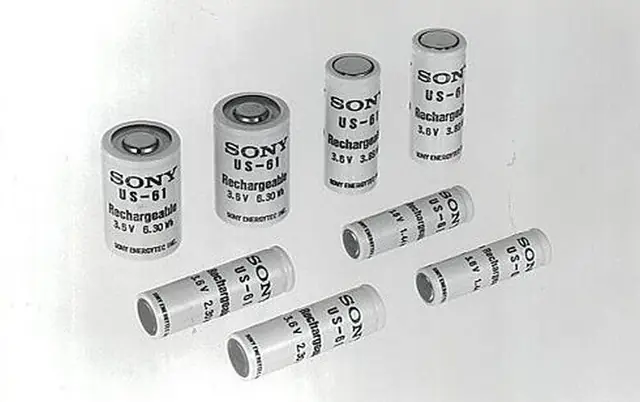
Sony commercial Li-ion
First mass-market lithium-ion cells, in camcorders; then phones and laptops.
Image: Sony Energytec · © Sony Energytec, 1991; no reuse licenc… · Nieuwe Instituut, credited to Sony Energytec - 1997

Lithium iron phosphate (LFP) cathode
Goodenough group's cheaper, safer cathode; later widely used in EVs and storage.
Image: The University of Texas at Austin · Unclear; no licence stated (© The Unive… · Wayback Machine capture of www.utexas.edu, 13 M…
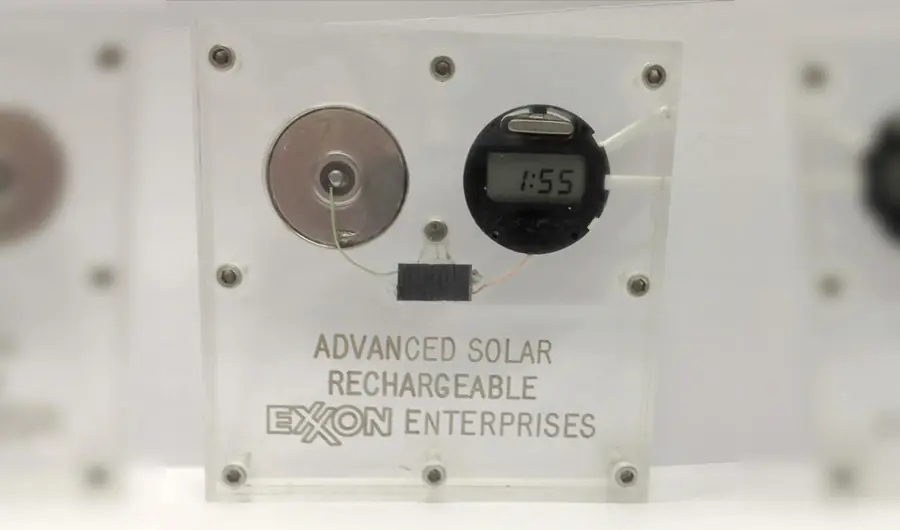


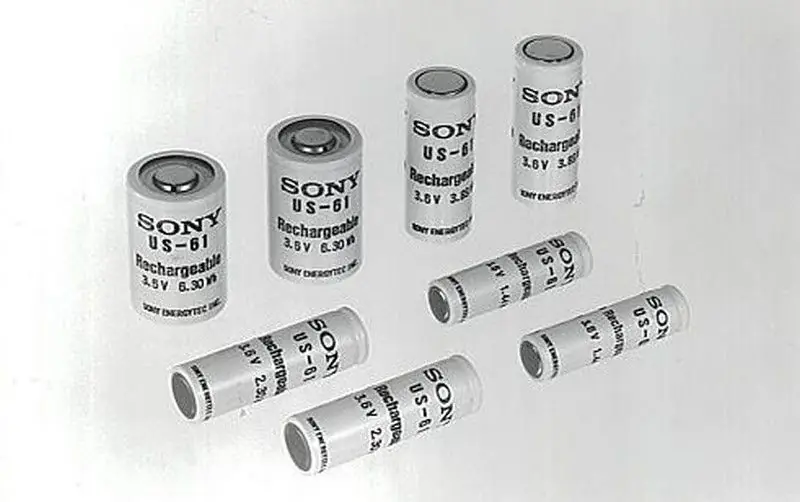


Contested: Some argue Rachid Yazami (graphite anode) and Sony's commercialisation team deserved credit omitted from the 2019 Nobel Prize.