Wi-Fi (IEEE 802.11 wireless LAN)
Wireless local-area networking standard that untethered computers and phones; now carries most consumer internet traffic indoors.
- 1997
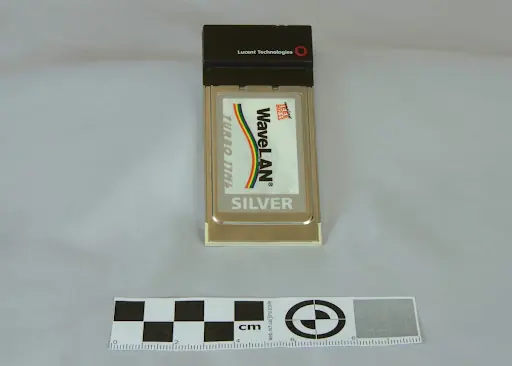
First version
IEEE 802.11 working group (chair Vic Hayes, NCR); CSIRO (John O'Sullivan) OFDM patent; Wi-Fi Alliance
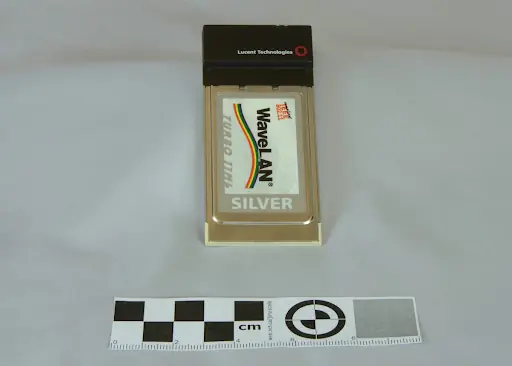
Image: see source page · No image-reuse licence stated · artsandculture.google.com - 1999
802.11b and the Wi-Fi brand
11 Mb/s; the industry alliance (later Wi-Fi Alliance) brands certified products 'Wi-Fi'.
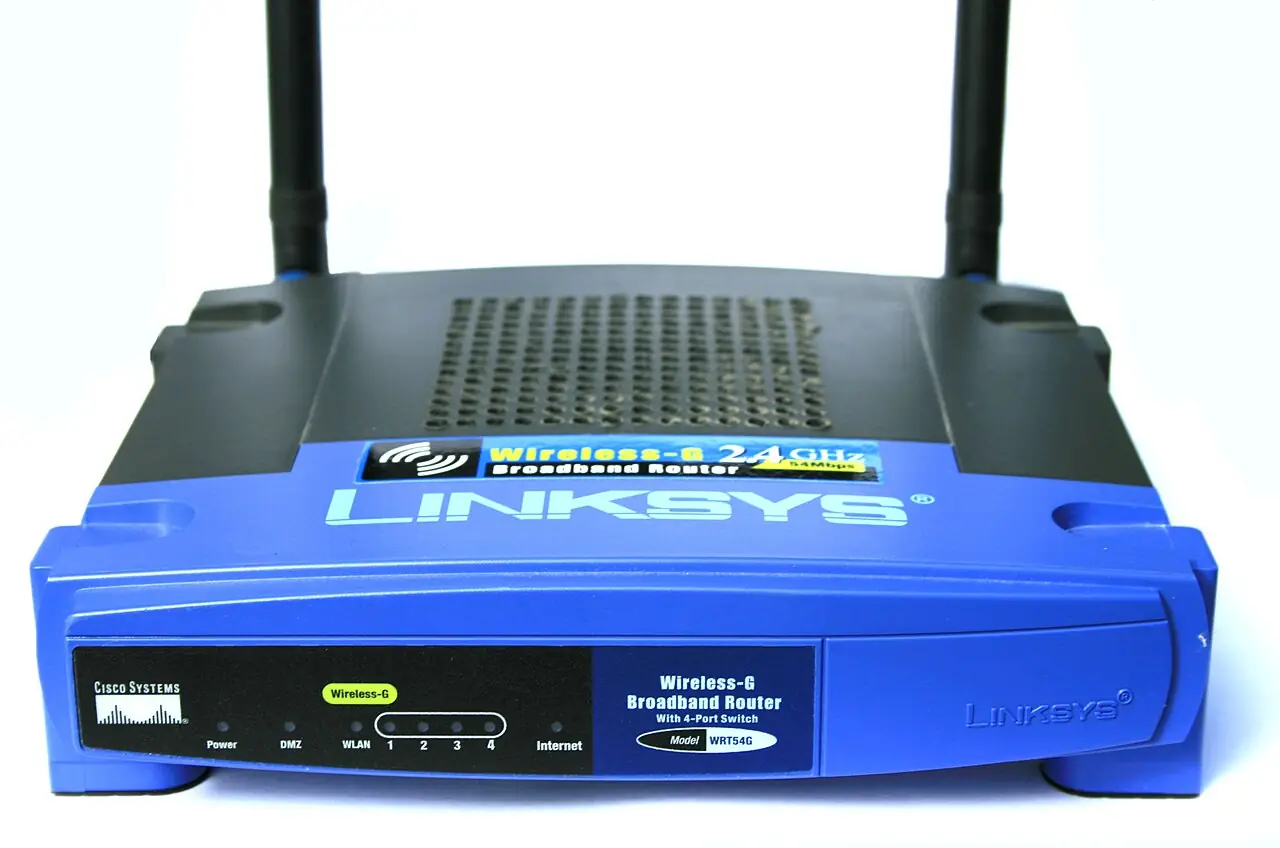
Image: Unknown author · Public domain · Wikimedia Commons - 2003
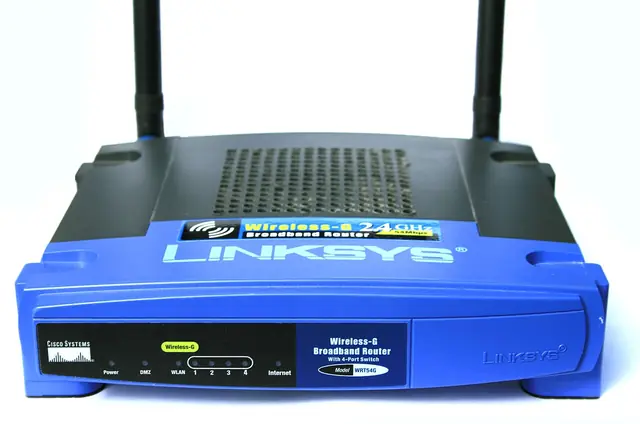
802.11g (OFDM at 54 Mb/s)
Brings 802.11a's OFDM modulation to the mainstream 2.4 GHz band at 54 Mb/s, five times 802.11b; OFDM underlies every later Wi-Fi generation.
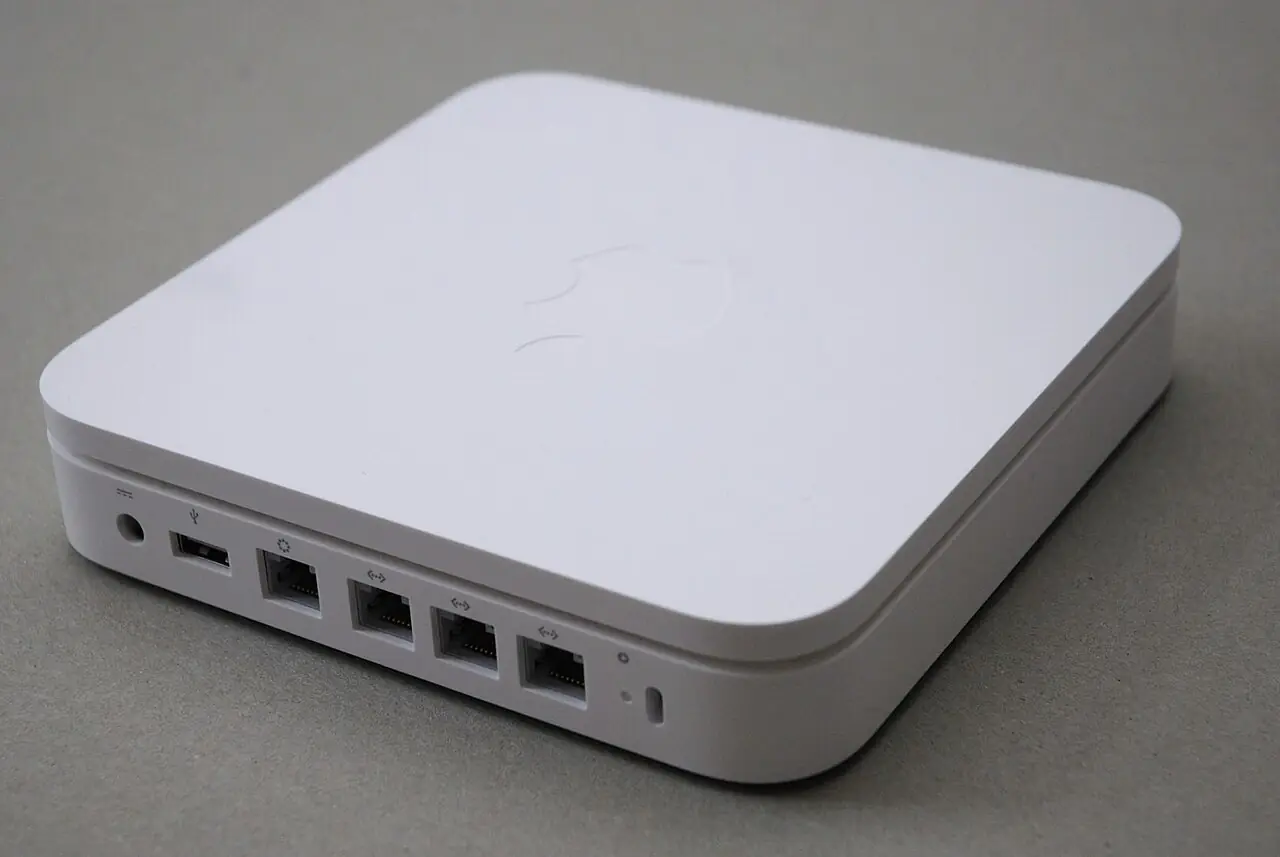
Image: “Jonathan Zander (Digon3)” · CC BY-SA 3.0 · Wikimedia Commons - 2009
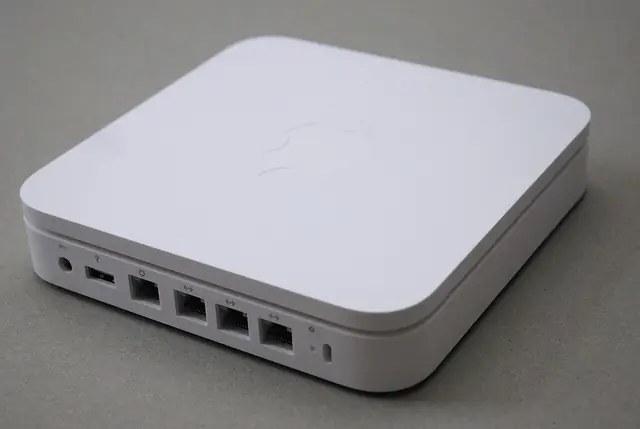
802.11n (Wi-Fi 4)
MIMO multiple antennas push throughput to hundreds of Mb/s on 2.4 and 5 GHz.
Image: Björn Milcke · Public domain · Wikimedia Commons - 2013

802.11ac (Wi-Fi 5)
Wider 5 GHz channels and multi-user MIMO bring gigabit-class wireless speeds to homes and offices.
Image: Wi-Fi Alliance · CC0 · Wikimedia Commons - 2019

Wi-Fi 6 / 6E (802.11ax)
OFDMA for crowded networks; 6E (2020) adds the 6 GHz band.
Image: Wi-Fi Alliance · CC0 · Wikimedia Commons - 2024

Wi-Fi 7 (802.11be)
Certification launched January 2024; 320 MHz channels and multi-link operation; IEEE published July 2025.
Image: Wi-Fi Alliance · CC0 · Wikimedia Commons






Contested: Australia (CSIRO's 1992 OFDM patent), the Netherlands/US (NCR WaveLAN, Vic Hayes) and Canada's Wi-LAN all claim Wi-Fi's invention.