Graphics tablet and stylus digitizer
Flat digitizing surface that tracks a pen's position. A cheaper alternative to the light pen, it became the core tool for digital drawing and handwriting.
- 1963
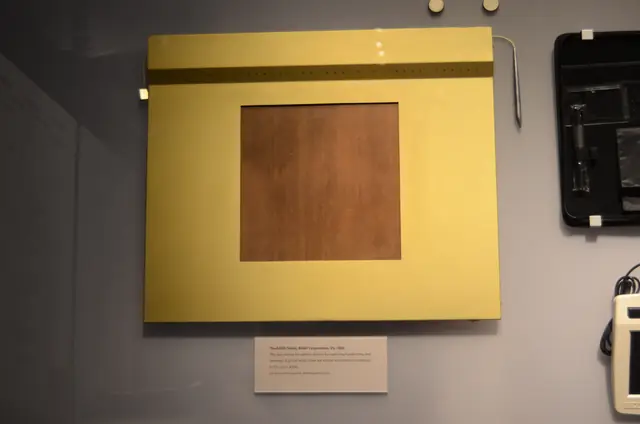
First version
RAND Corporation (ARPA contract)
Image: Brian Hicks · CC BY-NC-SA 2.0 · Flickr (Computer History Museum exhibit) - 1984

Cordless pen tablets (e.g. Wacom)
A battery-free cordless pen, powered by the tablet's electromagnetic field, removes the stylus wire.
Image: Wacom Co., Ltd. · Unclear; no licence stated (company log… · Wayback Machine capture (12 Sep 1999) of Wacom'… - 1987
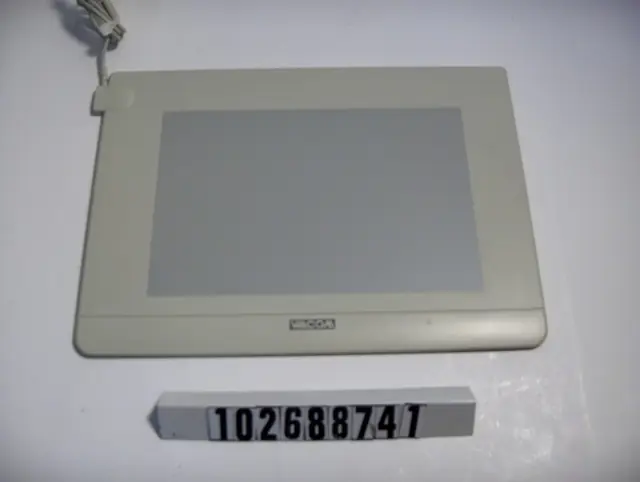
Pressure-sensitive pen (Wacom SD series)
The cordless pen reports how hard it is pressed, so digital strokes thicken and darken like a real brush or pencil.
Image: Computer History Museum · © Computer History Museum · Computer History Museum catalogue 102688741 (Wacom SD-510C) - 1992

Wacom pen display (PL-100V)
Tablet and LCD screen merge, so users draw directly on the image.
Image: Wacom Co., Ltd. · Trademark of Wacom Co., Ltd.; unclear r… · Wayback Machine capture of wacom.com (header lo… - 2015
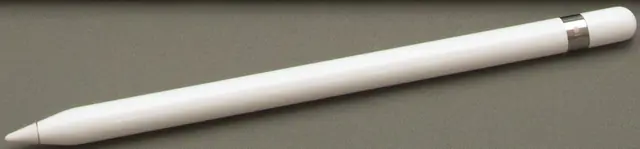
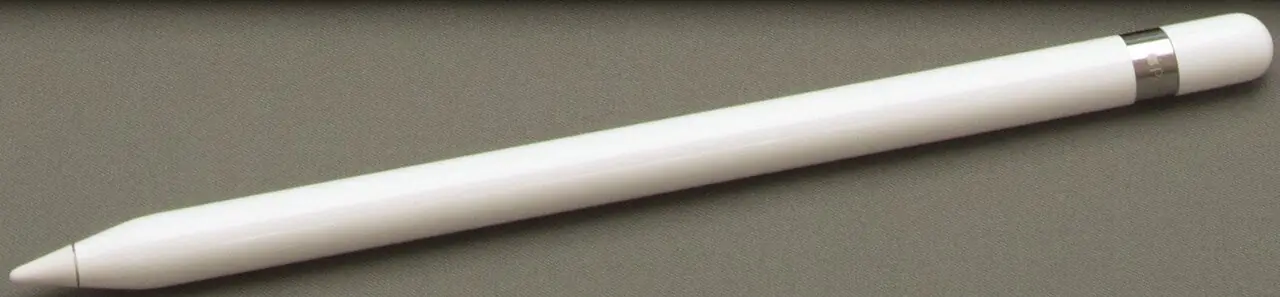
Apple Pencil
Pressure- and tilt-sensing stylus brings low-latency pen drawing to a mainstream tablet.
Image: Brett Jordan · CC BY 2.0 · Wikimedia Commons
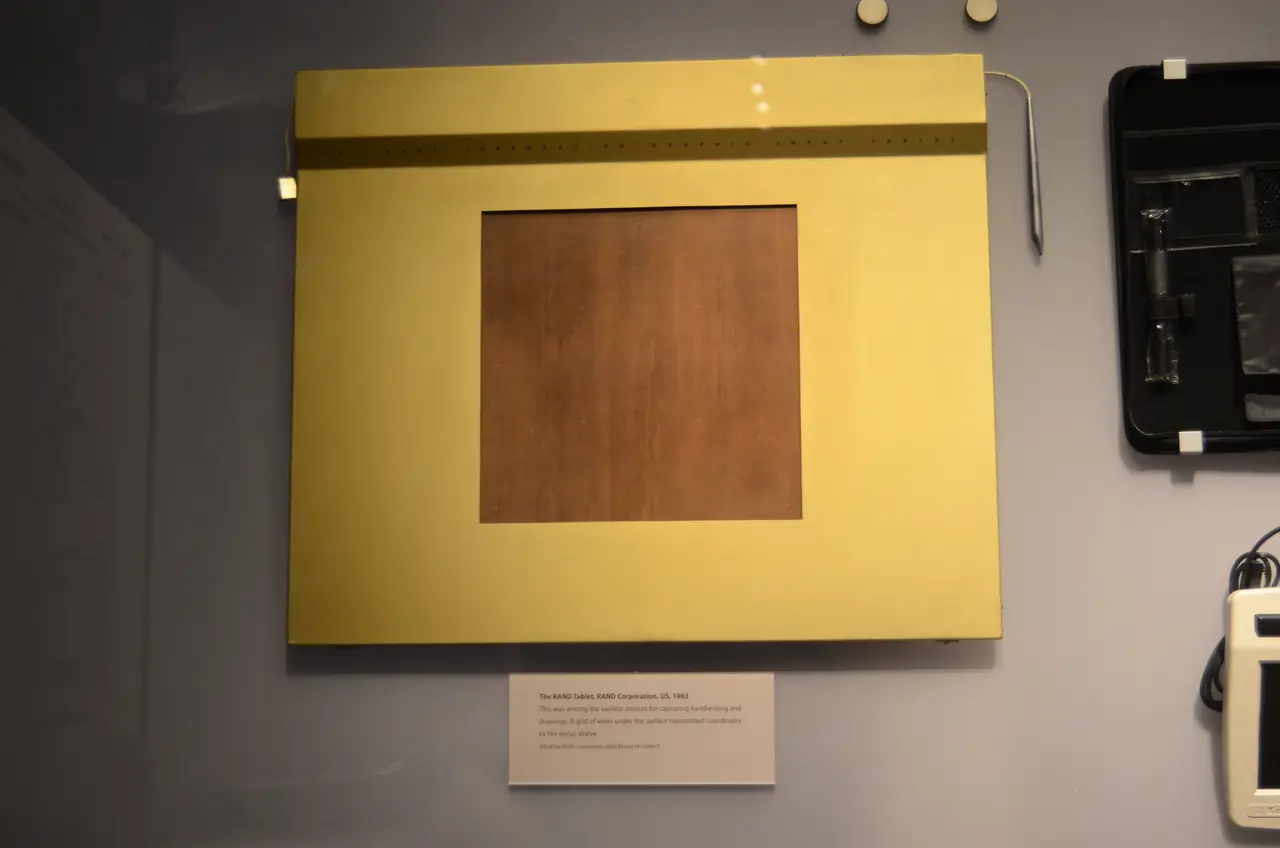




Contested: Bill Buxton dates the RAND Tablet to 1963; other histories say 1964.