Hard disk drive (HDD)
Spinning magnetic platters with moving heads gave random-access bulk storage; still the backbone of data-centre capacity in 2026.
- 1956
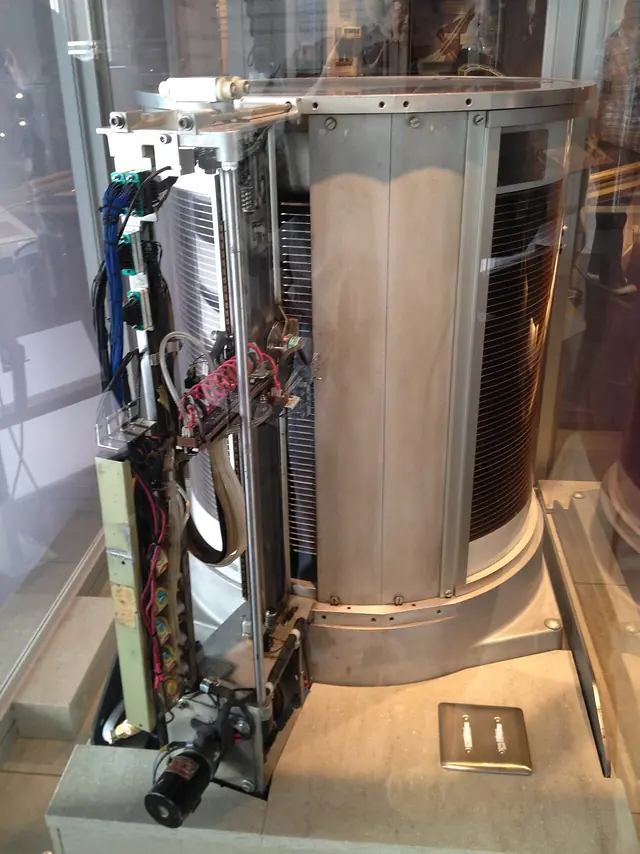
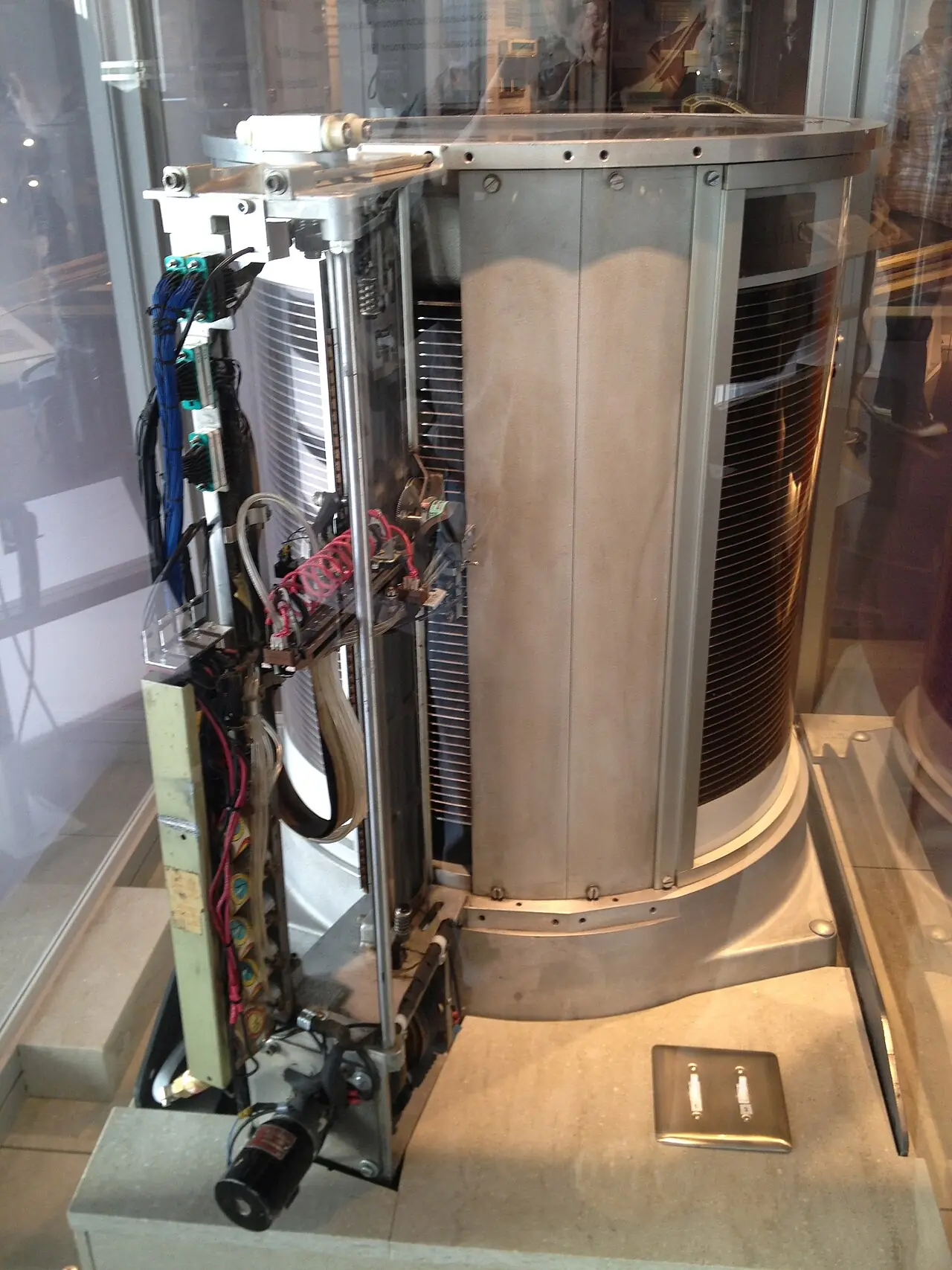
First version
IBM San Jose lab (Reynold Johnson's team) — IBM 350 RAMAC
Image: ArnoldReinhold · CC BY-SA 3.0 · Wikimedia Commons - 1973
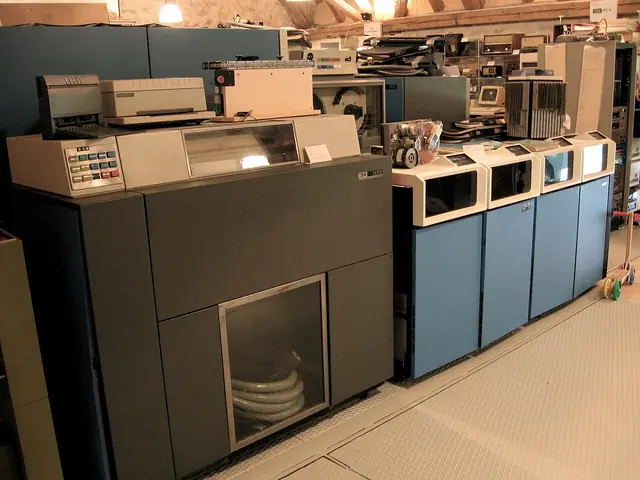
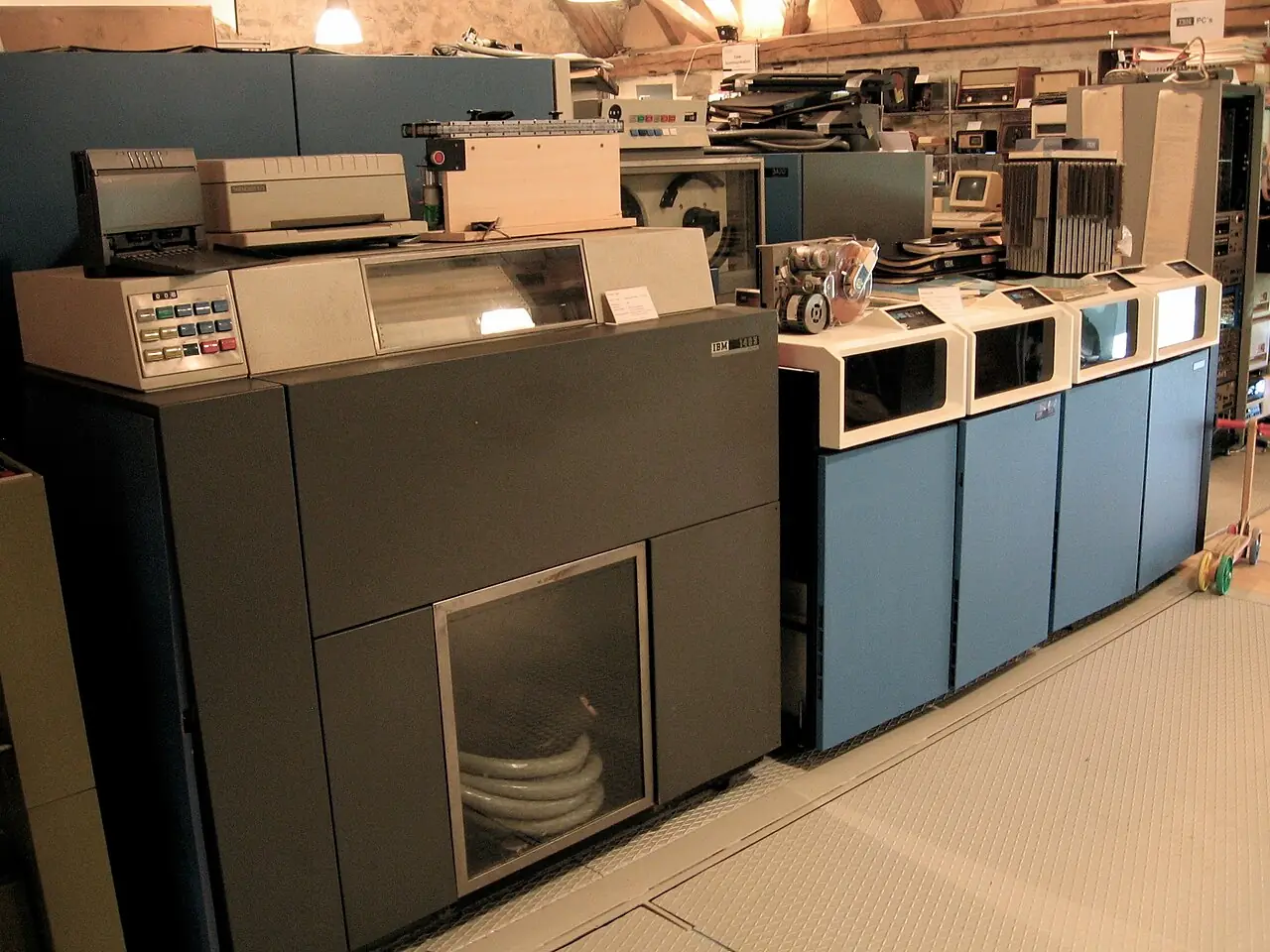
IBM 3340 'Winchester'
Sealed low-mass heads and lubricated disks set the template for modern drives.
Image: Marcin Wichary · CC BY 2.0 · Wikimedia Commons - 1980
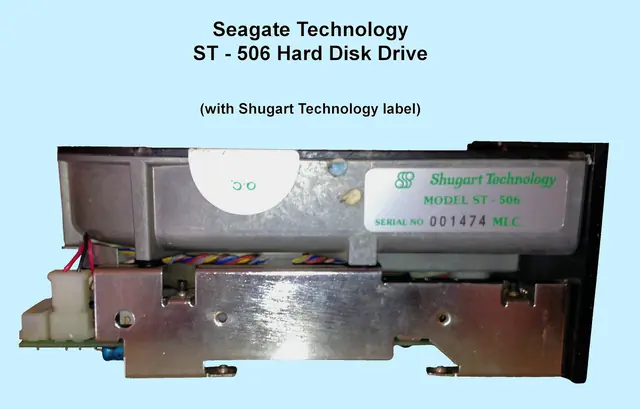
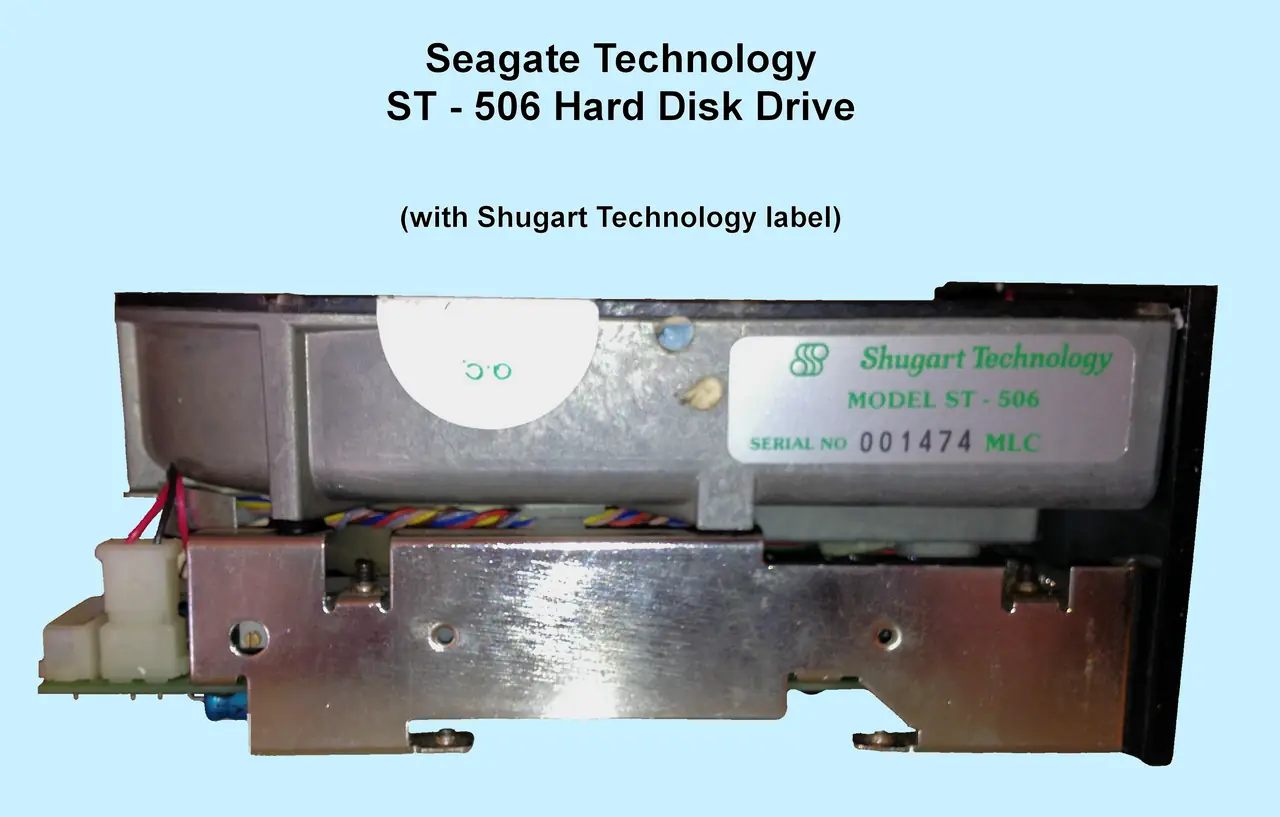
Seagate ST-506 (5.25-inch)
Small drive becomes the PC standard.
Image: Tom Gardner · CC BY-SA 4.0 · Wikimedia Commons - 1990
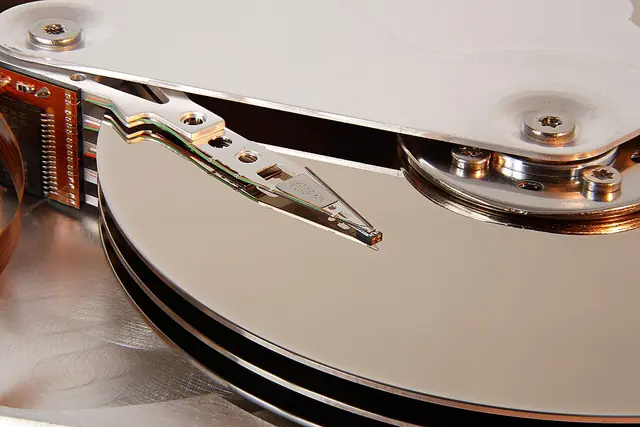
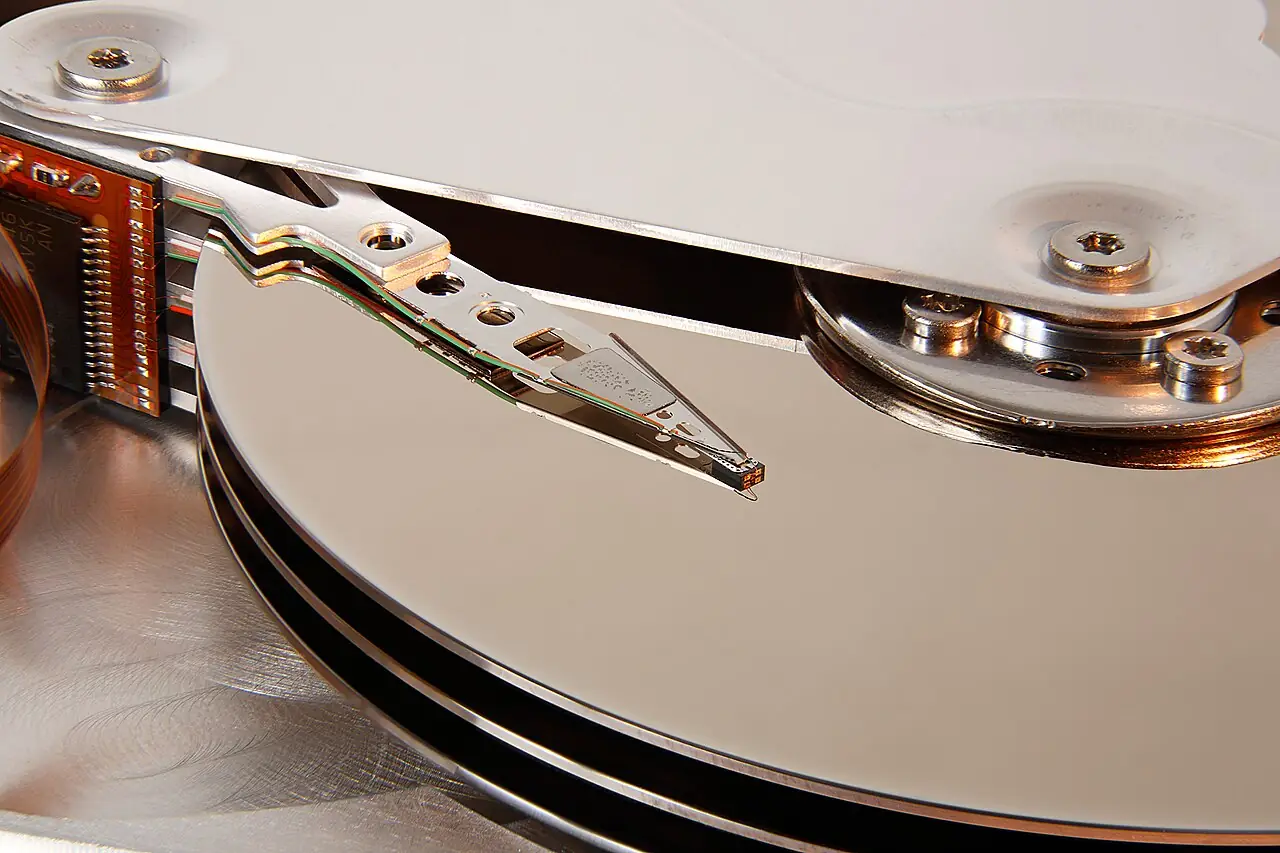
Magnetoresistive read head
MR heads sharply raise areal density.
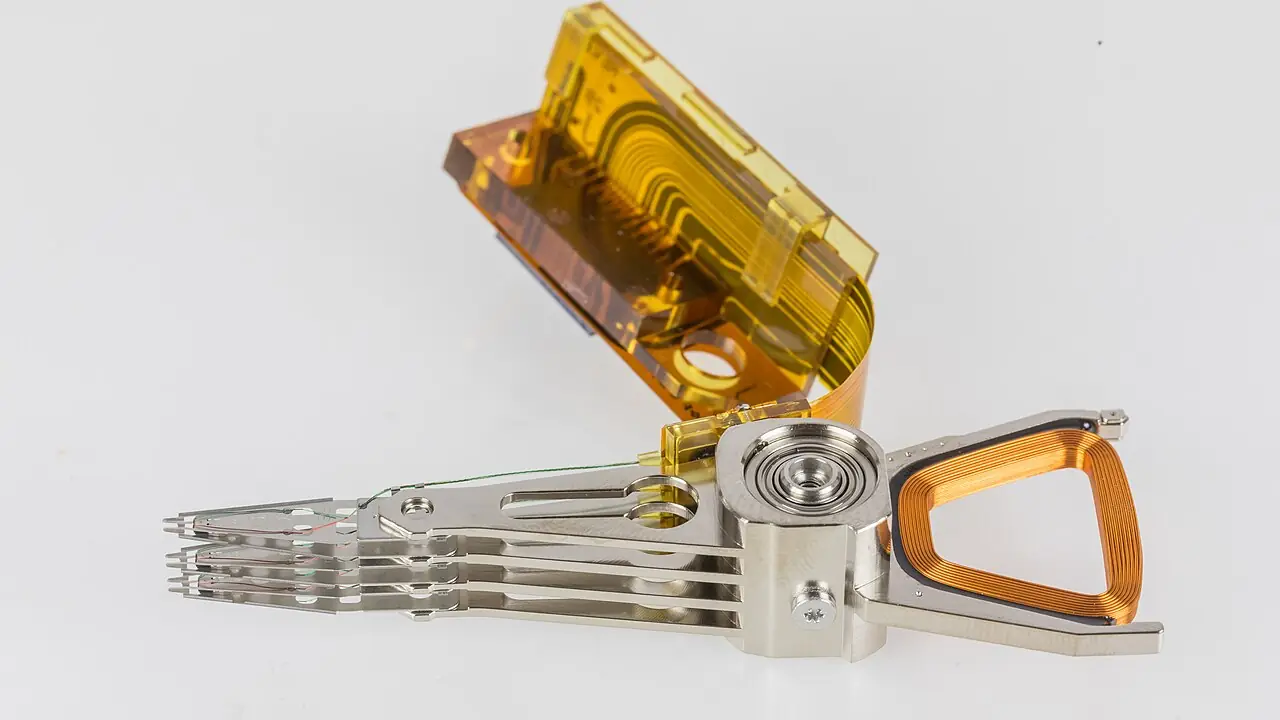
Image: Eric Gaba (Sting - fr:Sting) This image was created with CombineZP by 23 ( It w… · CC BY-SA 3.0 · Wikimedia Commons - 1997
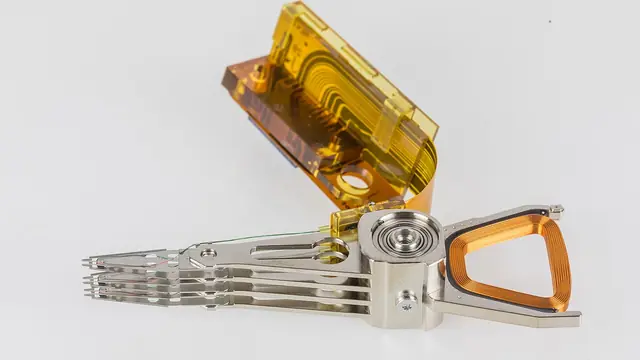
GMR read head (IBM Deskstar 16GP)
Spin-valve heads based on giant magnetoresistance read much smaller bits; by 2000 every hard drive made used them.
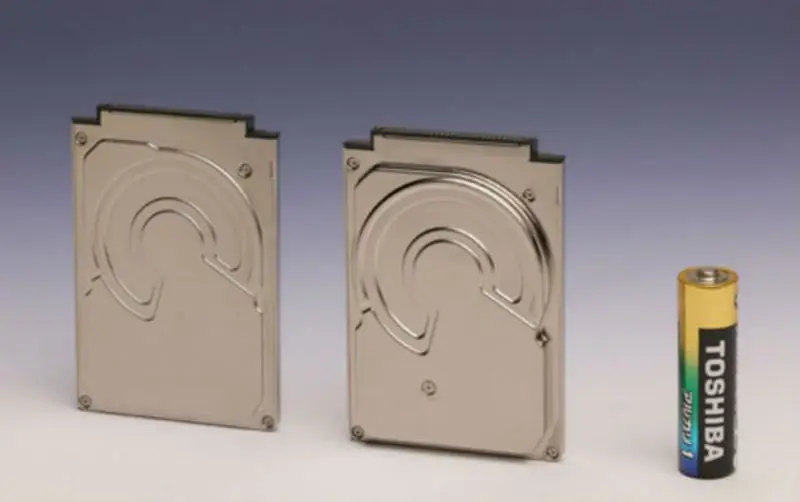
Image: Raimond Spekking · CC BY-SA 4.0 · Wikimedia Commons - 2005
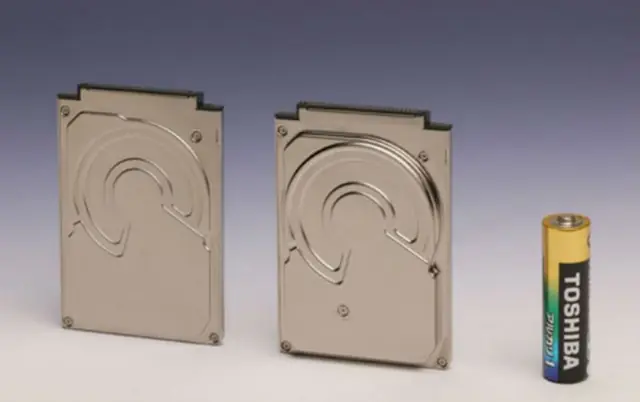
Perpendicular recording
Bits stand vertically, extending density growth.
Image: Toshiba Corporation; individual photographer not stated · Unclear; the Computer History Museum pa… · Computer History Museum Storage Engine / Toshiba - 2013
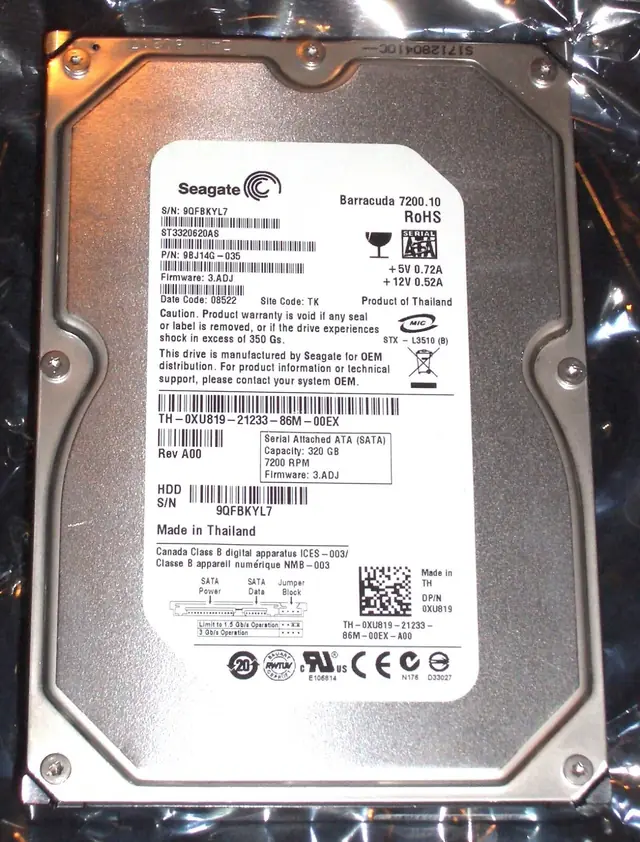
Helium-filled drives
Helium lowers drag, allowing more platters for cloud storage.
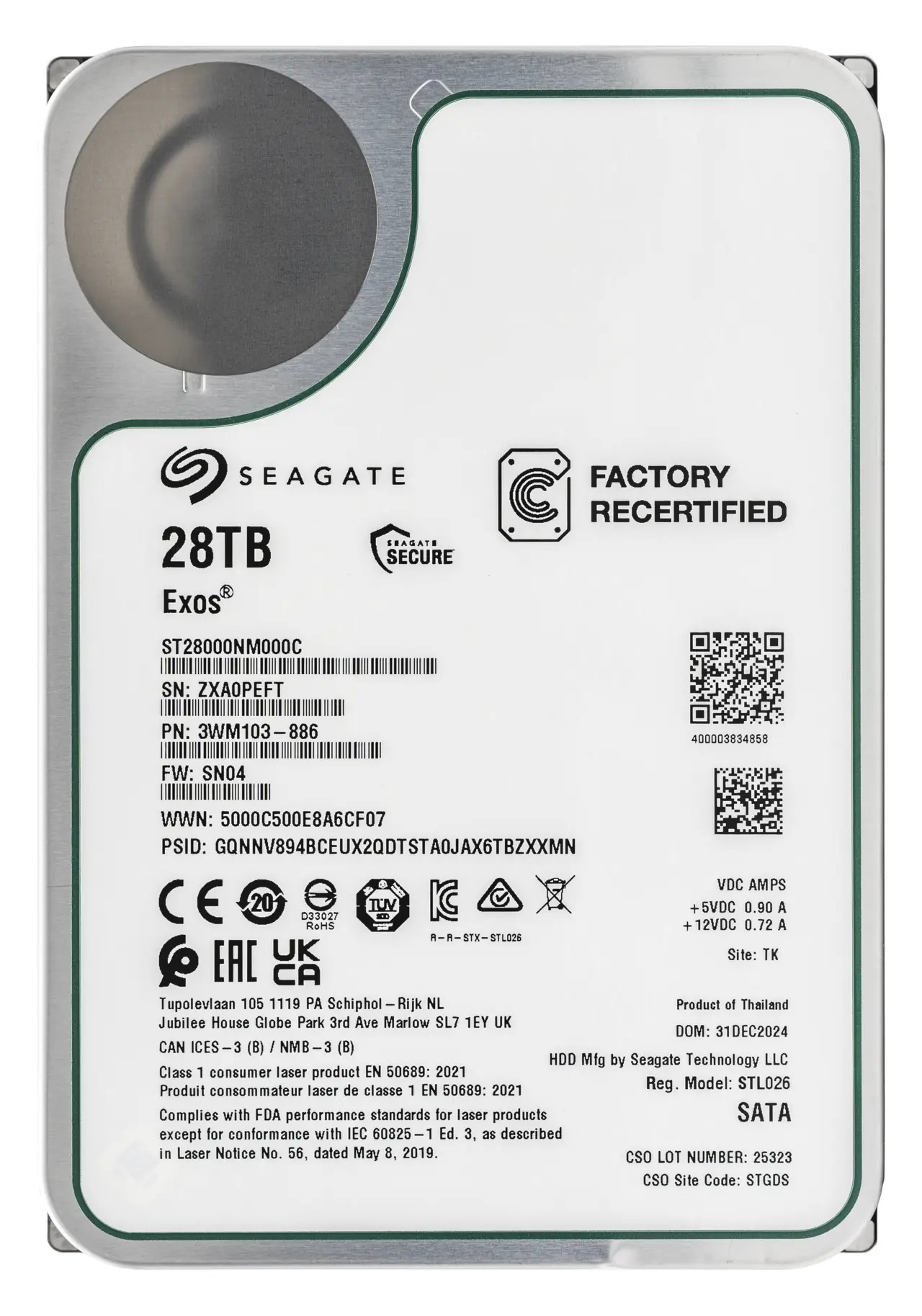
Image: User5515 · CC0 · Wikimedia Commons - 2024
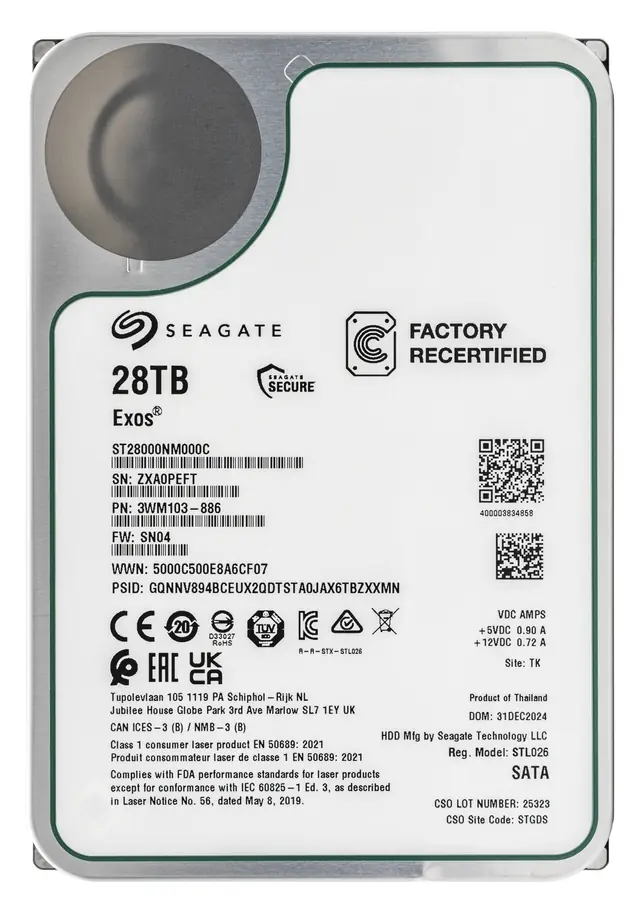
HAMR (Seagate Mozaic 3+)
A laser heats each spot while writing, enabling denser, more stable media; drives ship to cloud data centres.
Image: PantheraLeo1359531 · CC BY 4.0 · Wikimedia Commons


Contested: Jacob Rabinow patented magnetic disk data storage in 1951, before IBM's RAMAC shipped.