SRAM (static random-access memory)
Flip-flop memory cells that hold data without refresh; the fastest semiconductor memory, used for scratchpads, then caches and registers.
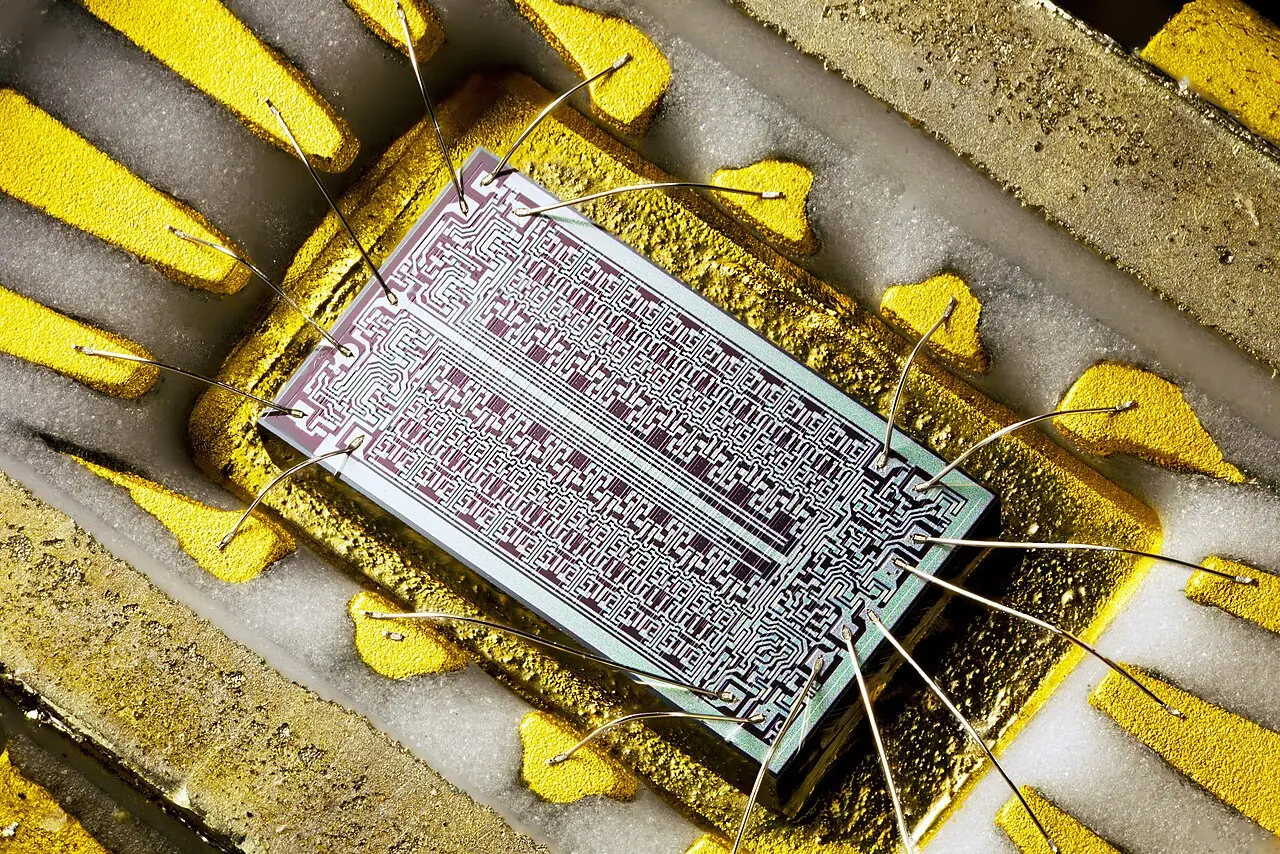
- 1965
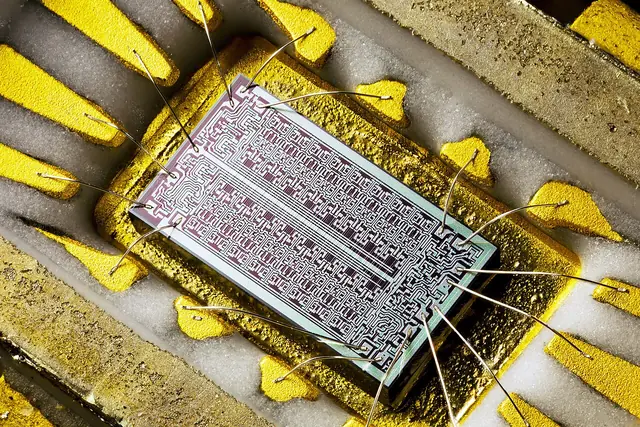
First version
IBM Components Division (SP95) and Signetics; later Fairchild
Image: Mister rf · CC BY-SA 4.0 · Wikimedia Commons - 1968
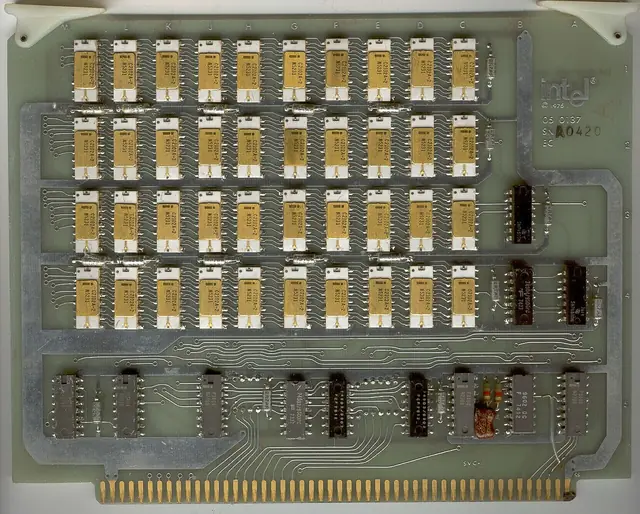
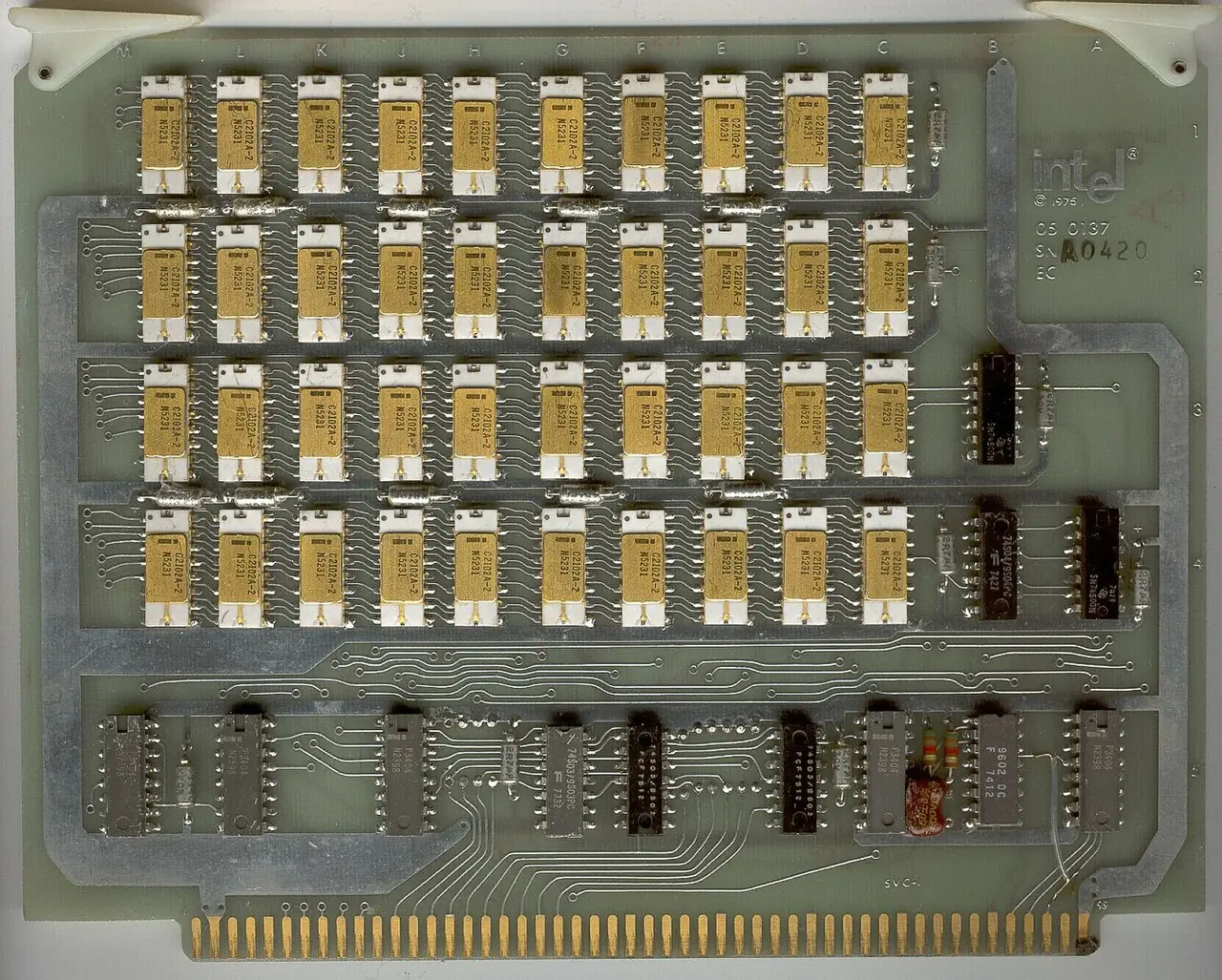
Fairchild 1024-bit MOS SRAM
MOS SRAM arrays built for Burroughs, raising density.
Image: Christian Bassow · CC BY-SA 4.0 · Wikimedia Commons - 1968
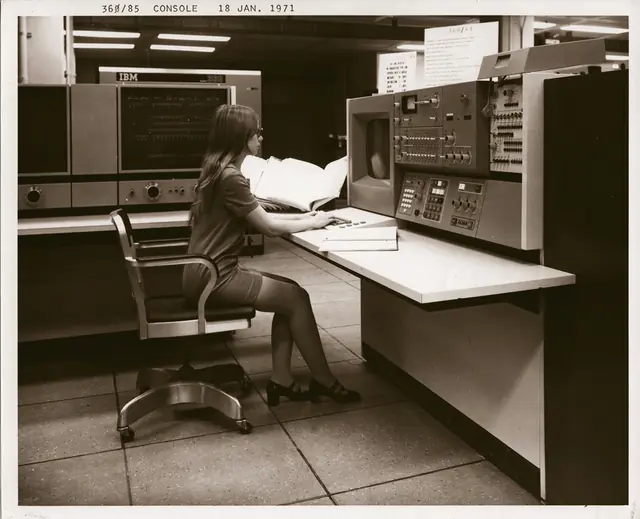
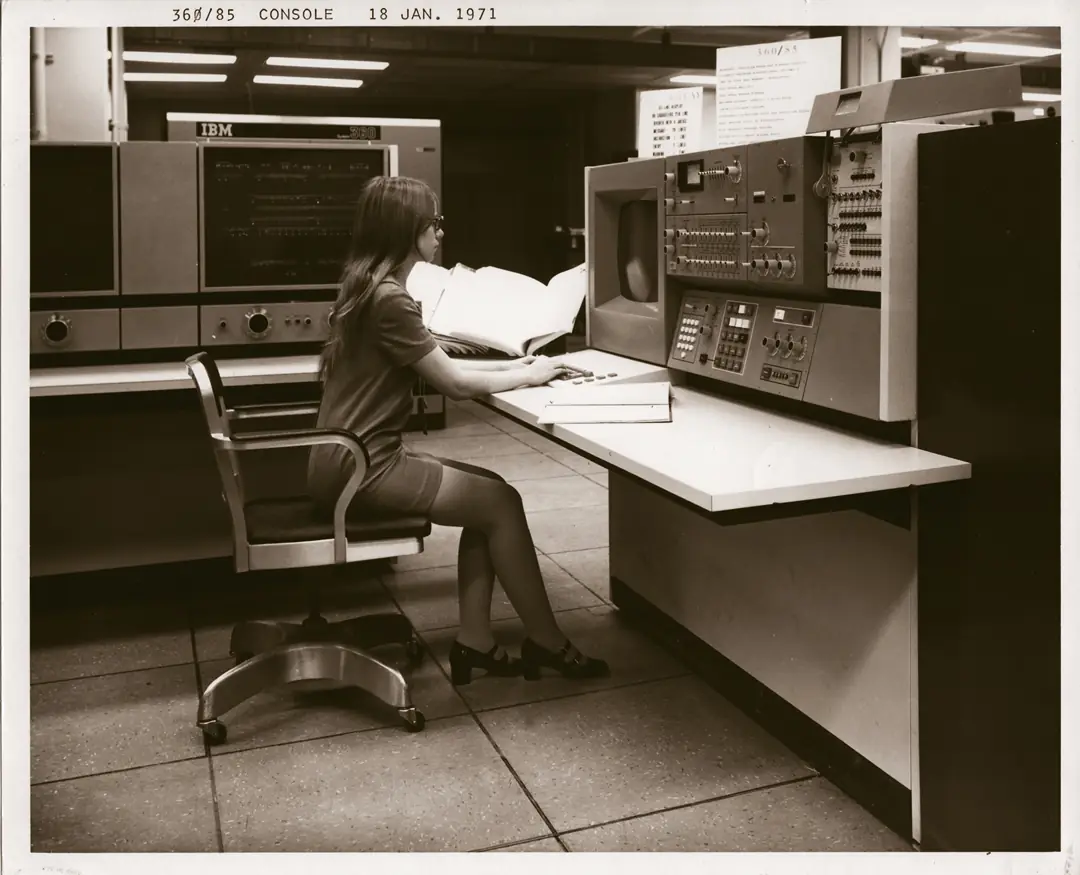
First cache memory (IBM System/360 Model 85)
A small high-speed buffer keeps recently used data next to the processor, cutting effective memory time to a third or a quarter; the role SRAM caches play today.
Image: Unidentified US governement agent · Public domain · Wikimedia Commons - 1989
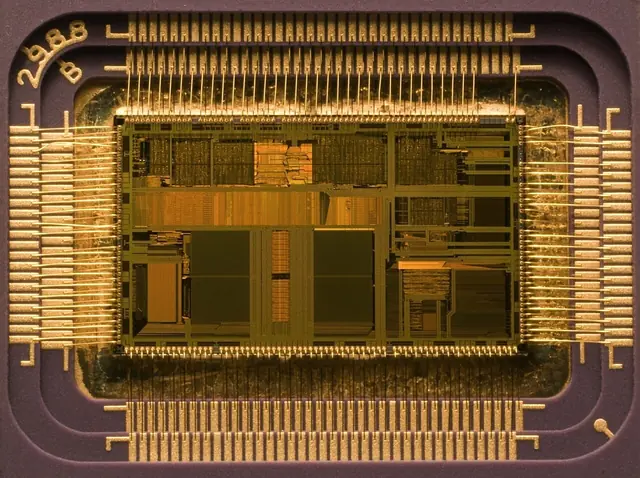
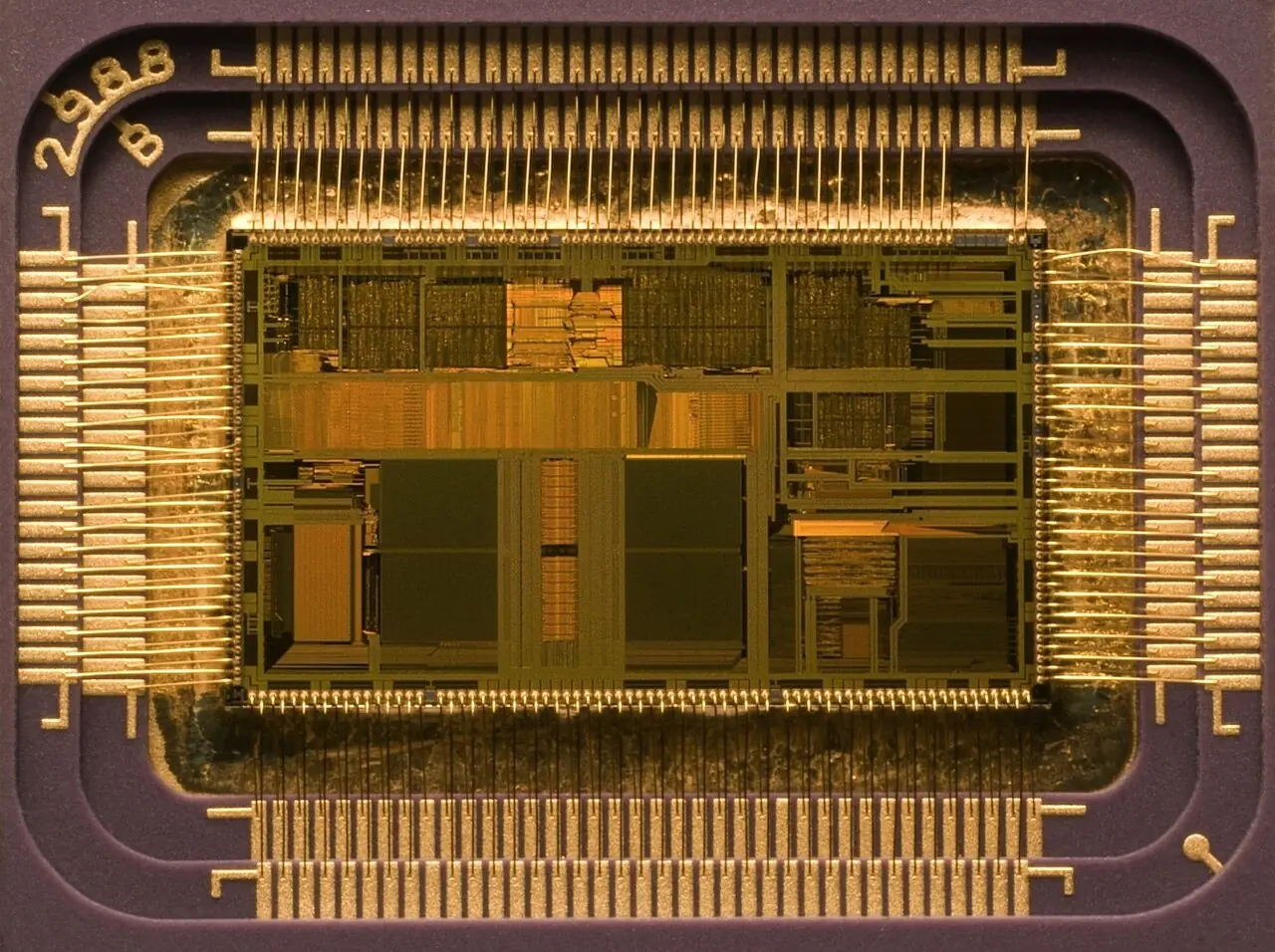
On-die cache (Intel 486)
SRAM moves onto the processor die as an 8KB cache, becoming its main role.
Image: Die prepared by Matt Britt w:User:Matt Britt = w:User:Uberpenguin = w:User:Uber… · CC BY-SA 3.0 · Wikimedia Commons


Contested: Semiconductor IC memory concepts were patented in 1963; CHM dates the first delivered bipolar SRAM chips to 1965.
Sources:computerhistory.org