Radio (wireless telegraphy to broadcasting)
Communication without wires: ship-to-shore safety, then mass broadcasting of voice and music, the first electronic mass medium.
- 1895
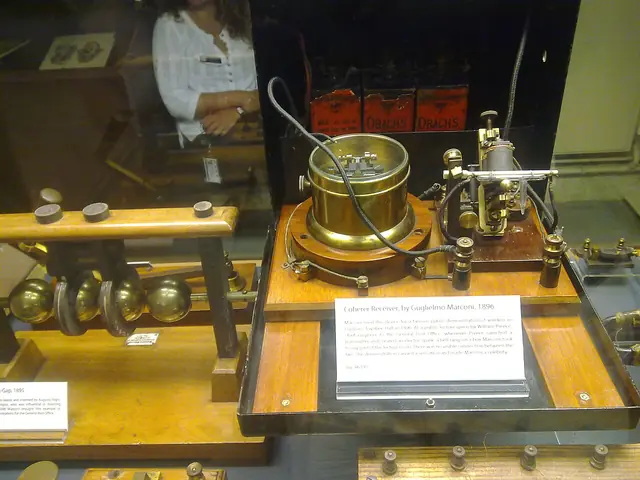
First version
Guglielmo Marconi; also Alexander Popov, Jagadish Chandra Bose, Nikola Tesla, Reginald Fessenden
Image: Ozeye · CC BY-SA 3.0 · Wikimedia Commons - 1906
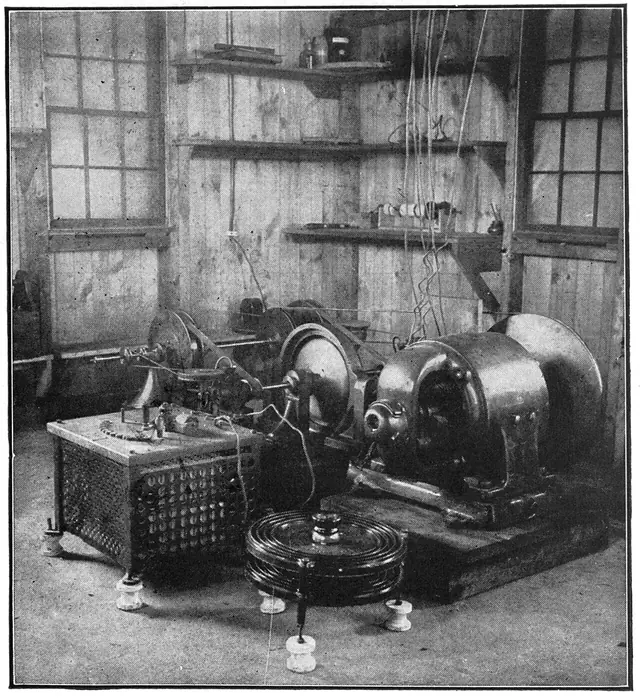
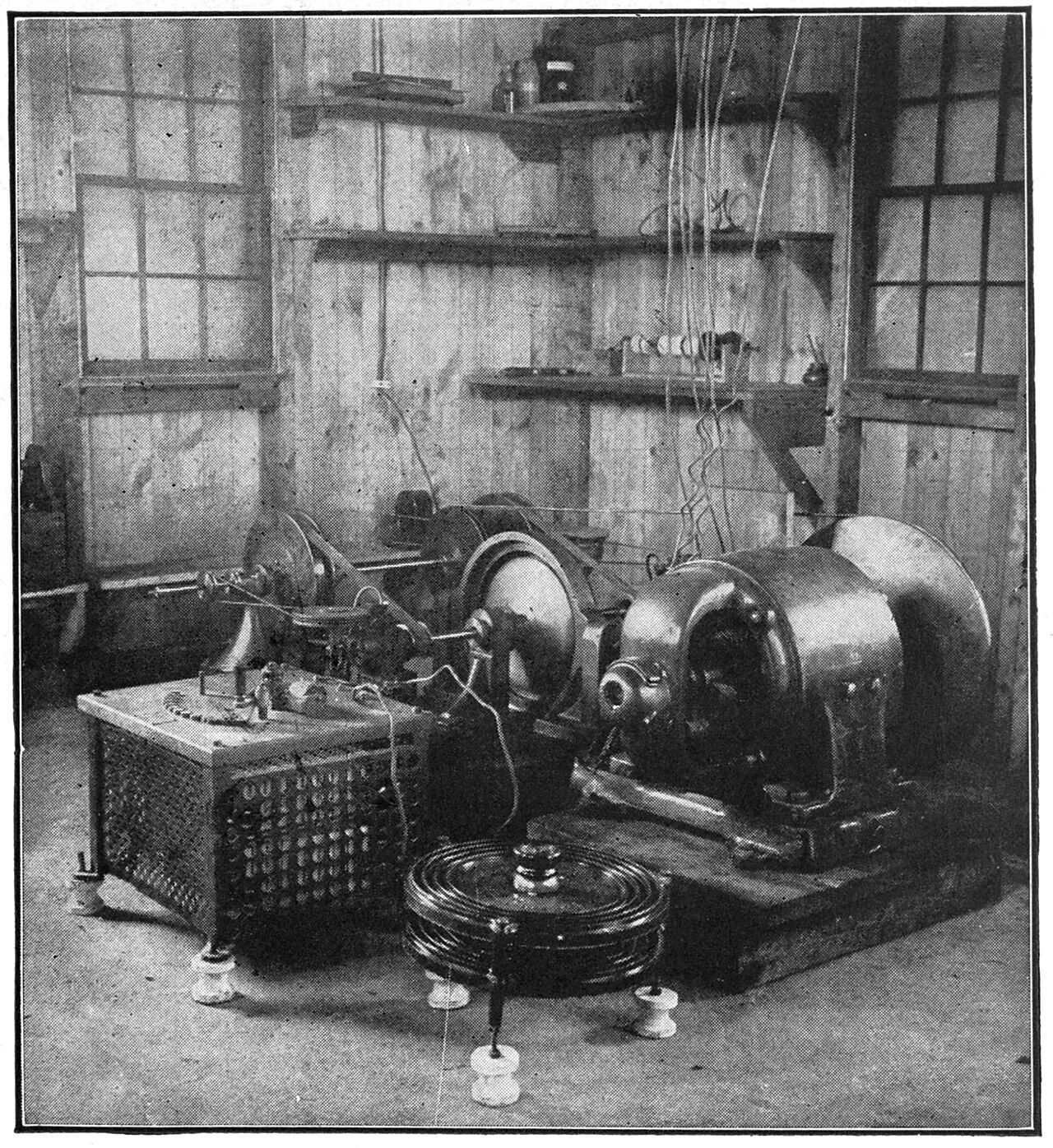
AM voice broadcast
Fessenden's alternator transmitter at Brant Rock sends speech and music by continuous-wave AM to invited guests; his claimed Christmas Eve 'broadcast' is unproven.
Image: Uncredited magazine article illustration · Public domain · Wikimedia Commons - 1918
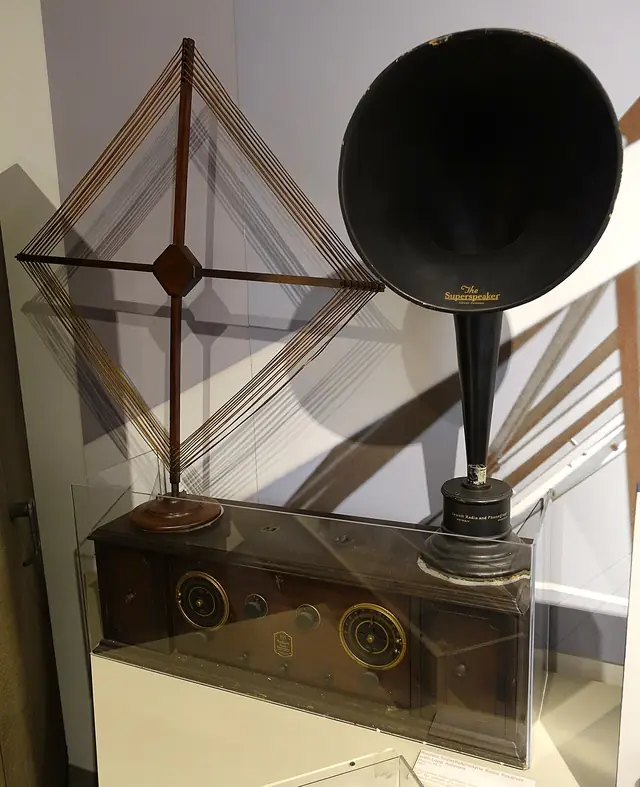
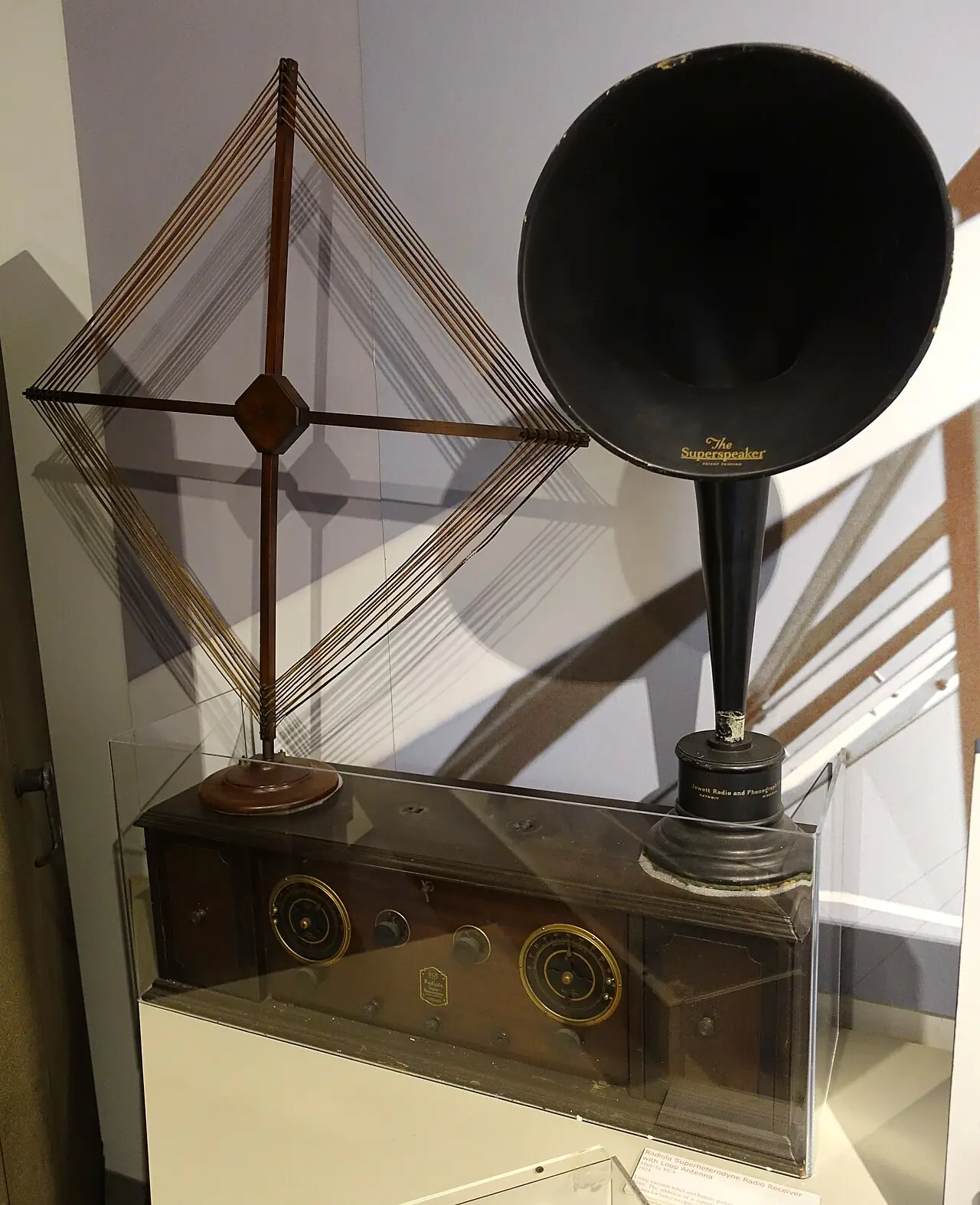
Superheterodyne receiver
Lucien Lévy and Edwin Armstrong convert every station to one fixed intermediate frequency for amplification and filtering; the design used in almost all later radio, TV and radar receivers.
Image: Daderot · CC0 · Wikimedia Commons - 1920
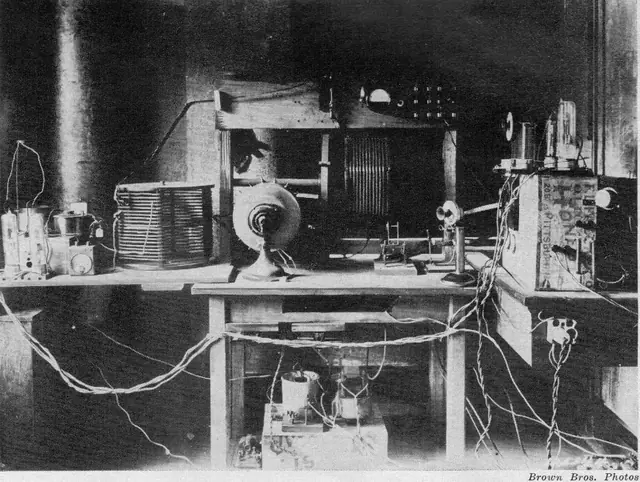
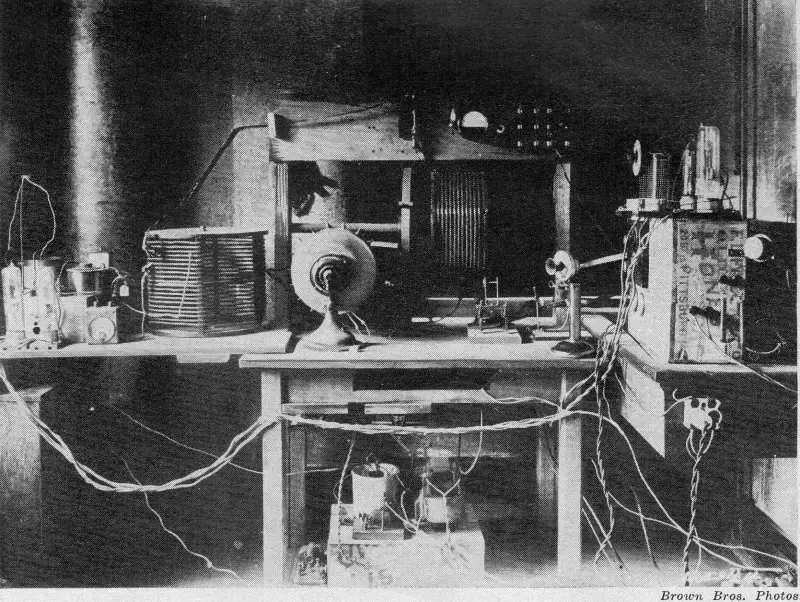
Scheduled public broadcasting (KDKA)
Westinghouse's KDKA starts regular programmes with the 2 November 1920 election returns, turning radio from point-to-point messaging into a mass medium.
Image: T. R. Kennedy Jr. · Public domain · Wikimedia Commons - 1933
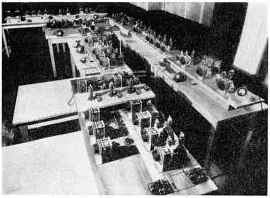
FM radio
Armstrong's wideband frequency modulation cuts static, enabling high-fidelity broadcasting.
Image: Unknown author · Public domain · Wikimedia Commons - 1954
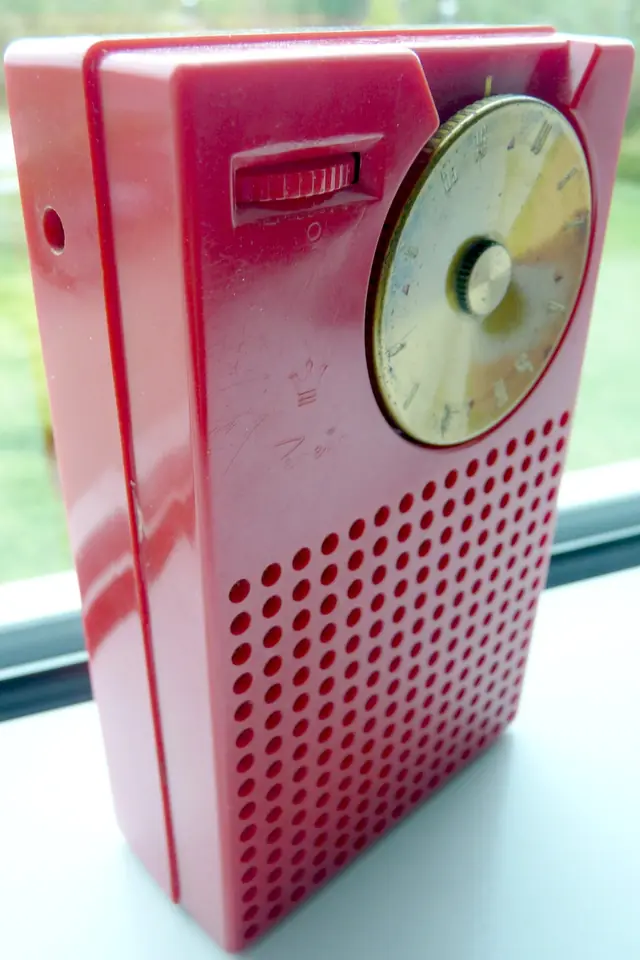
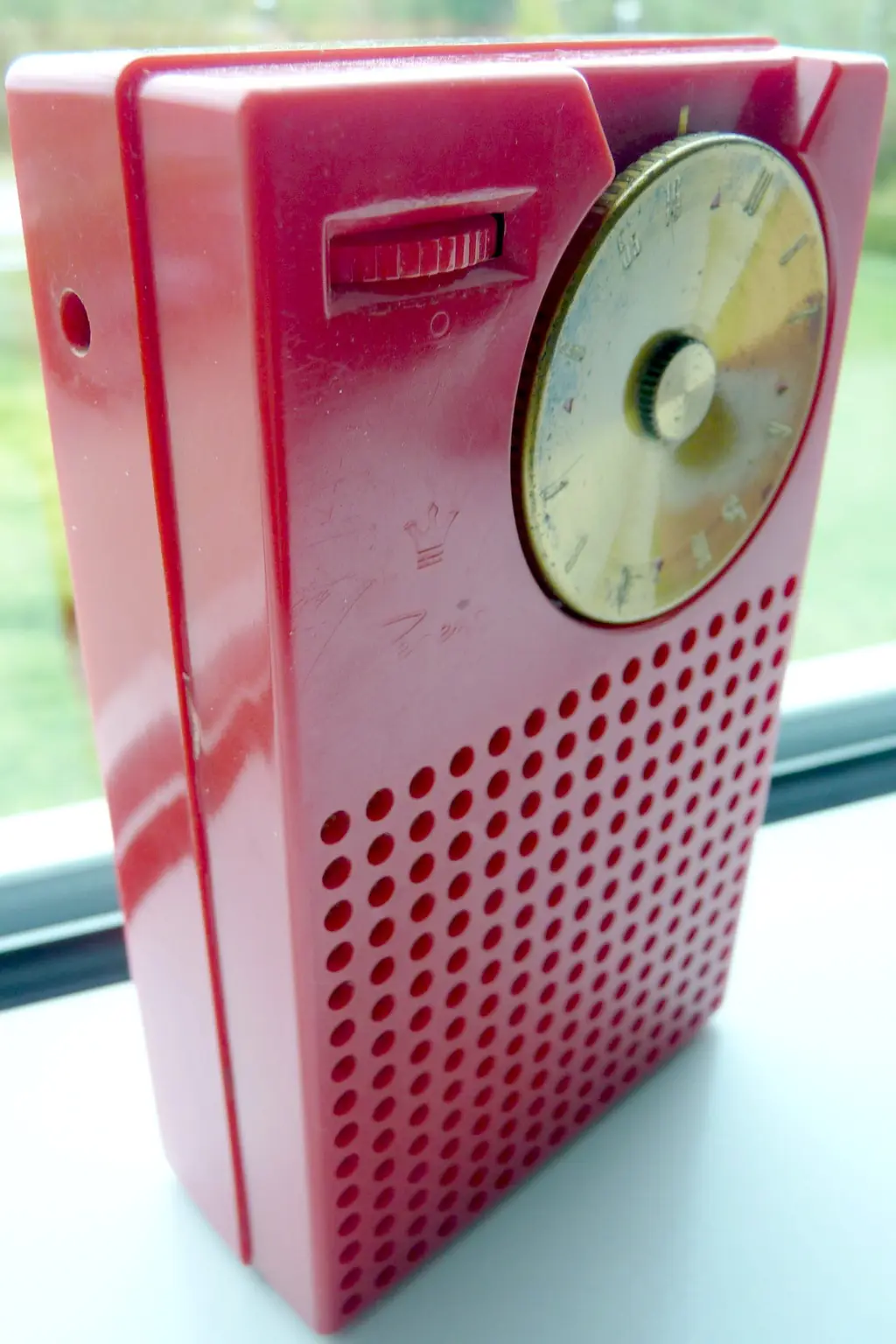
Transistor radio (Regency TR-1)
Four transistors replace vacuum tubes in a pocket-sized battery set, making radio personal and portable.
Image: Cmglee · CC BY-SA 3.0 · Wikimedia Commons - 1995
Digital radio (DAB)
Digital audio broadcasting replaces analogue AM/FM signals, adding more stations, clearer sound and text.
Image: Unknown author · Public domain · Wikimedia Commons
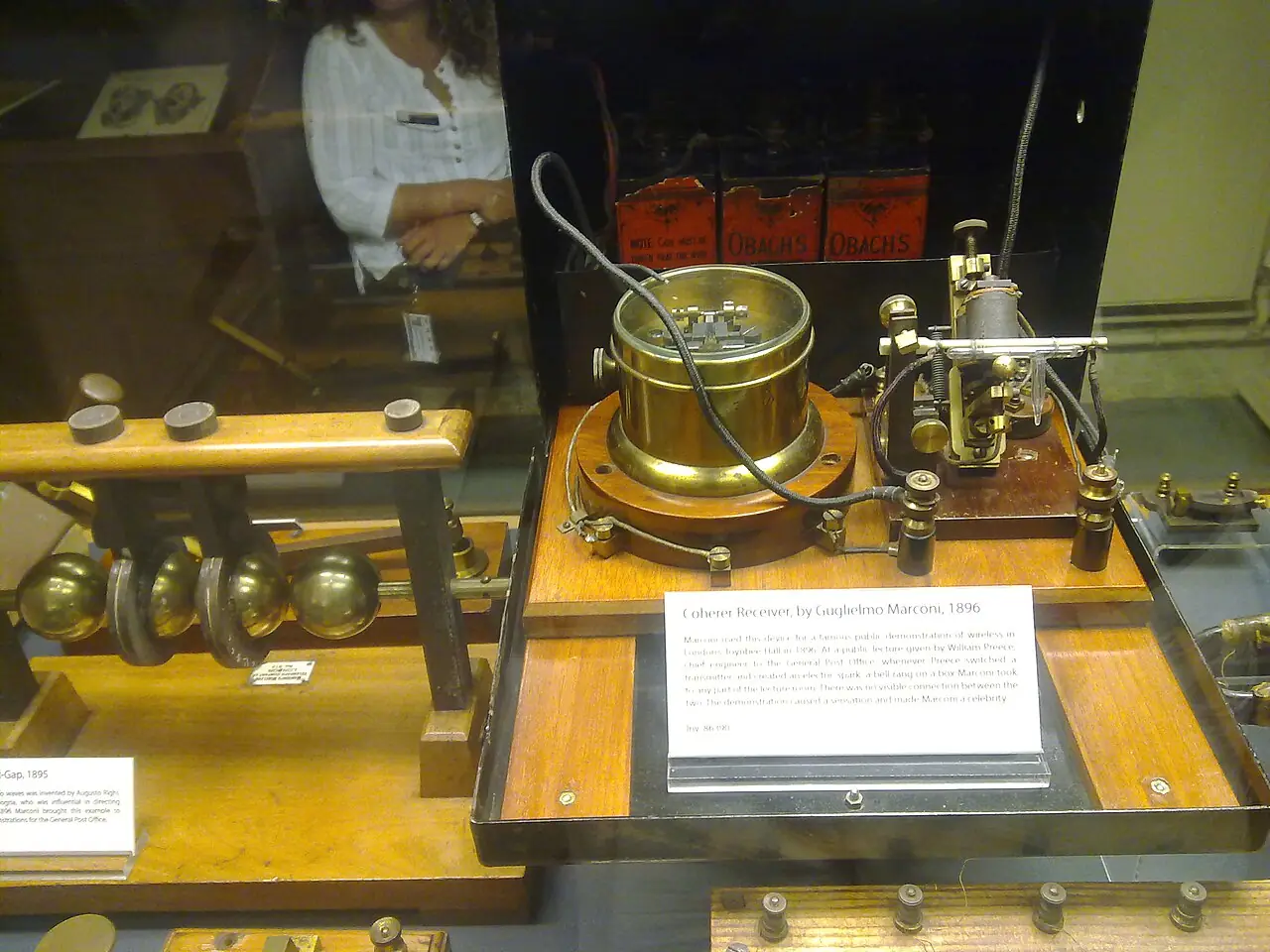



Contested: Marconi vs Tesla vs Popov vs Bose; the US Supreme Court (1943) voided key Marconi patent claims over prior art.