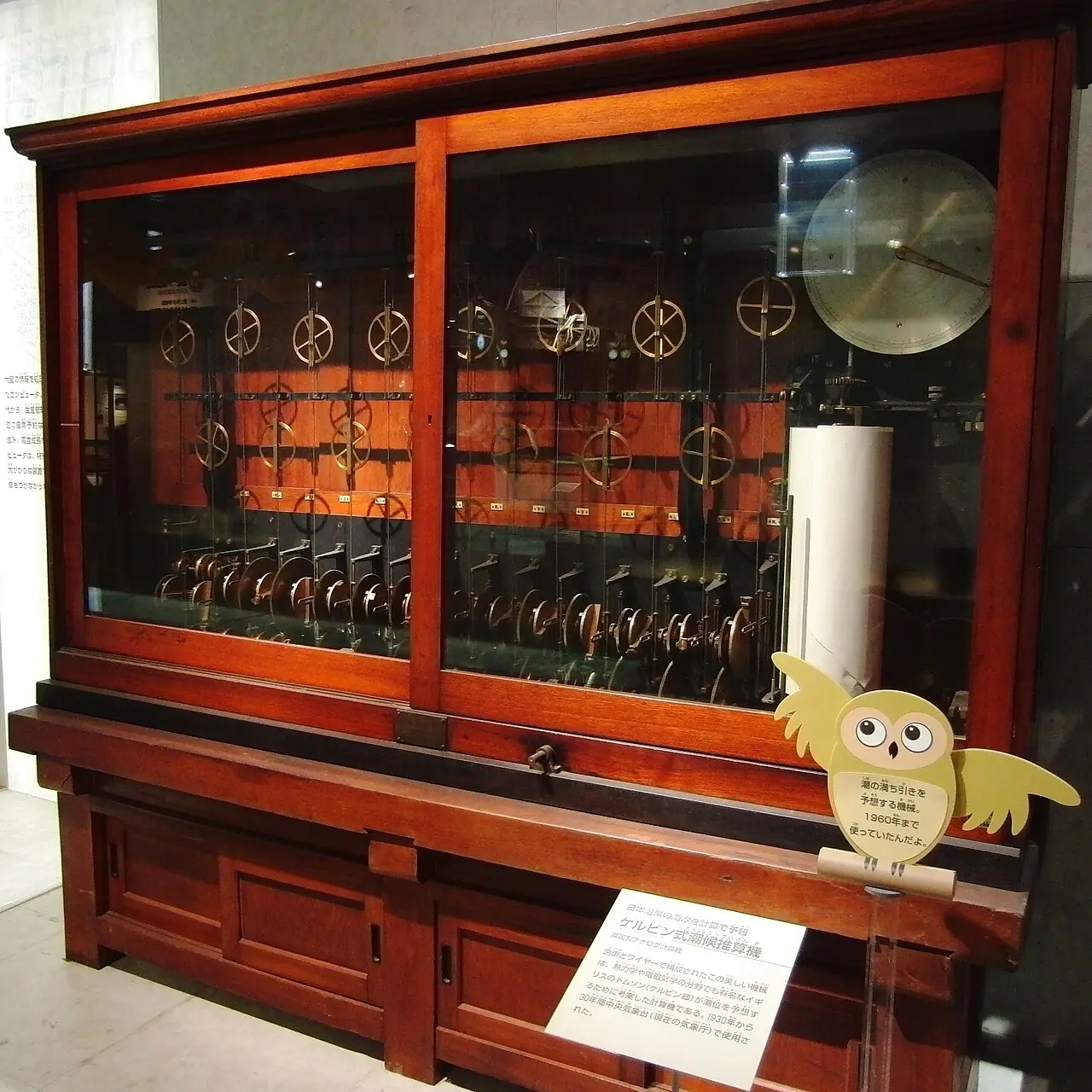
Analog computer (tide predictor to differential analyzer)
Computes by modelling a problem with continuously varying quantities, such as shaft rotations or voltages, instead of digits; it predicted tides, solved ballistics and simulated flight until digital computers took over in the 1970s.
- 1872
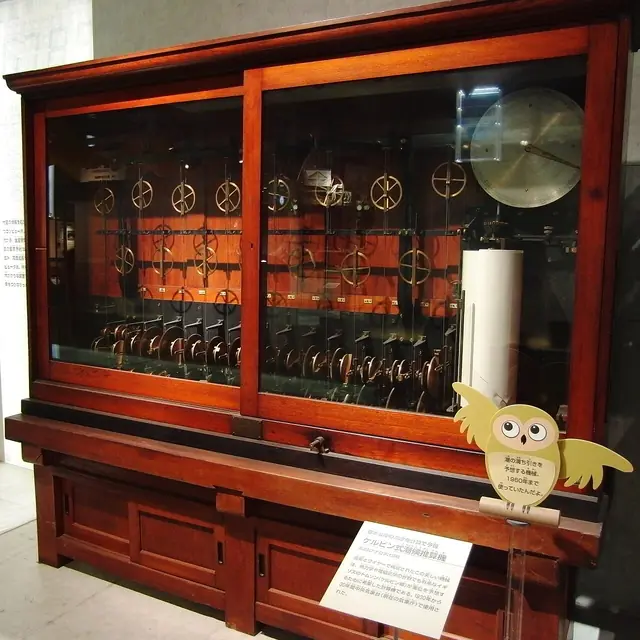
First version
William Thomson (Lord Kelvin); Vannevar Bush and Harold Hazen (MIT)
Image: Momotarou2012 · CC BY-SA 3.0 · Wikimedia Commons - 1931
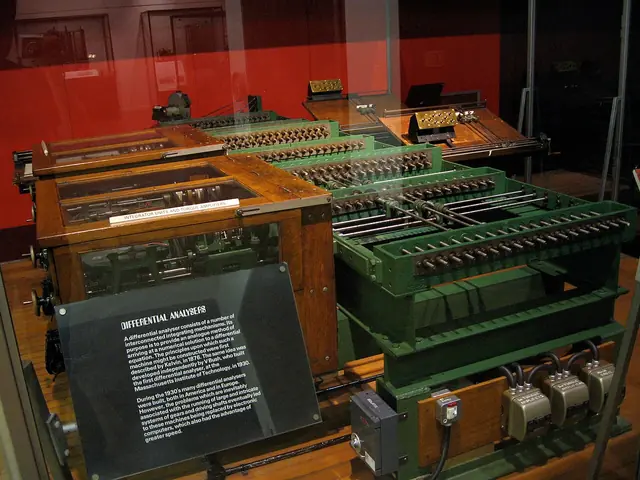
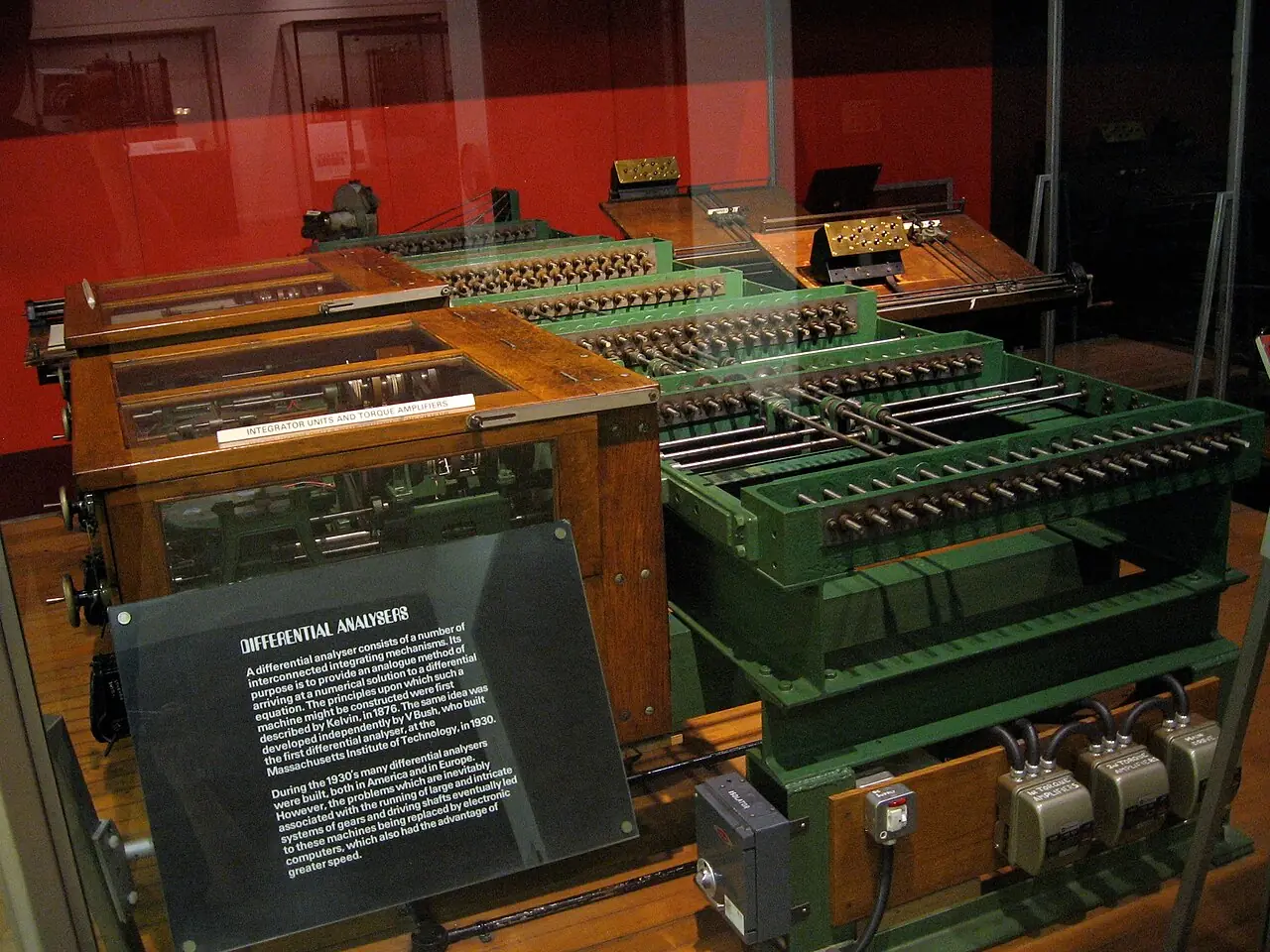
Differential analyzer (MIT)
Bush's machine links wheel-and-disc integrators with shafts to solve general differential equations; copies proved too slow for firing tables, spurring ENIAC.
Image: Marcin Wichary from San Francisco, U.S.A. · CC BY 2.0 · Wikimedia Commons - 1946
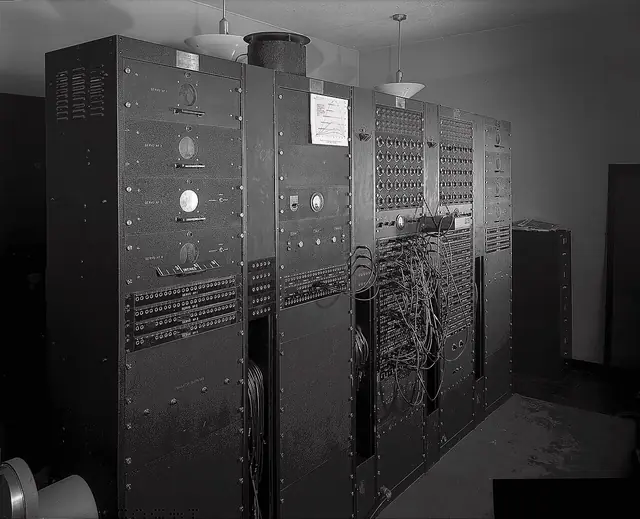
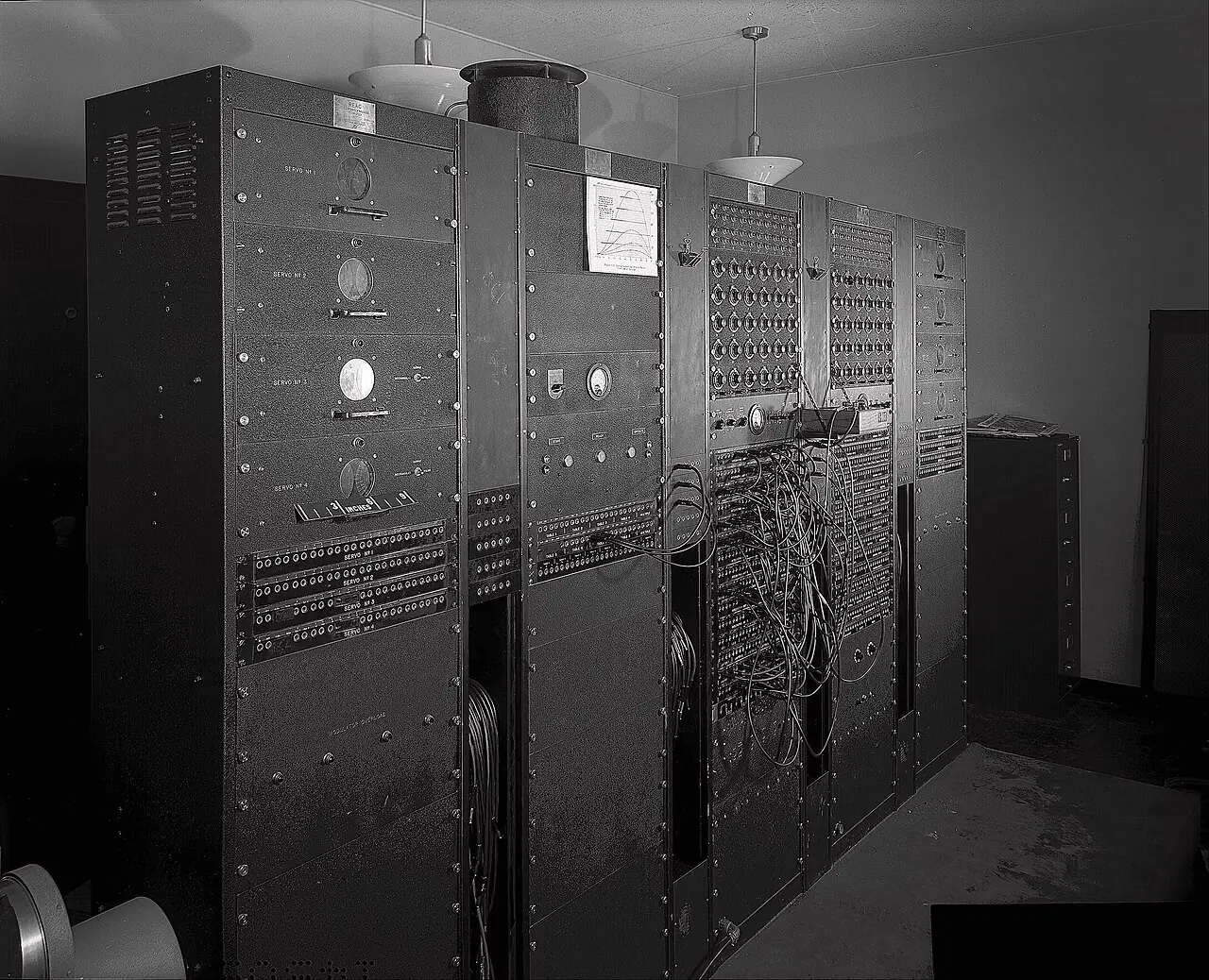
Electronic analog computer (Reeves REAC)
Vacuum-tube amplifiers replace gears and shafts; the Navy's Project Cyclone REAC simulates guided missiles, and commercial units sell from 1948.
Image: NASA Ames Research Center / NACA · Public domain · Wikimedia Commons