Typewriter and QWERTY keyboard
Practical typewriter whose QWERTY layout became the standard for typing machines, computer terminals and, later, on-screen keyboards.
- 1868

First version
Christopher Latham Sholes, Carlos Glidden, Samuel W. Soulé
Image: Daderot · CC0 · Wikimedia Commons - 1874
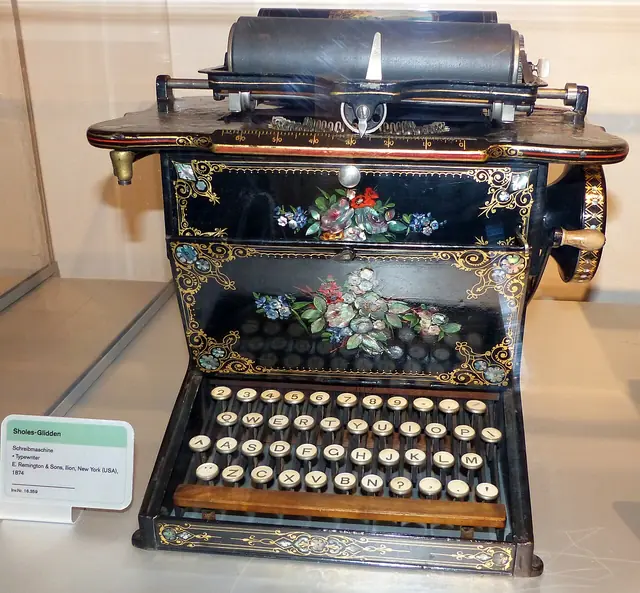
Sholes & Glidden Type Writer (Remington)
First commercial QWERTY machine; capitals only, and the typist cannot see the text.
Image: Dr. Bernd Gross · CC BY-SA 4.0 · Wikimedia Commons - 1878

Remington No. 2
Shift key gives upper- and lower-case on a QWERTY typewriter.
Image: Martin Howard · CC BY-SA 4.0 · Wikimedia Commons - 1896

Underwood No. 1 (visible writing)
Front-strike type bars hit the front of the platen, so the typist sees each line while typing; the design becomes the typewriter template for over 60 years.
Image: Windmemories · CC BY-SA 4.0 · Wikimedia Commons - 1961

IBM Selectric
A spinning golf-ball type element replaces type bars and the moving carriage.
Image: steve lodefink · CC BY 2.0 · Wikimedia Commons - 1985

IBM Model M (Enhanced Keyboard)
Buckling-spring computer keyboard with the 101-key layout that became the standard PC keyboard.
Image: Wilfredor · CC0 · Wikimedia Commons - 2007

iPhone on-screen QWERTY keyboard
QWERTY moves onto a touchscreen: virtual keys with autocorrect replace physical keys on phones.
Image: Sarah Gilbert (cafemama) · CC BY-NC-SA 2.0 · Flickr

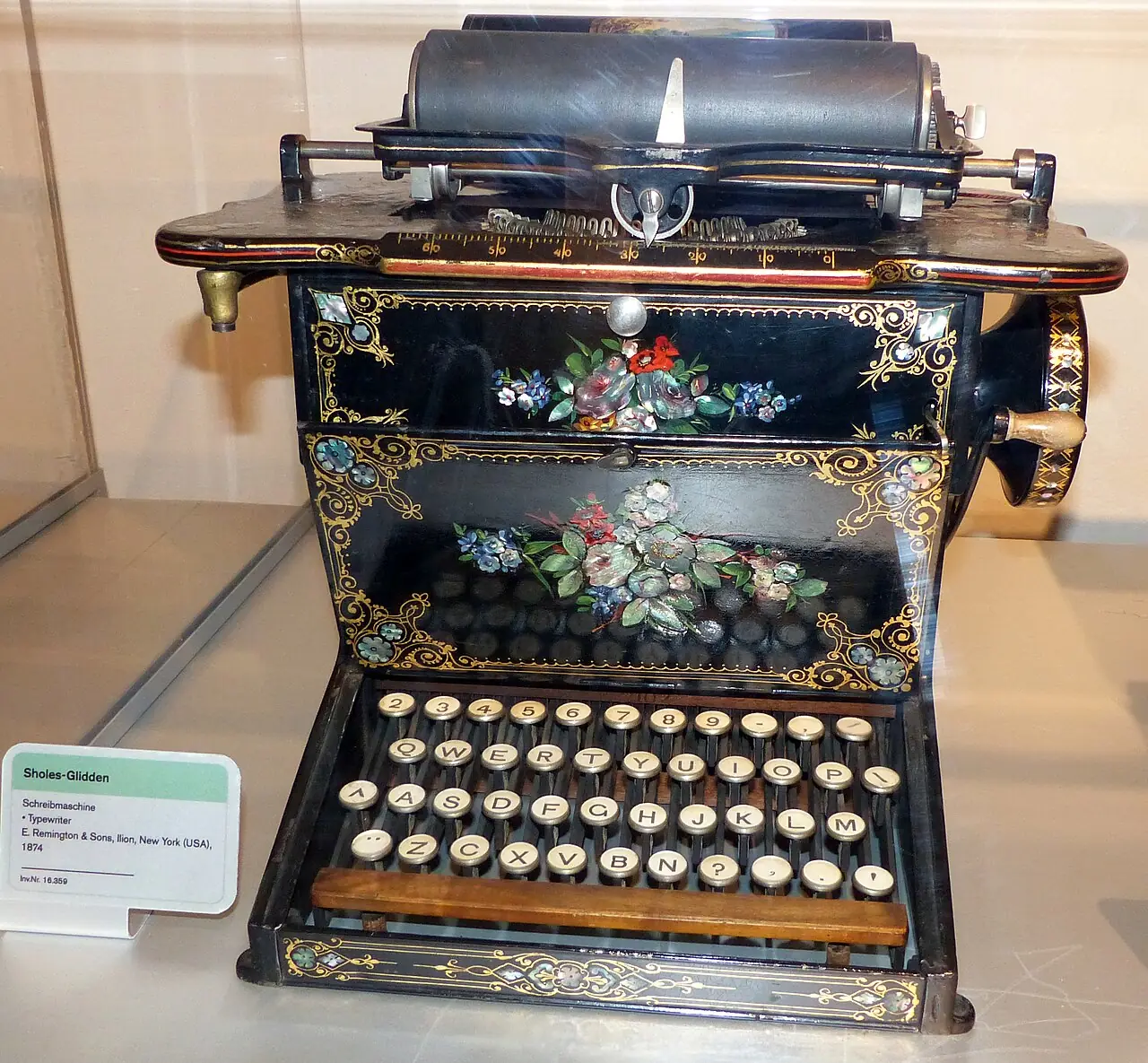


Contested: Many earlier typing machines existed; QWERTY's origin (anti-jamming vs telegraph-transcription needs) and the Remington sale date are disputed.