Supercomputer (CDC 6600 to exascale)
The fastest computers of their era, used for physics, weapons, weather and climate simulation; the line now runs at exascale.
- 1964
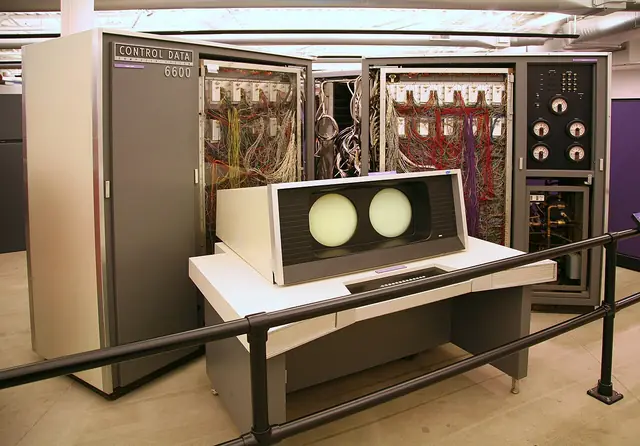
First version
Seymour Cray at Control Data Corporation (CDC 6600)
Image: Jitze Couperus · CC BY 2.0 · Wikimedia Commons - 1976
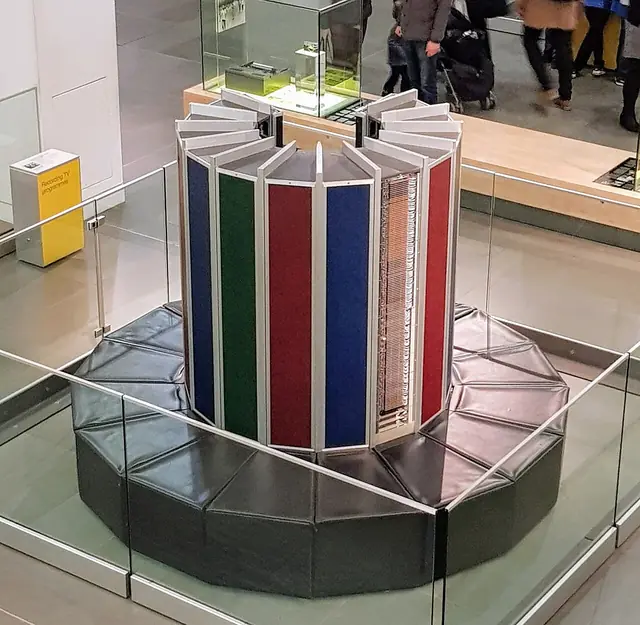
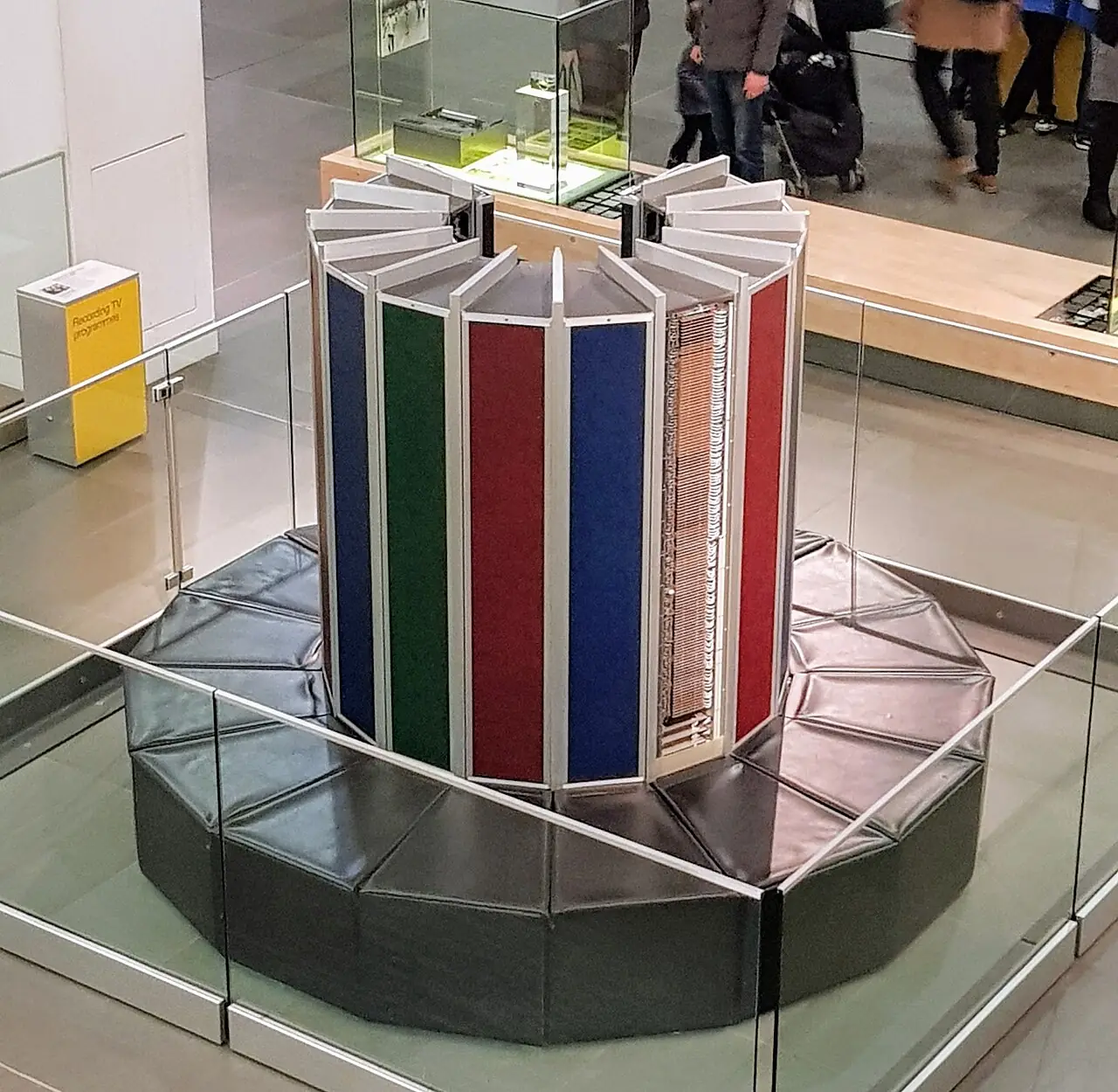
Cray-1
Vector supercomputer from Cray Research; fastest machine of its day.
Image: Irid Escent · CC BY-SA 2.0 · Wikimedia Commons - 1985
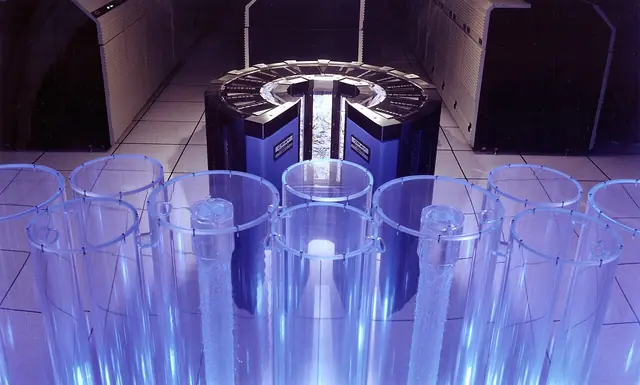
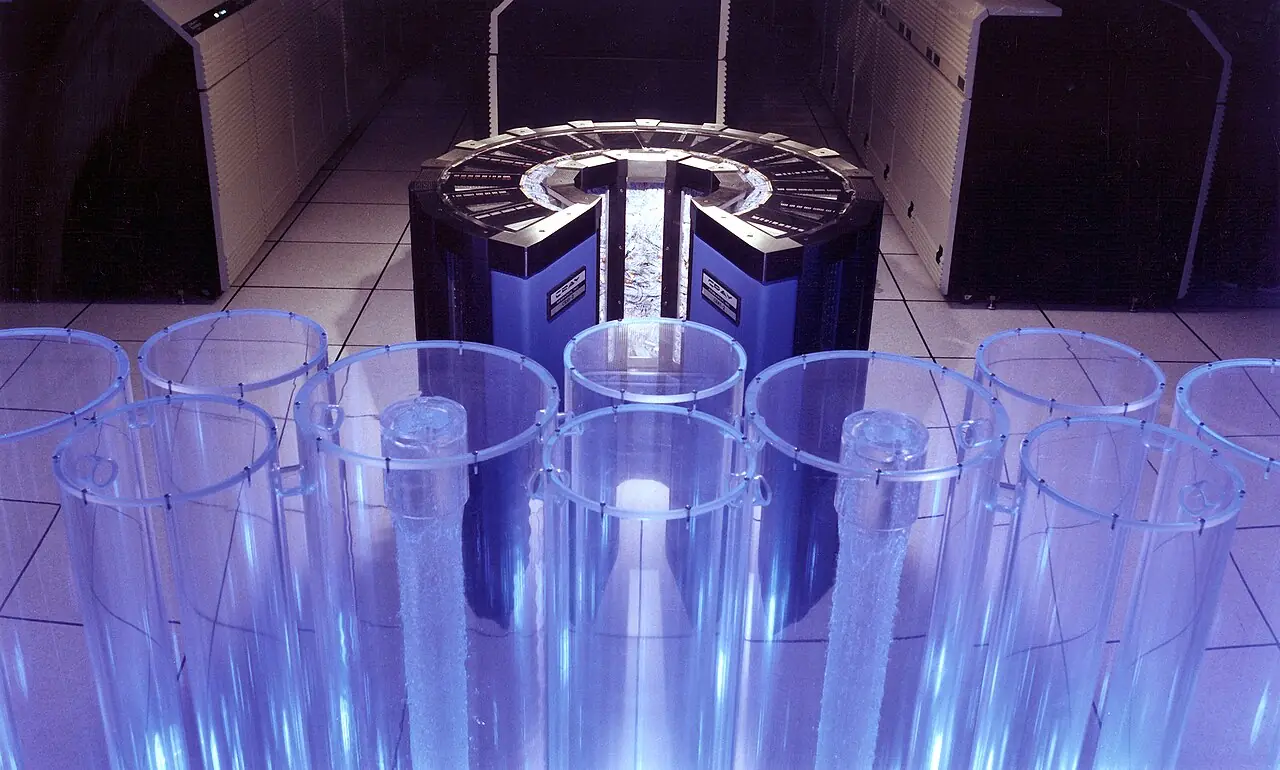
Cray-2
Four vector processors reach 1.9 gigaflops peak, more than ten times the Cray-1, with the circuits cooled by liquid flowing directly over them.
Image: NASA / Wade Sisler · Public domain · Wikimedia Commons - 1994
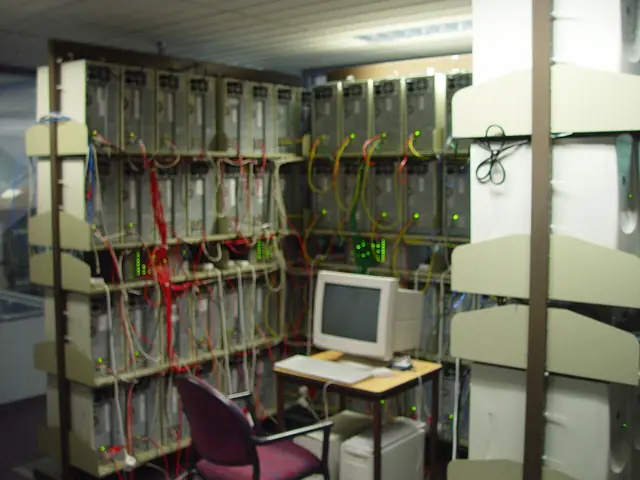
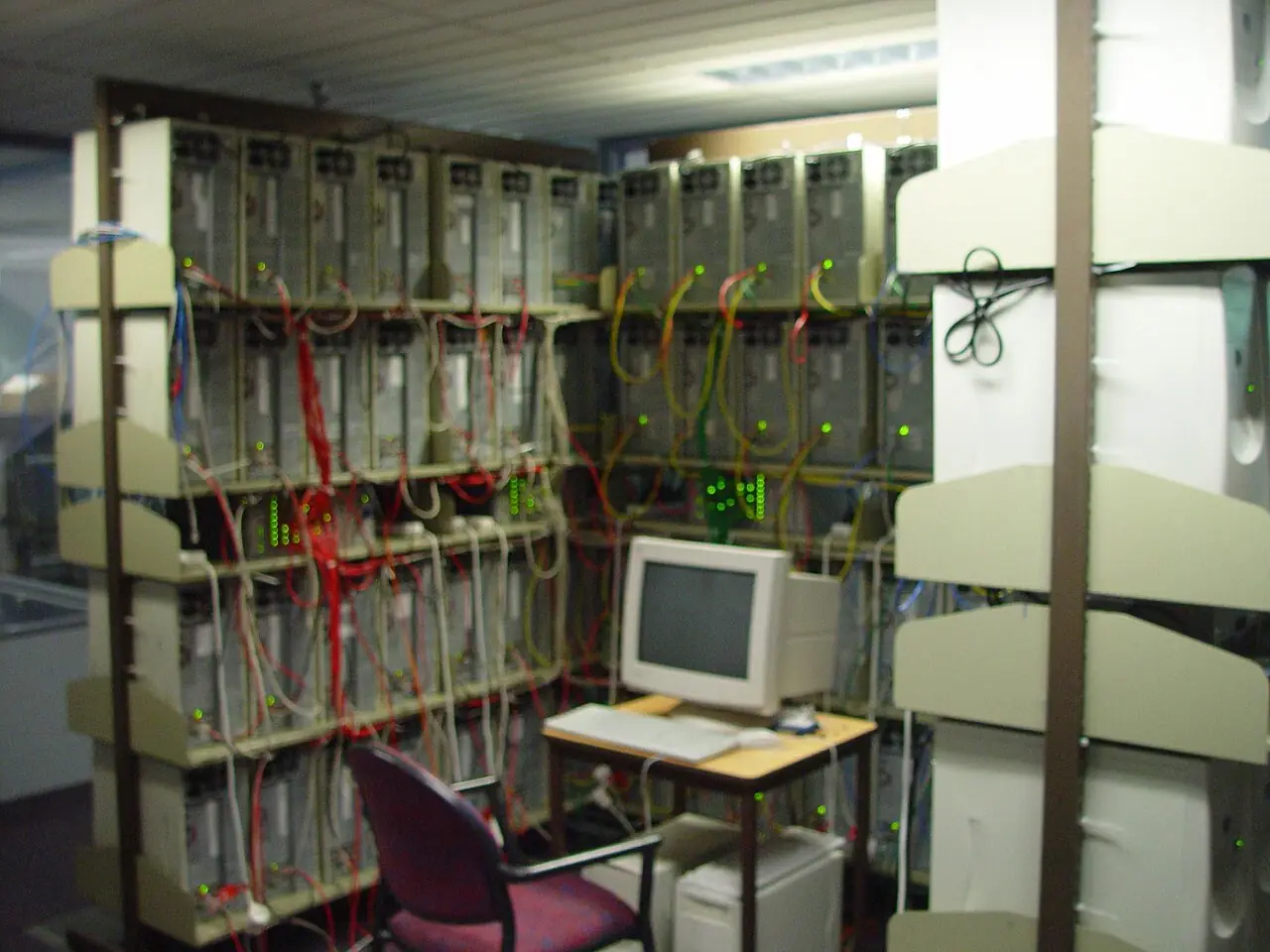
Beowulf commodity cluster
NASA Goddard links 16 off-the-shelf PCs running Linux over Ethernet into one parallel machine, launching cheap cluster supercomputing.
Image: Leon Brooks · Public domain · Wikimedia Commons - 1997
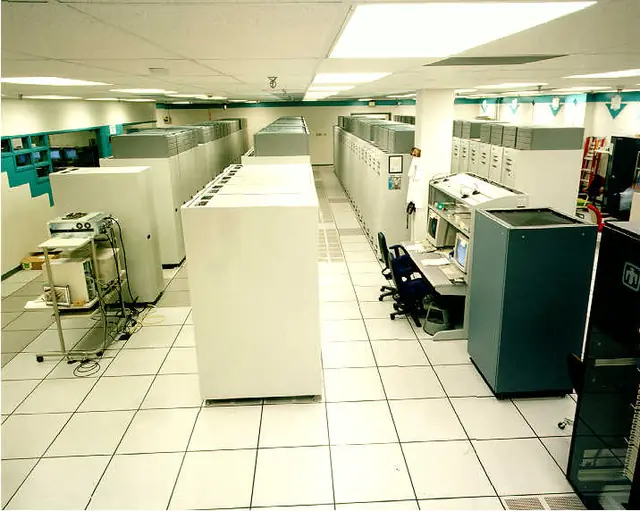
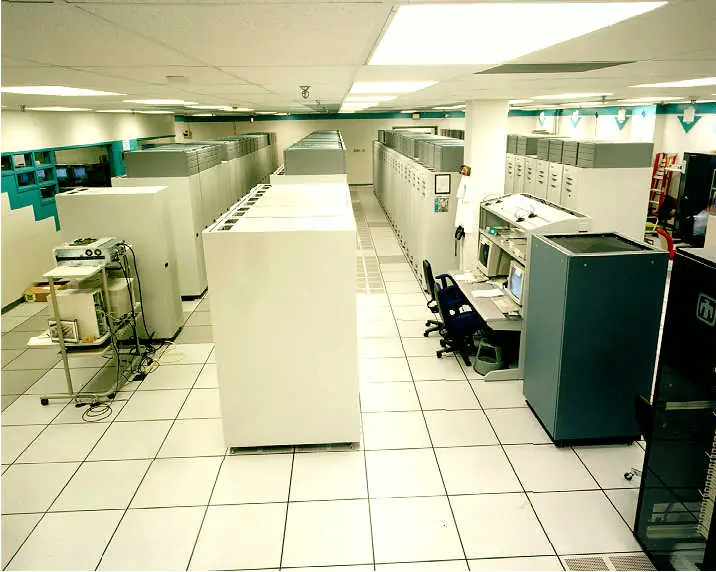
ASCI Red
Sandia's massively parallel Intel system is the first to reach a teraflop (1.068 Tflop/s on Linpack); world's fastest until 2000.
Image: Sandia National Laboratories · Public domain · Wikimedia Commons - 2008
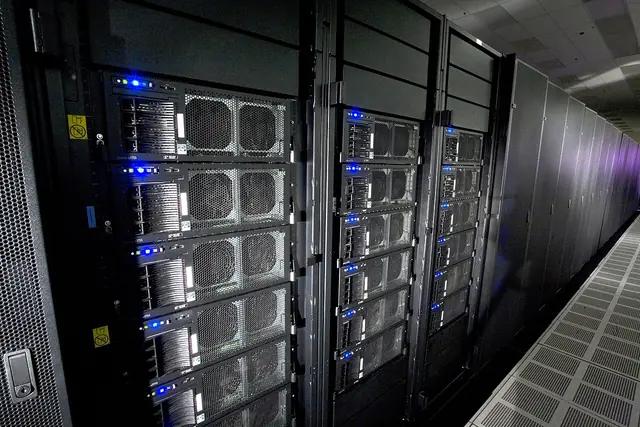
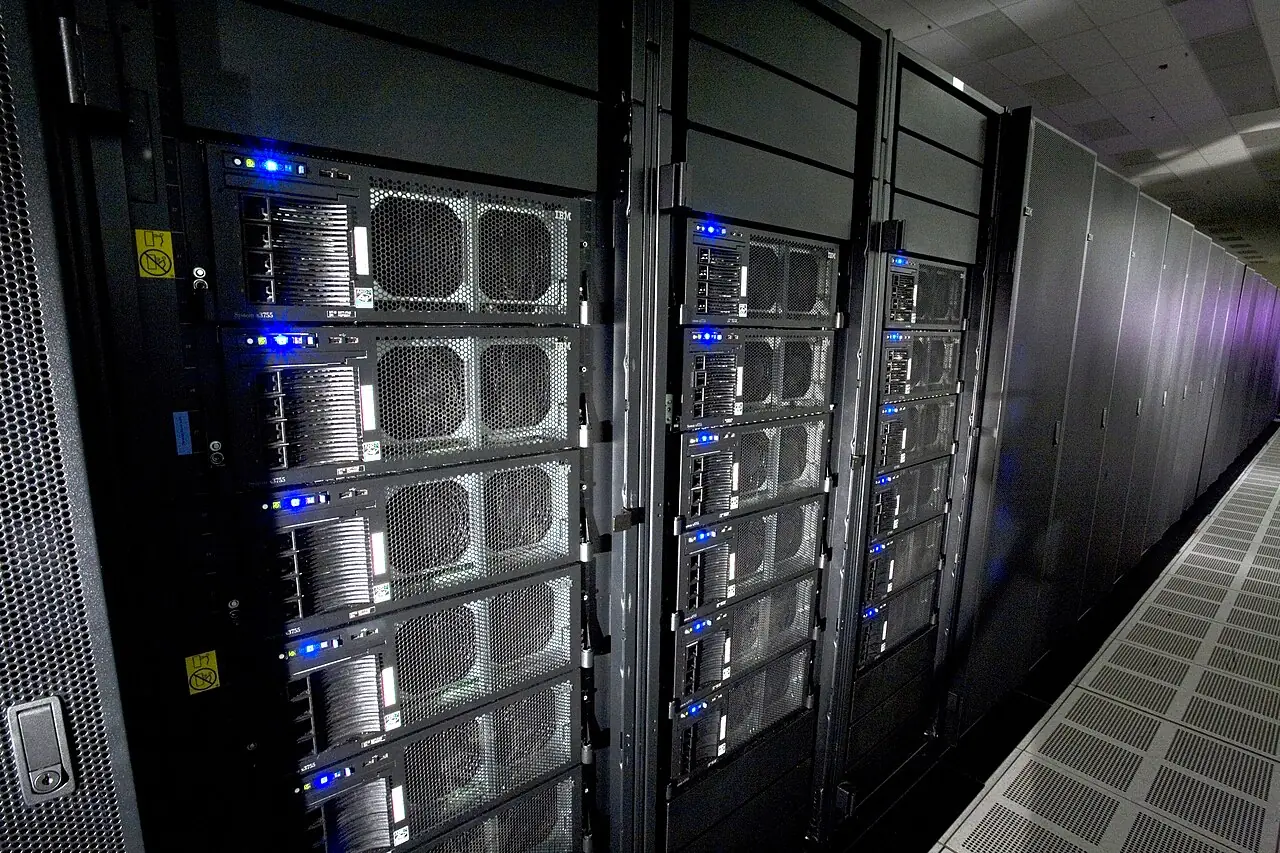
IBM Roadrunner
First system to break the petaflop Linpack barrier, 1.026 Pflop/s, at Los Alamos.
Image: LeRoy N. Sanchez, Records Management/Media Services and Operations · Attribution · Wikimedia Commons - 2022
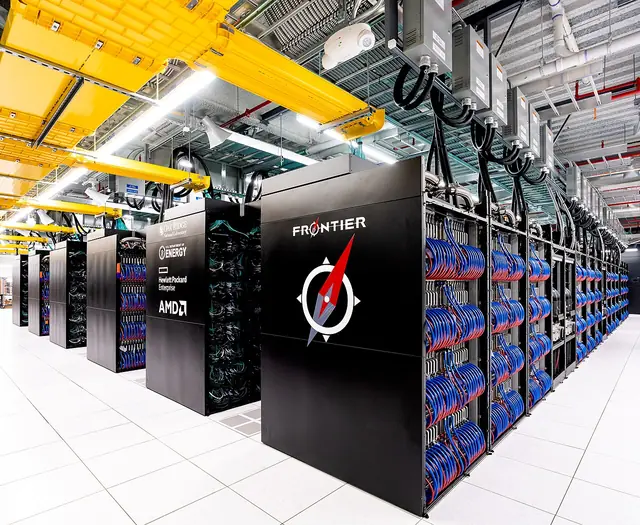
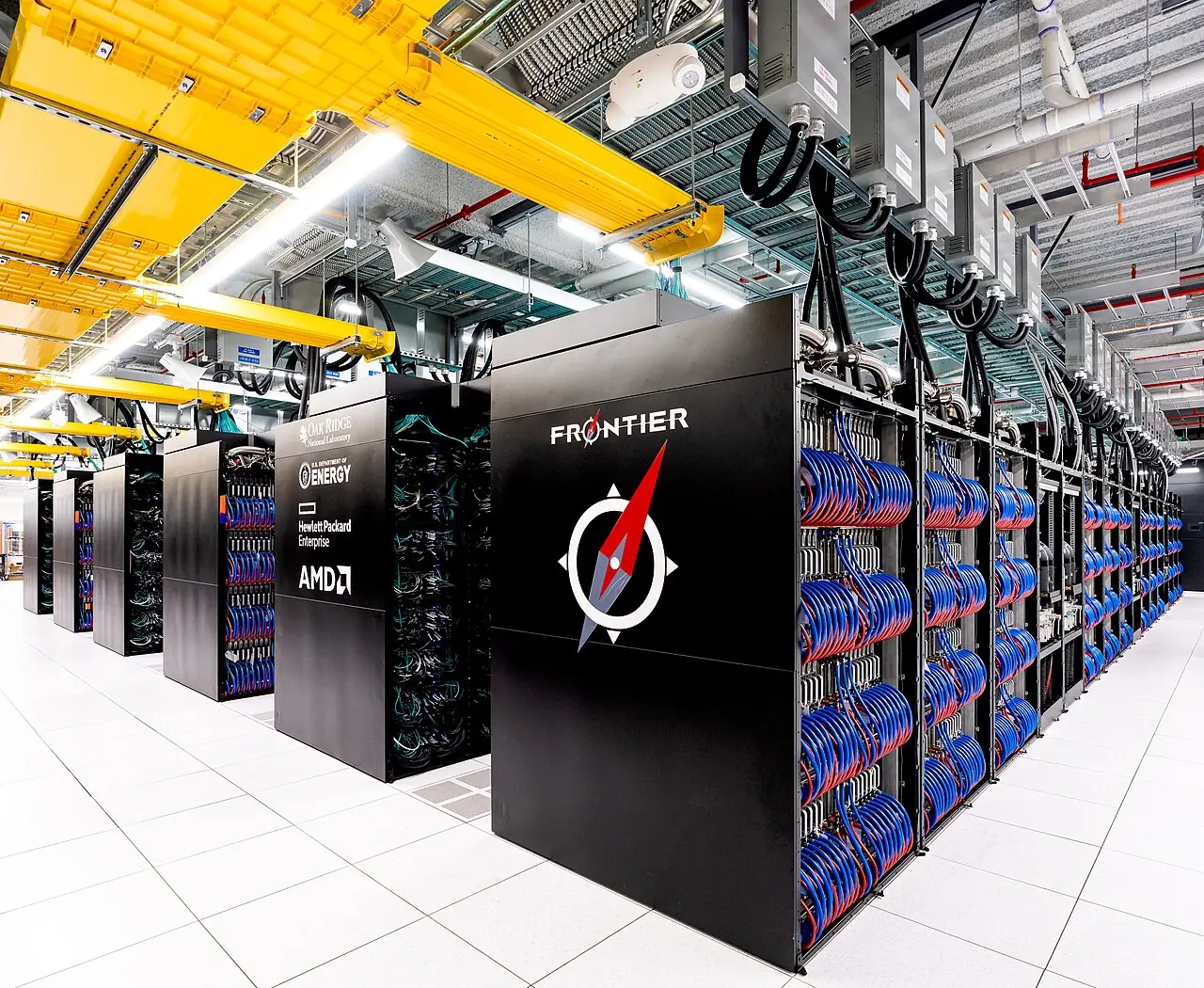
Frontier (HPE Cray, ORNL)
First true exascale machine on TOP500: 1.102 exaflop/s from AMD CPU-plus-GPU nodes.
Image: OLCF at ORNL · CC BY 2.0 · Wikimedia Commons
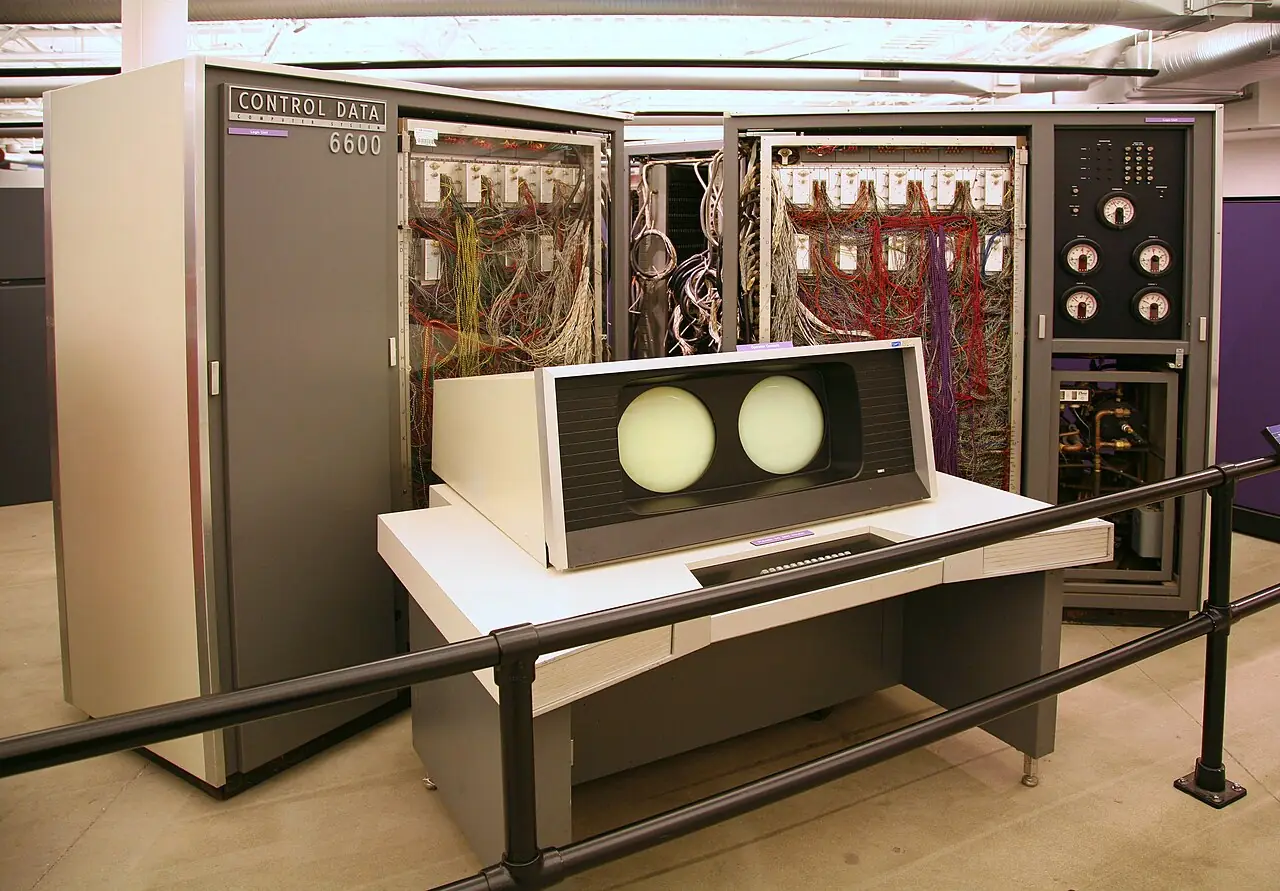


Contested: Earlier fast machines (e.g., IBM Stretch, UNIVAC LARC) are sometimes called the first supercomputers; CDC 6600 is the usual landmark.