World Wide Web and HTML
Hypertext system of linked pages (URLs, HTML, HTTP) over the internet; made the network usable by everyone.
- 1989
First version
Tim Berners-Lee (CERN), with Robert Cailliau
Image: User:Coolcaesar at en.wikipedia · CC BY-SA 3.0 · Wikimedia Commons - 1990

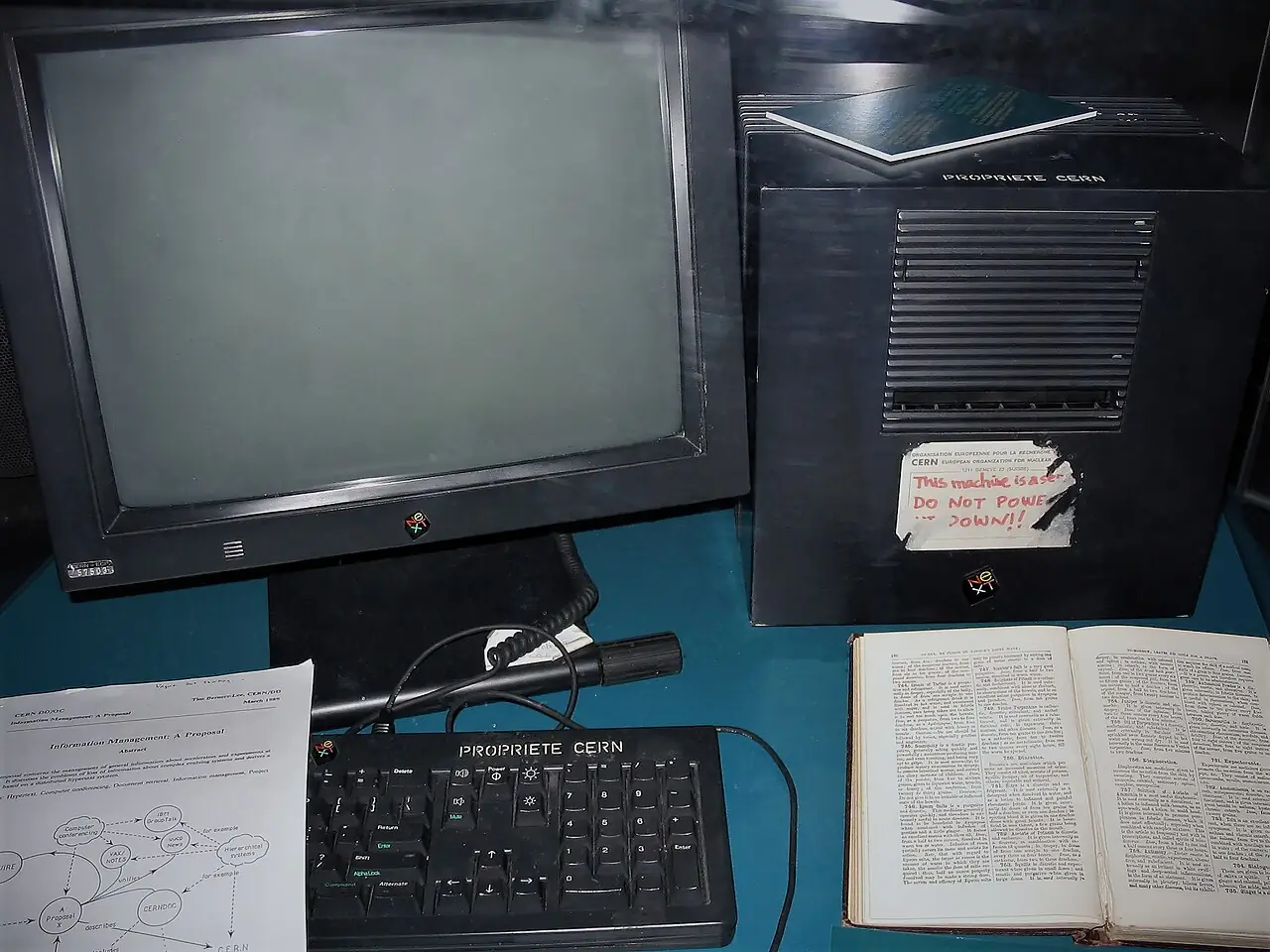
First server, browser and HTML
Working web server and browser-editor run on a NeXT computer at CERN by end of 1990.
Image: Original: Hell Pé Vector: Bibi Saint-Pol · Public domain · Wikimedia Commons - 1993

Fill-out forms (NCSA Mosaic 2.0)
Forms let pages send user input to servers for searches, orders and logins; HTML 2.0 (RFC 1866, 1995) made them standard.
Image: Unknown author · Public domain · Wikimedia Commons - 1996

CSS (Cascading Style Sheets)
Separate style sheets control layout, fonts and colours, splitting a page's design from its content.
Image: Javi Aguilar and The CSS-Next Community Group · CC0 · Wikimedia Commons - 2014
HTML5 W3C Recommendation
Native video, audio, canvas and app APIs replace browser plug-ins such as Flash.
Image: W3C · CC BY 3.0 · Wikimedia Commons