RAID (redundant array of independent disks)
Spreads data, with mirror copies or parity, across many cheap disks so the set is faster than one big drive and survives a disk failure; the basis of server and cloud storage.
- 1988
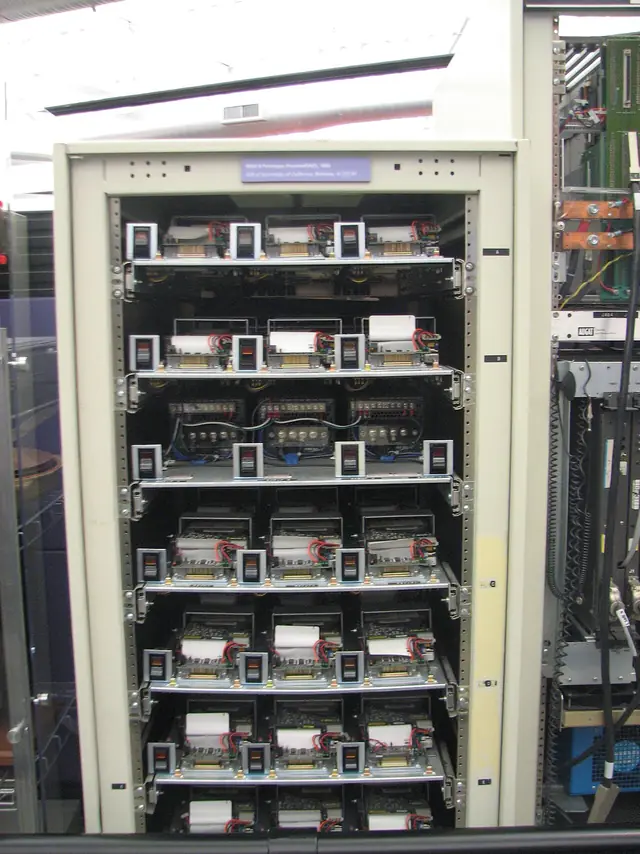
First version
David Patterson, Garth Gibson and Randy Katz (University of California, Berkeley)
Image: Erik Pitti from San Diego, CA, USA · CC BY 2.0 · Wikimedia Commons - 1990
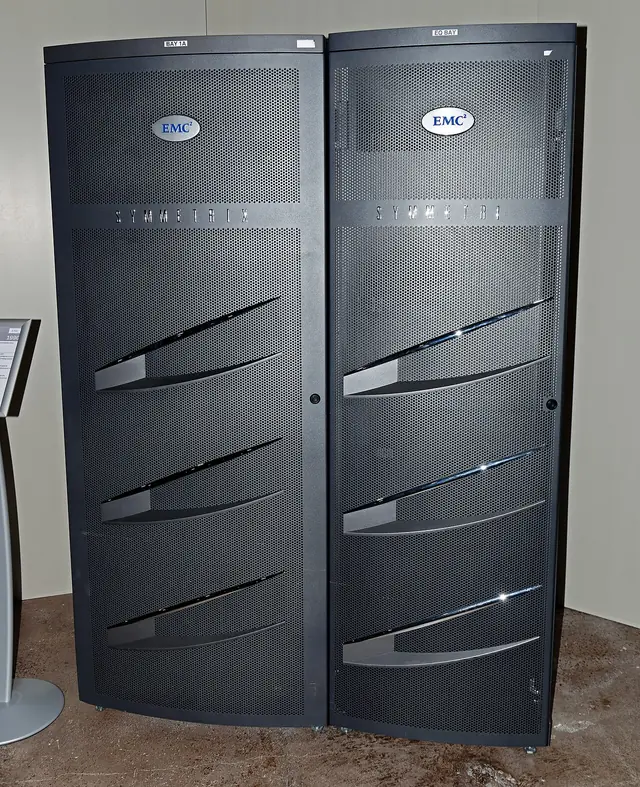
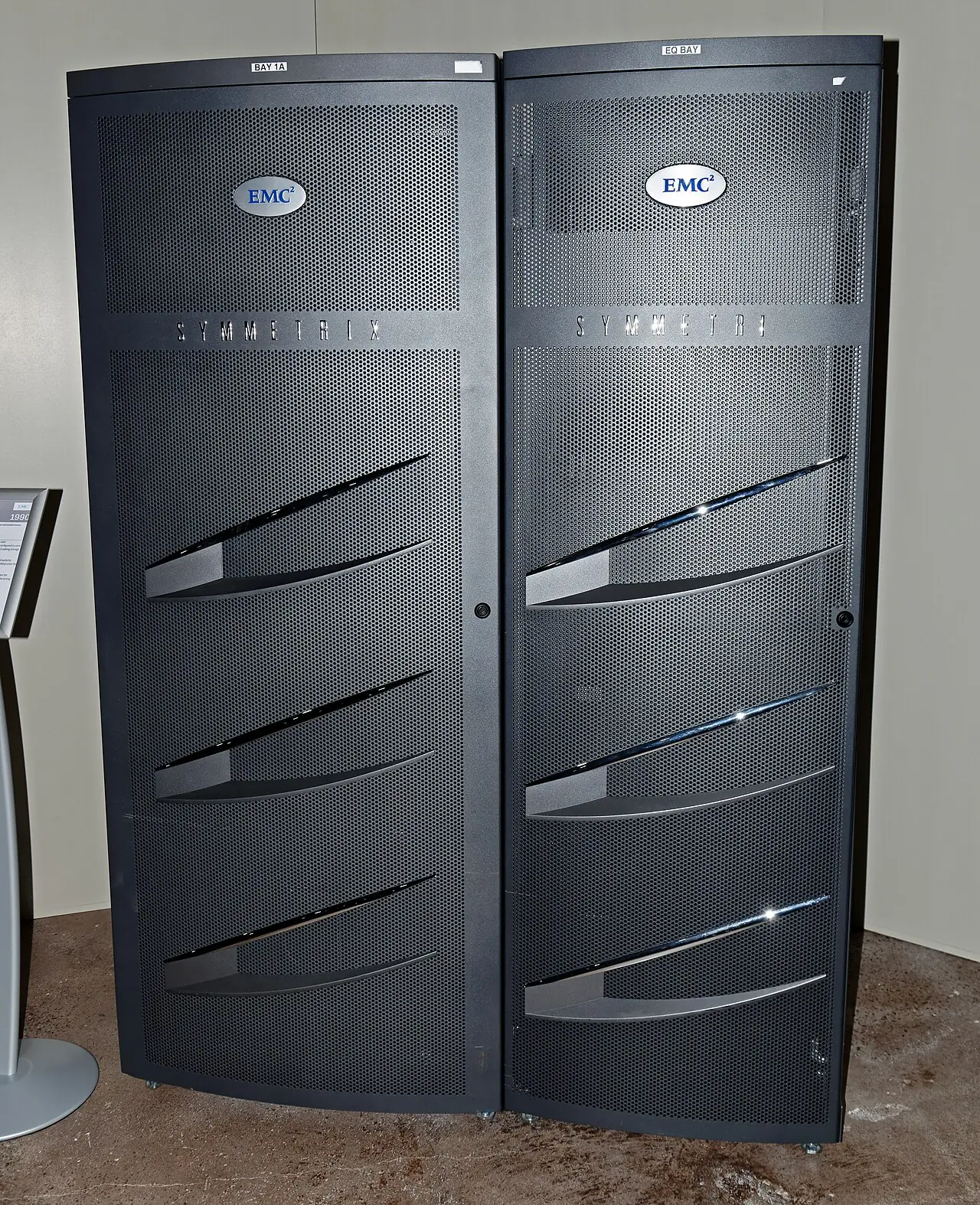
EMC Symmetrix cached disk array
Arrays of small disks with a large cache stand in for IBM's big mainframe drives and win much of that market.
Image: Bubba73 · CC BY-SA 3.0 · Wikimedia Commons - 2005
RAID-Z in ZFS
Software RAID with end-to-end checksums and copy-on-write closes the 'write hole' and catches silent data corruption.
Image: ™/®OpenZFS · Public domain · Wikimedia Commons - 2012

Erasure coding at cloud scale
Windows Azure Storage spreads coded fragments across servers with Local Reconstruction Codes, cutting storage overhead and repair traffic.
Image: Microsoft Corporation · Public domain · Wikimedia Commons
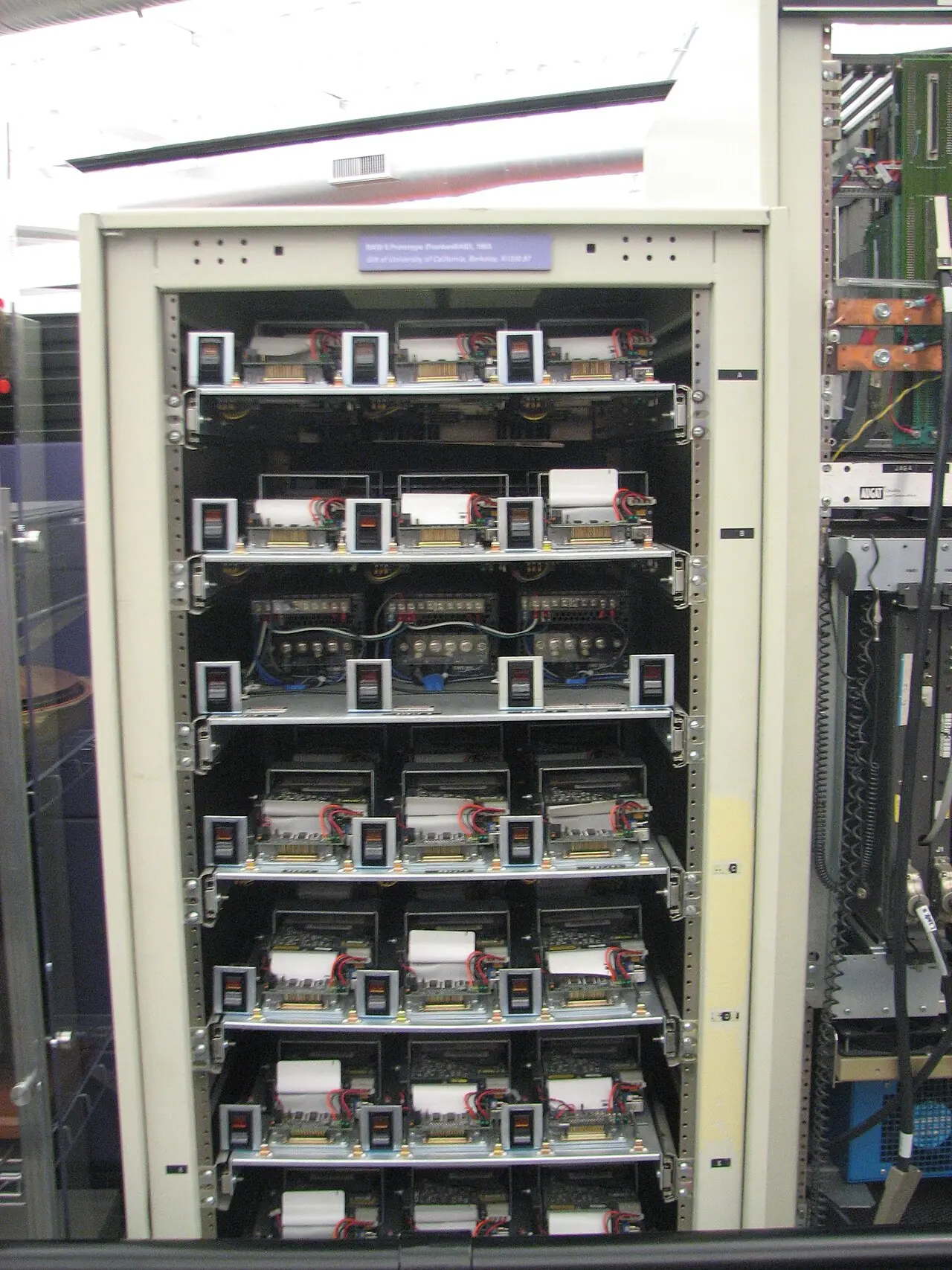



Contested: The ideas predate the name: Tandem and DEC mirrored disks in the 1970s and early 1980s, and IBM's Norman Ken Ouchi filed a parity-disk patent in 1977 (granted 1978). The 1988 Berkeley paper named and classified the RAID levels.