Liquid-crystal display (LCD)
Flat display that modulates light through liquid crystals. With active-matrix TFTs and LED backlights it replaced the CRT and became the dominant screen.
- 1968
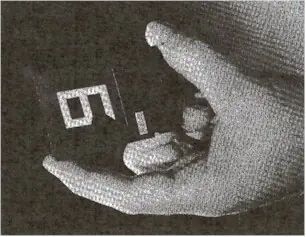
First version
George H. Heilmeier, Louis Zanoni, Lucian Barton (RCA Sarnoff Research Center)
Image: Unclear; RCA (photo on IEEE ETHW milestone page) · Unclear; no licence stated · ETHW (IEEE) - 1971

Twisted nematic (TN) LCD
Twisted-nematic cells need little power and voltage, making LCDs practical for watches and calculators.
Image: Unknown author · CC BY-SA 3.0 · Wikimedia Commons - 1988
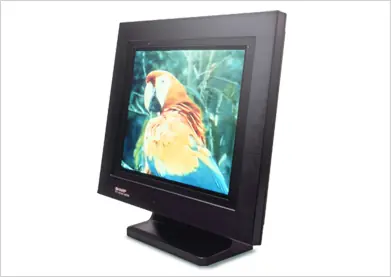
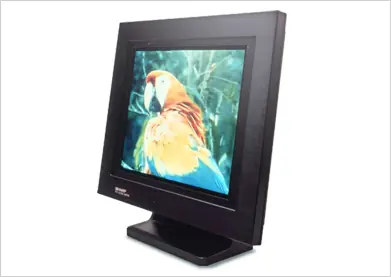
Sharp 14-inch TFT-LCD
Active-matrix thin-film transistors drive each pixel, giving a 14-inch colour screen fit for TV.
Image: Sharp Corporation · © Sharp Corporation; no licence stated · Sharp Global corporate history - 1996
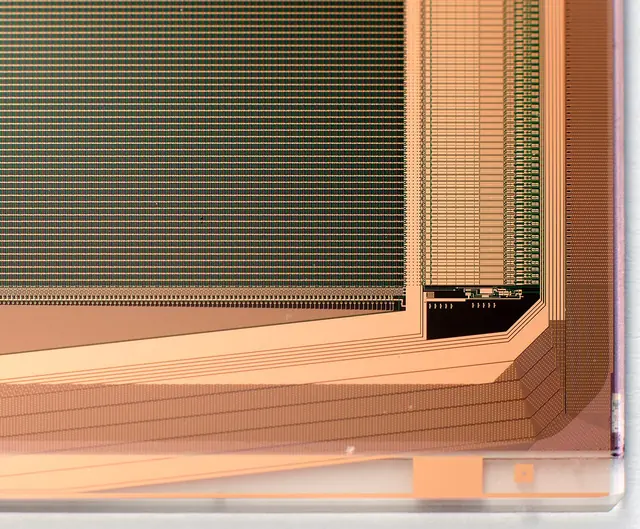
In-plane switching (IPS)
Hitachi's IPS panels rotate the crystals parallel to the glass, greatly widening viewing angles.
Image: Jack Whittaker (https://jackw01.github.io) · CC0 · Wikimedia Commons - 2004
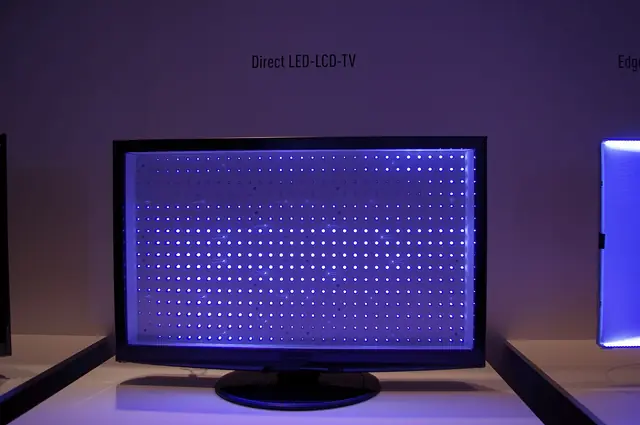
LED backlight (Sony Qualia 005)
First commercial LCD TV lit by RGB LEDs (Lumileds) instead of fluorescent lamps.
Image: RobertKuhlmann · CC BY-SA 3.0 · Wikimedia Commons - 2013

Quantum-dot backlight (Sony Triluminos)
Blue LEDs shine through red and green quantum dots instead of a yellow phosphor, widening LCD colour by about half.
Image: Michele Ficara Manganelli · CC BY-NC-SA 2.0 · Flickr - 2019
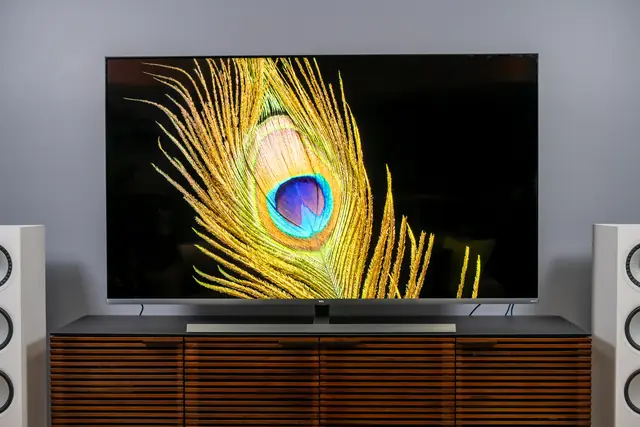
Mini-LED local dimming
TCL's 8-Series introduces mini-LED backlights with many dimming zones; rivals follow at CES 2021.
Image: Digital Trends · © Digital Trends; no licence stated · Digital Trends review (Nov 2019) - 2025
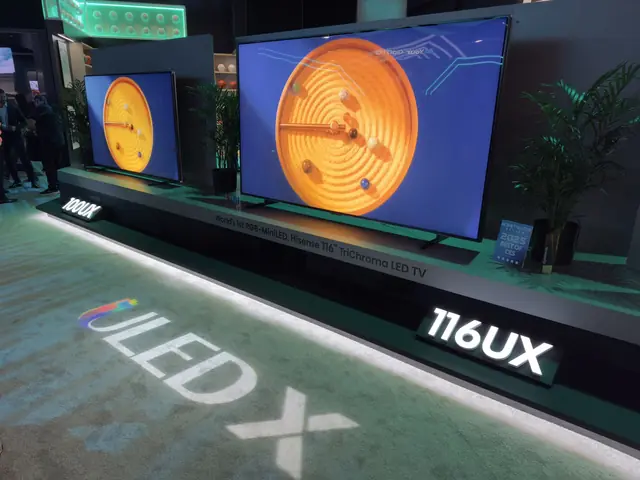
RGB mini-LED backlight
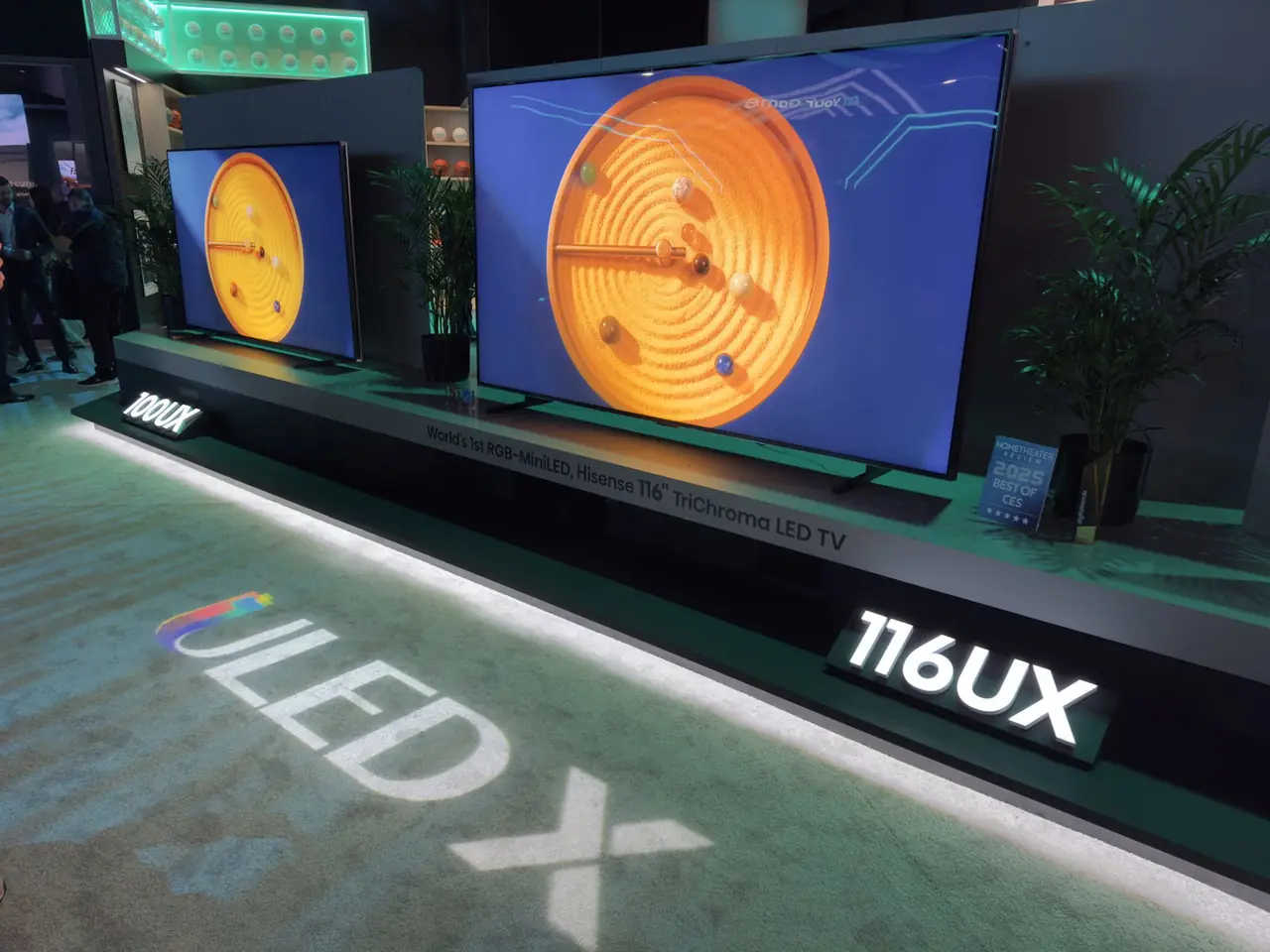
Hisense 116UX: locally dimmed red, green and blue mini-LEDs replace white ones for wider colour.
Image: Trevor Long / EFTM · © Trevor Long and EFTM; all rights rese… · EFTM, photographed at CES 2025
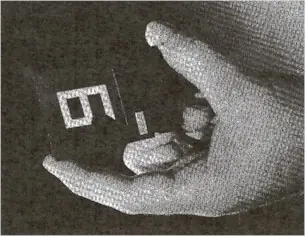
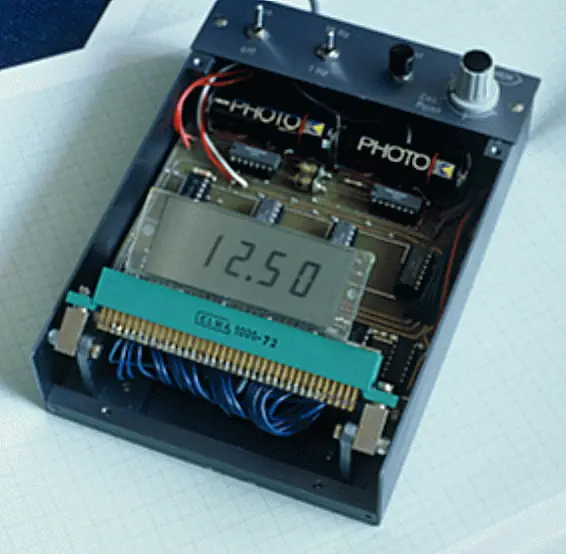




Contested: Credit for the twisted-nematic LCD (1970–71) was disputed between Schadt/Helfrich and Fergason; RCA's 1968 display used dynamic scattering.