Magnetic recording (wire and tape)
Recording signals as magnetization on wire, then tape; the physical principle behind every later tape, drum, disk and floppy.
- 1898
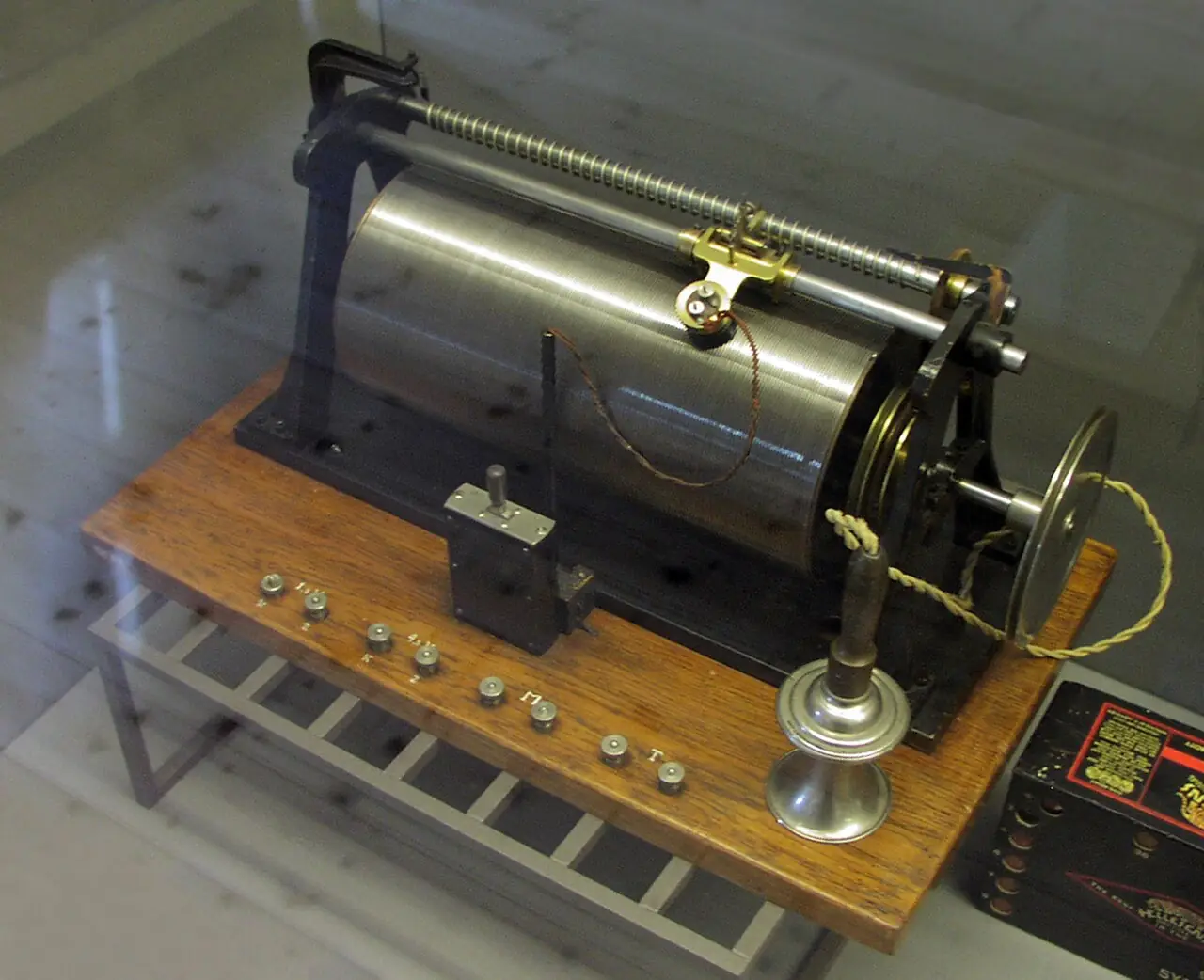
First version
Valdemar Poulsen (telegraphone); later AEG/BASF (Magnetophon), Ampex
Image: Telegrafon_8154.jpg: The original uploader was Bitman at Hungarian Wikipedia. d… · CC BY-SA 2.5 · Wikimedia Commons - 1935

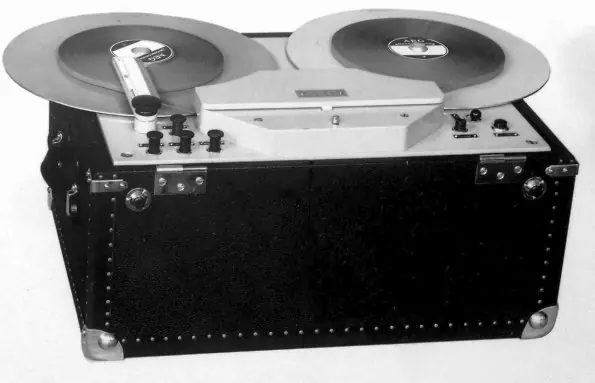
AEG Magnetophon
AEG's recorder and BASF's iron-oxide-coated plastic tape make the first practical tape recorder, lighter and cheaper than steel wire or band.
Image: Unknown; originally published by AEG in 1935 · Unclear; the hosting page states no lic… · Radiomuseum.org; reproduced from AEG-Mitteilung… - 1940
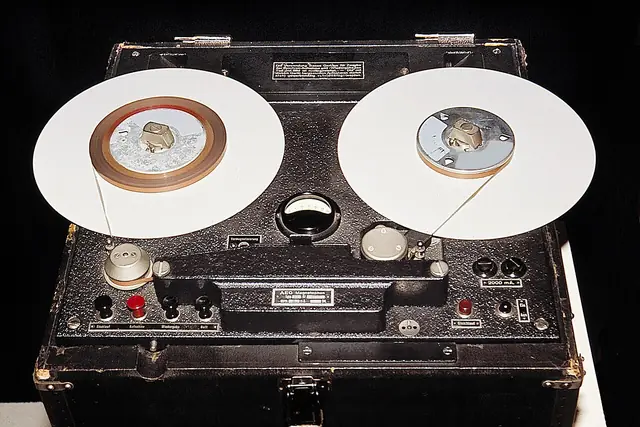
High-frequency AC bias
Walter Weber adds a high-frequency bias signal, cutting distortion and noise so tape rivals disc recordings; AEG's K4 recorders follow in 1941.
Image: Friedrich Engel · CC BY-SA 3.0 · Wikimedia Commons - 1951
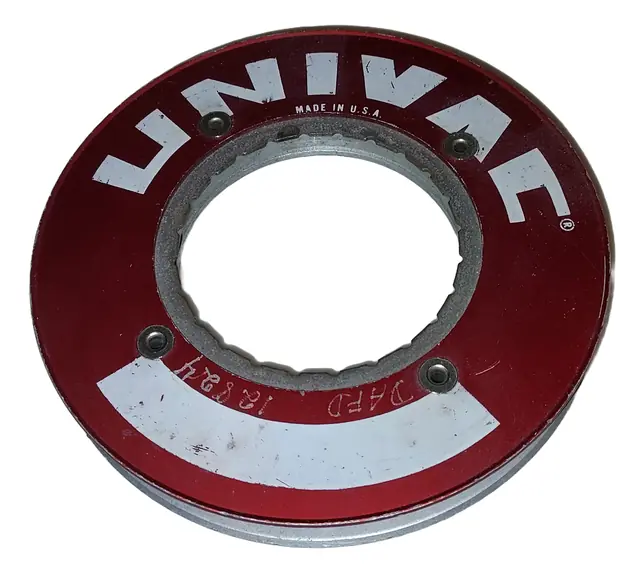
Adapted to digital data
Audio tape techniques carried over to computer data tape (UNISERVO, 1951).
Image: Bbrownspsu · CC0 · Wikimedia Commons - 1956
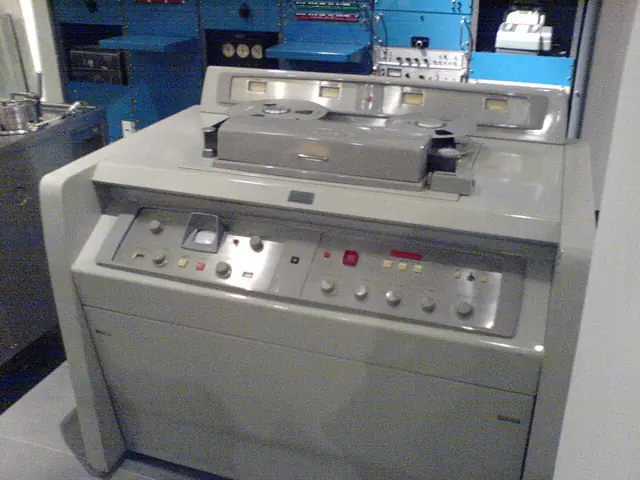
Ampex rotary-head video
Rotating heads record high-quality broadcast video on tape.
Image: Karl Baron from Lund, Sweden · CC BY 2.0 · Wikimedia Commons - 1963

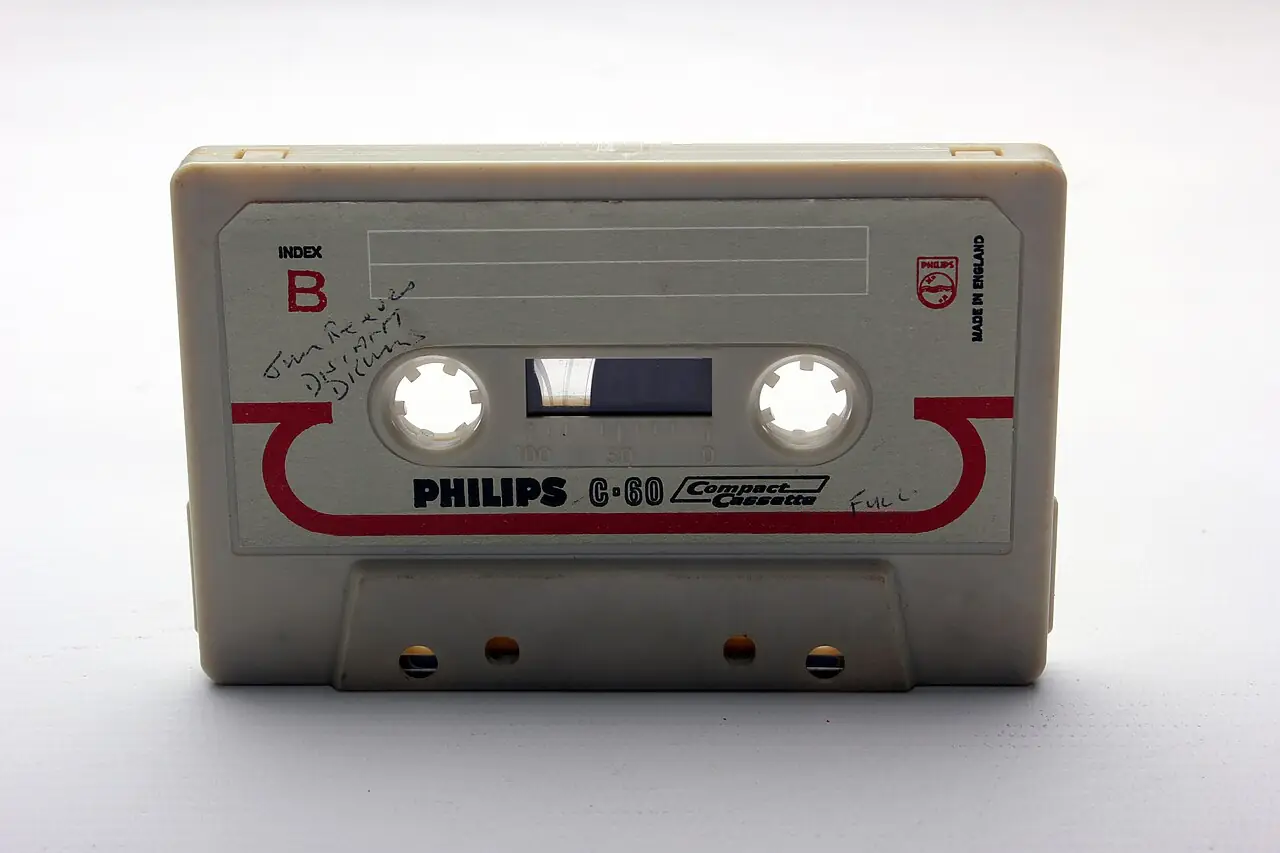
Philips Compact Cassette
Tape sealed in a small two-hub cassette makes recording portable and easy for consumers.
Image: stuart.childs · CC BY 2.0 · Wikimedia Commons