Vacuum tube (thermionic valve and triode)
Heated-filament tube that rectified signals; de Forest's grid let it amplify and switch, making it early electronics' active device.
- 1904
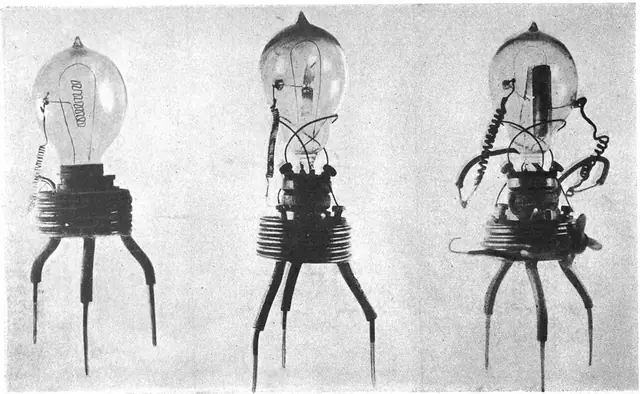
First version
John Ambrose Fleming (diode valve); Lee de Forest (Audion triode)
Image: John Ambrose Fleming · Public domain · Wikimedia Commons - 1906

Audion triode
De Forest adds a control grid: a small signal now steers a large current, making amplification possible.
Image: The photo is credited "Copyright Paul Thompson" · Public domain · Wikimedia Commons - 1913
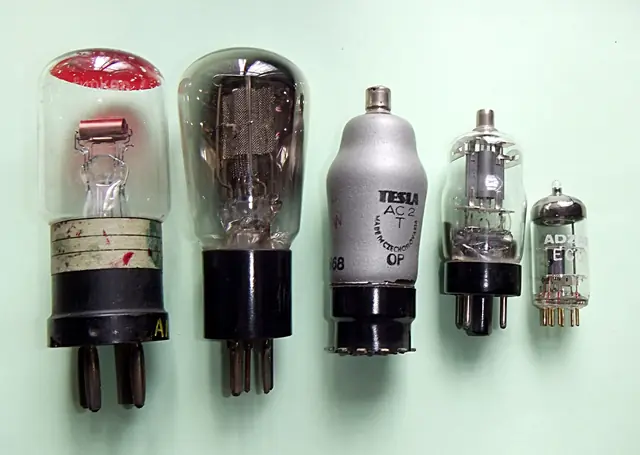
High-vacuum triode
Arnold at AT&T and Langmuir at GE pump the Audion to a hard vacuum, making amplification stable and repeatable; tube repeaters carry the first coast-to-coast phone line in 1915.
Image: RJB1 · CC BY-SA 4.0 · Wikimedia Commons - 1926
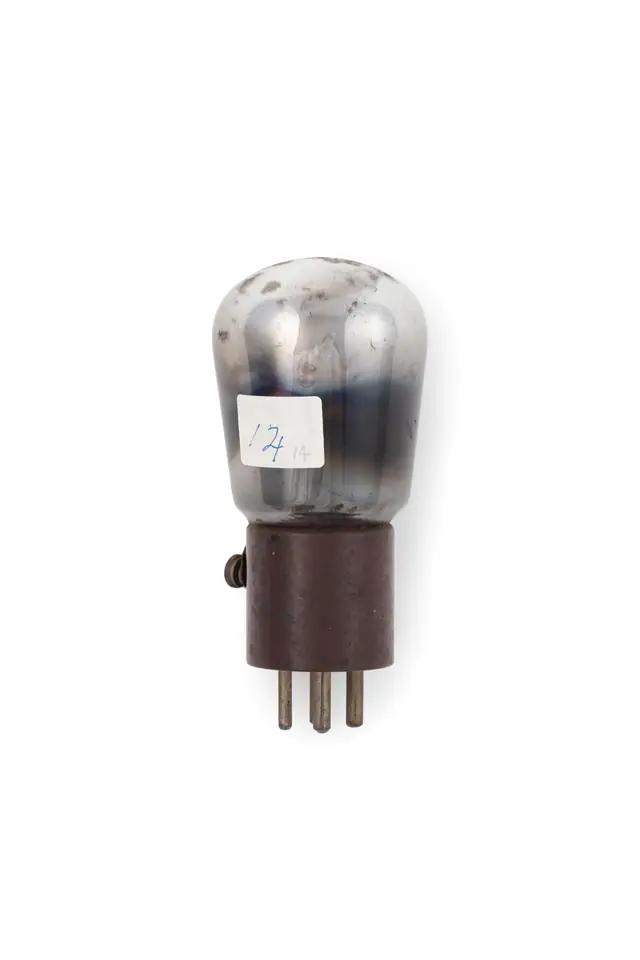
Pentode
Tellegen and Holst at Philips add a suppressor grid to the tetrode, raising gain and output efficiency.
Image: Powerhouse Collection · Powerhouse states that it holds copyrig… · Powerhouse Collection (Sydney) - 1940

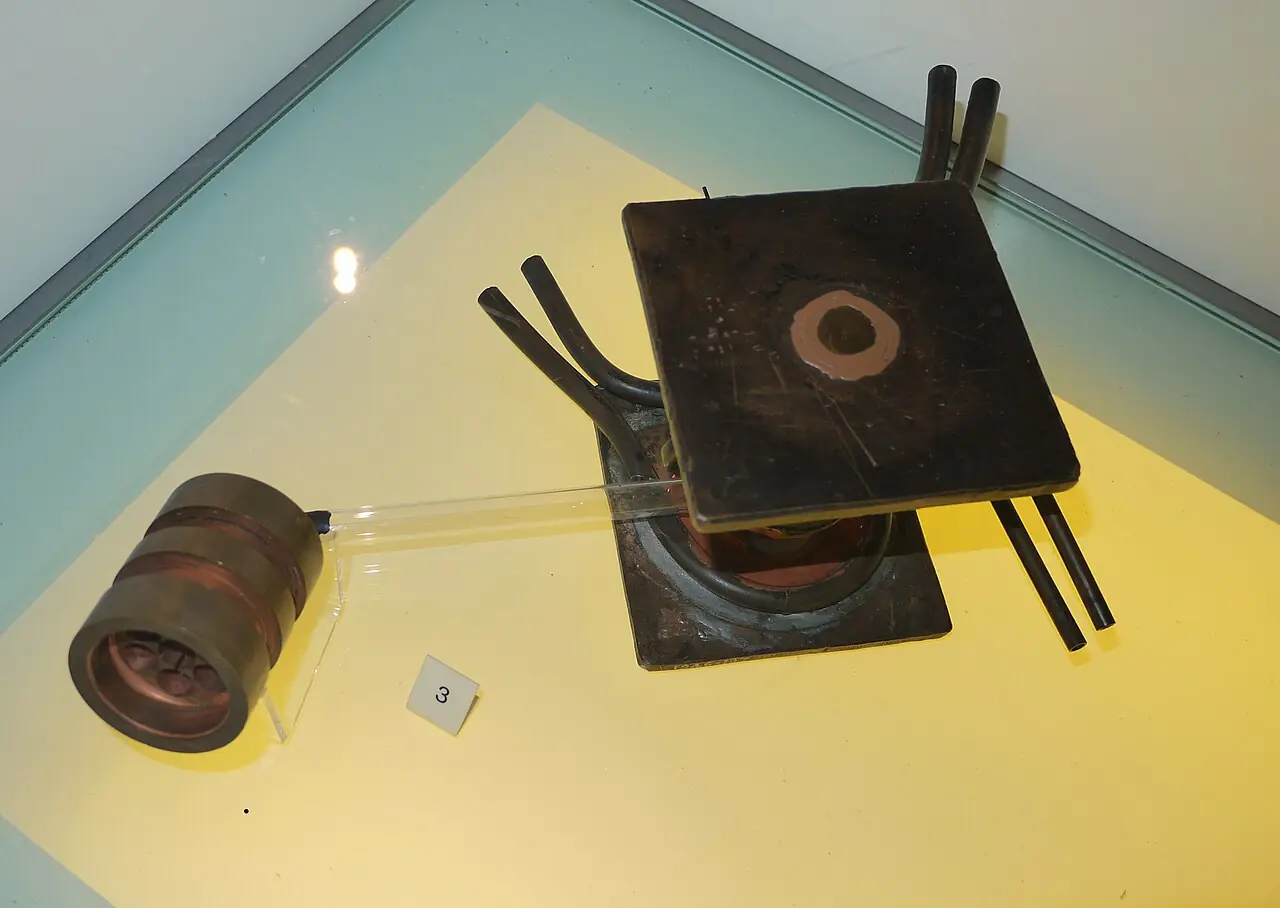
Cavity magnetron
Randall and Boot's tube generates powerful microwaves, enabling compact radar and later microwave ovens.
Image: geni · CC BY-SA 4.0 · Wikimedia Commons




Contested: Triode dates vary by source: grid added November 1906, triode patent filed 1907 and granted 1908 (US 879,532).