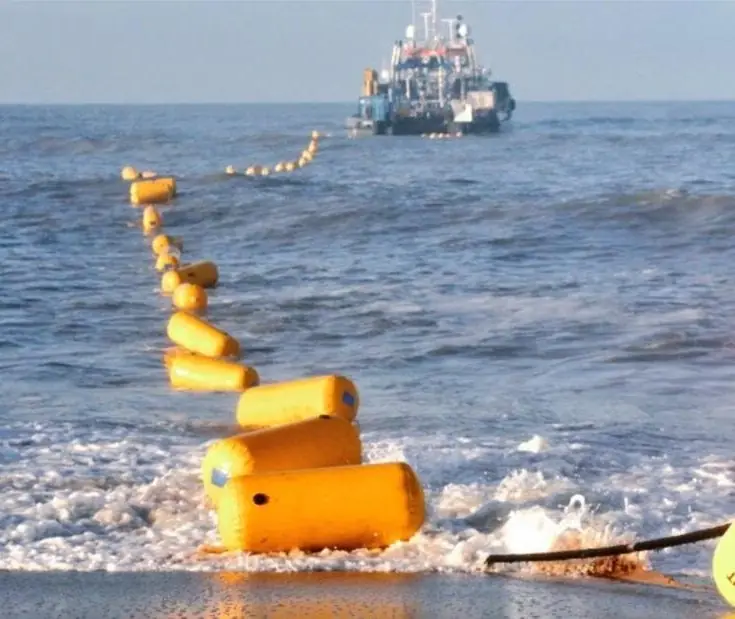
Submarine communications cable
Undersea cables carried telegraph, then telephone, now nearly all intercontinental internet traffic; the physical backbone of global communications.
- 1850

First version
John Watkins & Jacob Brett (Channel); Cyrus Field & Atlantic Telegraph Co. (Atlantic)
Image: rob koopman · CC BY-SA 2.0 · Flickr (Teylers Museum, Haarlem) - 1866
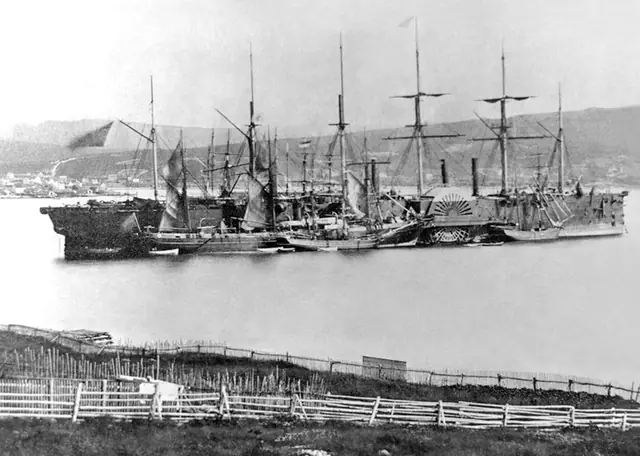
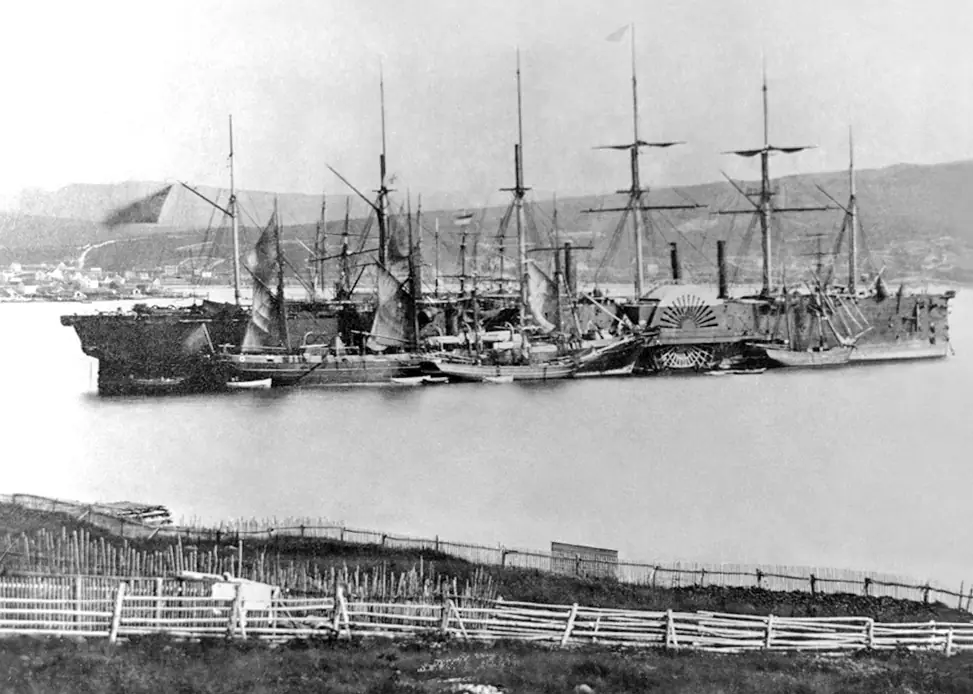
Great Eastern transatlantic cable
Great Eastern lays the first durable transatlantic cable, Valentia to Heart's Content, after 1858's failure.
Image: most likely Robert Edward Holloway (d. 1904) according to source · Public domain · Wikimedia Commons - 1956
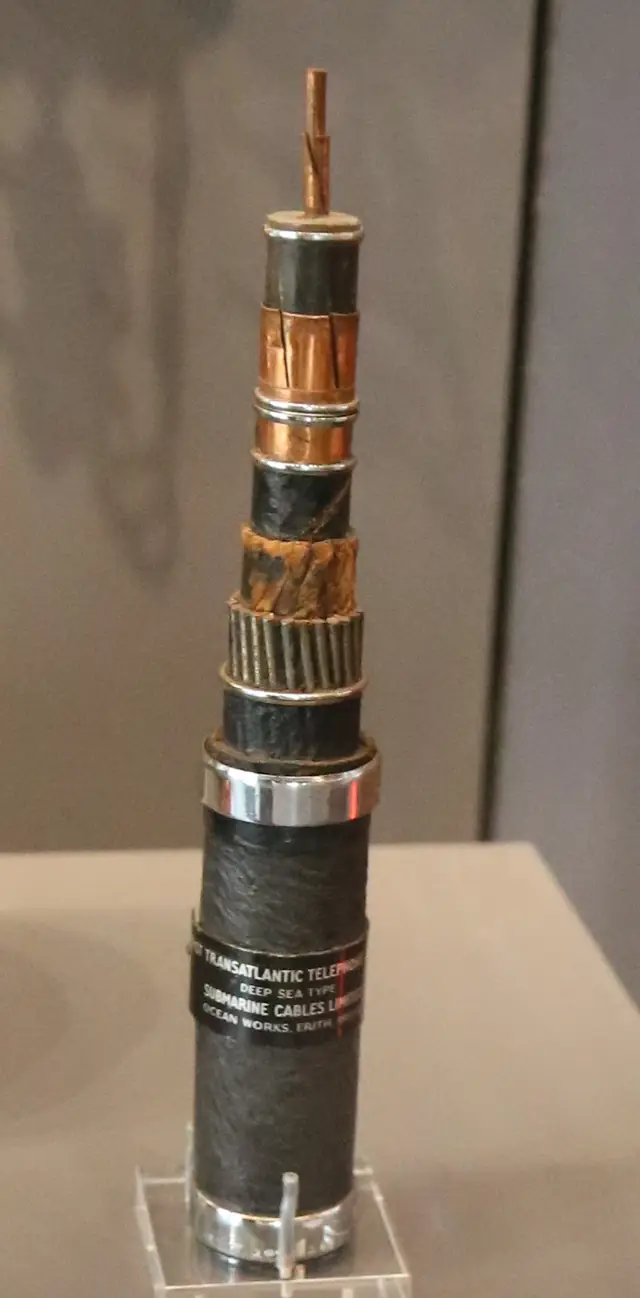
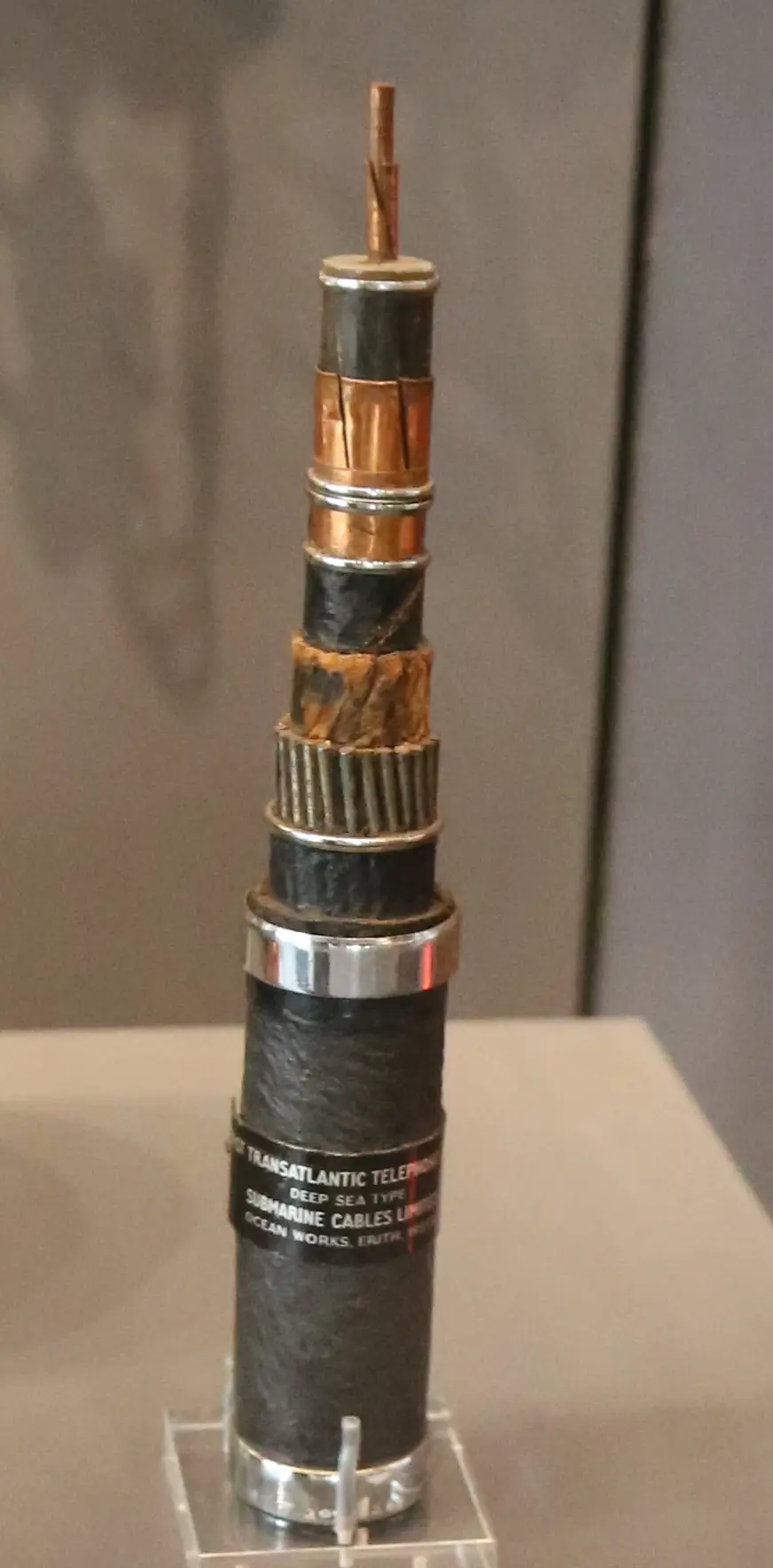
TAT-1 coaxial telephone cable
First transatlantic telephone cable, using submerged vacuum-tube repeaters.
Image: Geni · CC BY-SA 4.0 · Wikimedia Commons - 1988
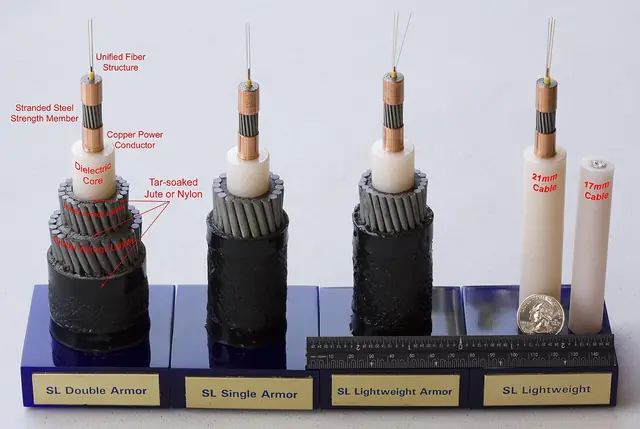
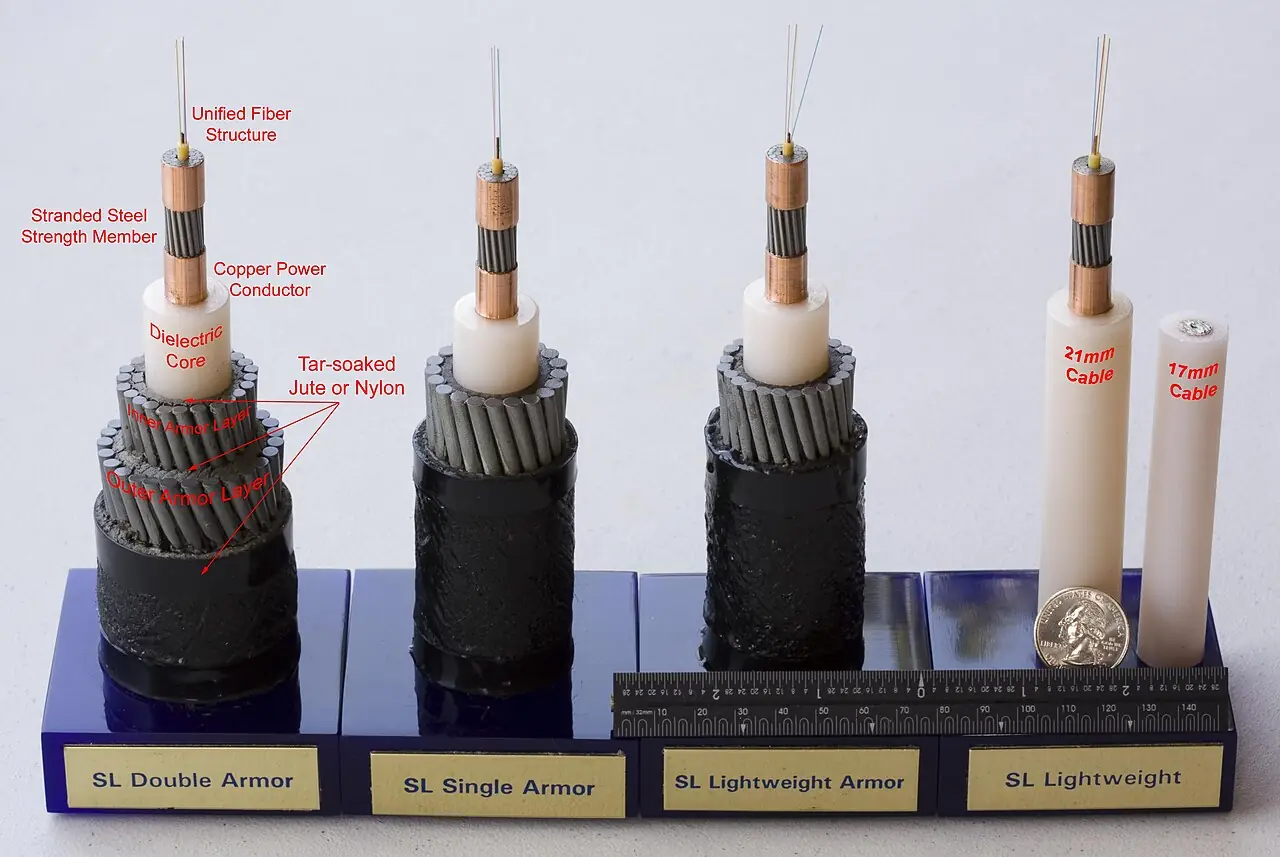
TAT-8 fibre-optic cable
First ocean-crossing fibre: 280 Mb/s, about 40,000 calls, ten times TAT-7.
Image: Lonnie Hagadorn · CC BY-SA 4.0 · Wikimedia Commons - 1996

TAT-12/13 optically amplified cable
Optical amplifiers replace electronic regenerators, lifting capacity to 2 × 5 Gb/s on a ring.
Image: Unknown author · Public domain · Wikimedia Commons - 2001
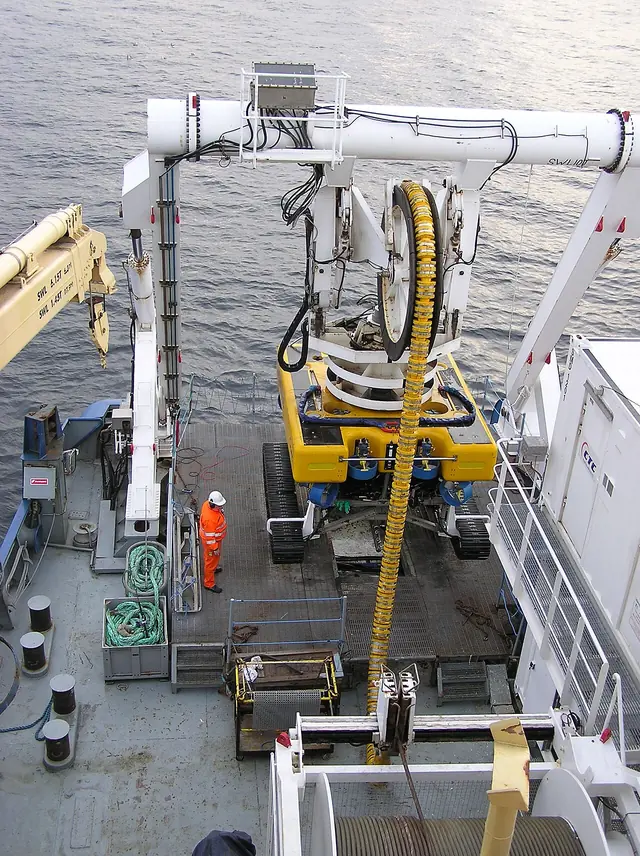
TAT-14 dense-WDM cable
Four fibre pairs each carry 40 wavelengths of 10 Gb/s, giving terabit-scale capacity at launch, more than 100 times TAT-12/13.
Image: tom jervis · CC BY 2.0 · Wikimedia Commons - 2021
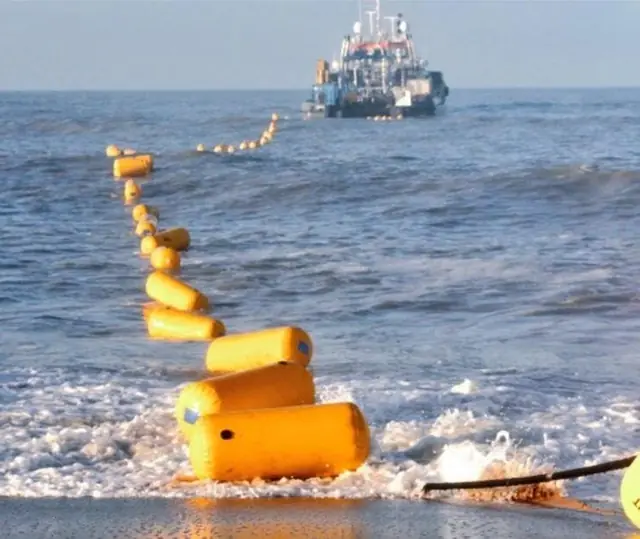
Space-division multiplexing (Dunant)
Google's Dunant packs 12 fibre pairs that share pump lasers, carrying 250 Tb/s across the Atlantic; capacity now grows by adding fibre paths, not just wavelengths.
Image: Orange (landing-day press photo, 13 March 2020; same shoot as the Stéphane Foulon/Orange frame in La Tribune) · © Orange; press image, no open licence · Next.ink brief 'Le câble transatlantique Dunant est arrivé en Vendée' (Orange press photo)