Fibre-optic communication
Light in ultra-pure glass carries almost all long-haul data; capacity rose from megabits to petabits per second per fibre.
- 1966
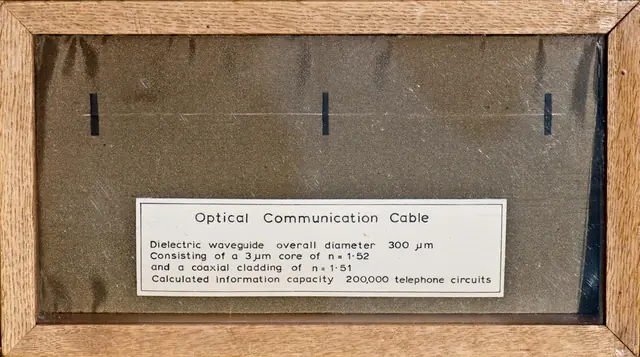
First version
Charles K. Kao & George Hockham (STL); Corning (Maurer, Keck, Schultz); laser by Theodore Maiman
Image: STL archive photo via opticalfibrehistory.co.uk · Unclear; no licence stated (archive pho… · opticalfibrehistory.co.uk - 1970

Corning low-loss fibre
First glass pure enough for telecom transmission.
Image: AndreyTheSparrow · CC BY 4.0 · Wikimedia Commons - 1977

First live fibre systems
GTE and AT&T carry real telephone traffic over fibre.
Image: Alby (talk) · Public domain · Wikimedia Commons - 1996
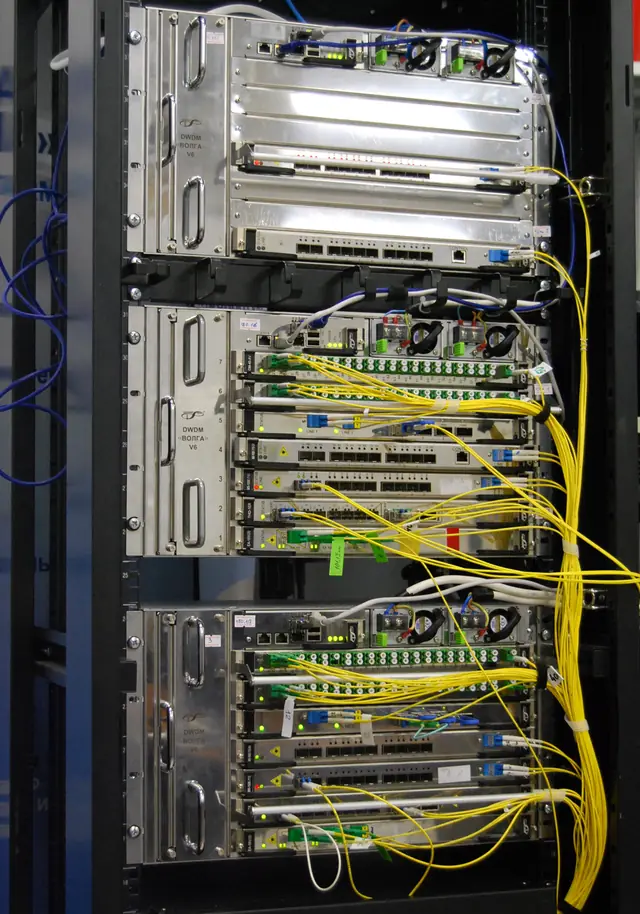
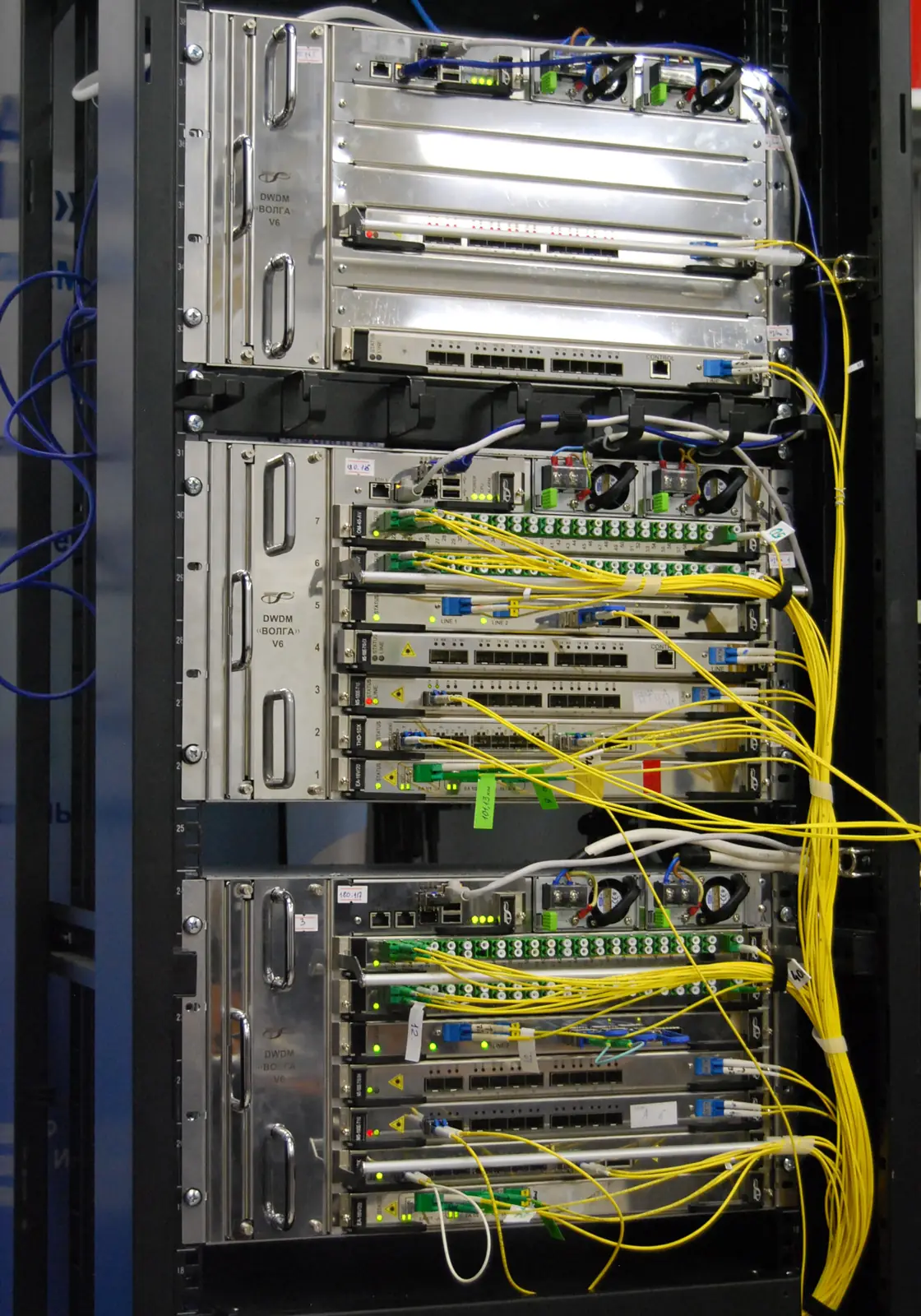
Dense WDM with optical amplifiers
Many wavelengths per fibre, amplified without electronics, multiply capacity.
Image: Slava dwdmstop all · CC BY-SA 4.0 · Wikimedia Commons - 2009

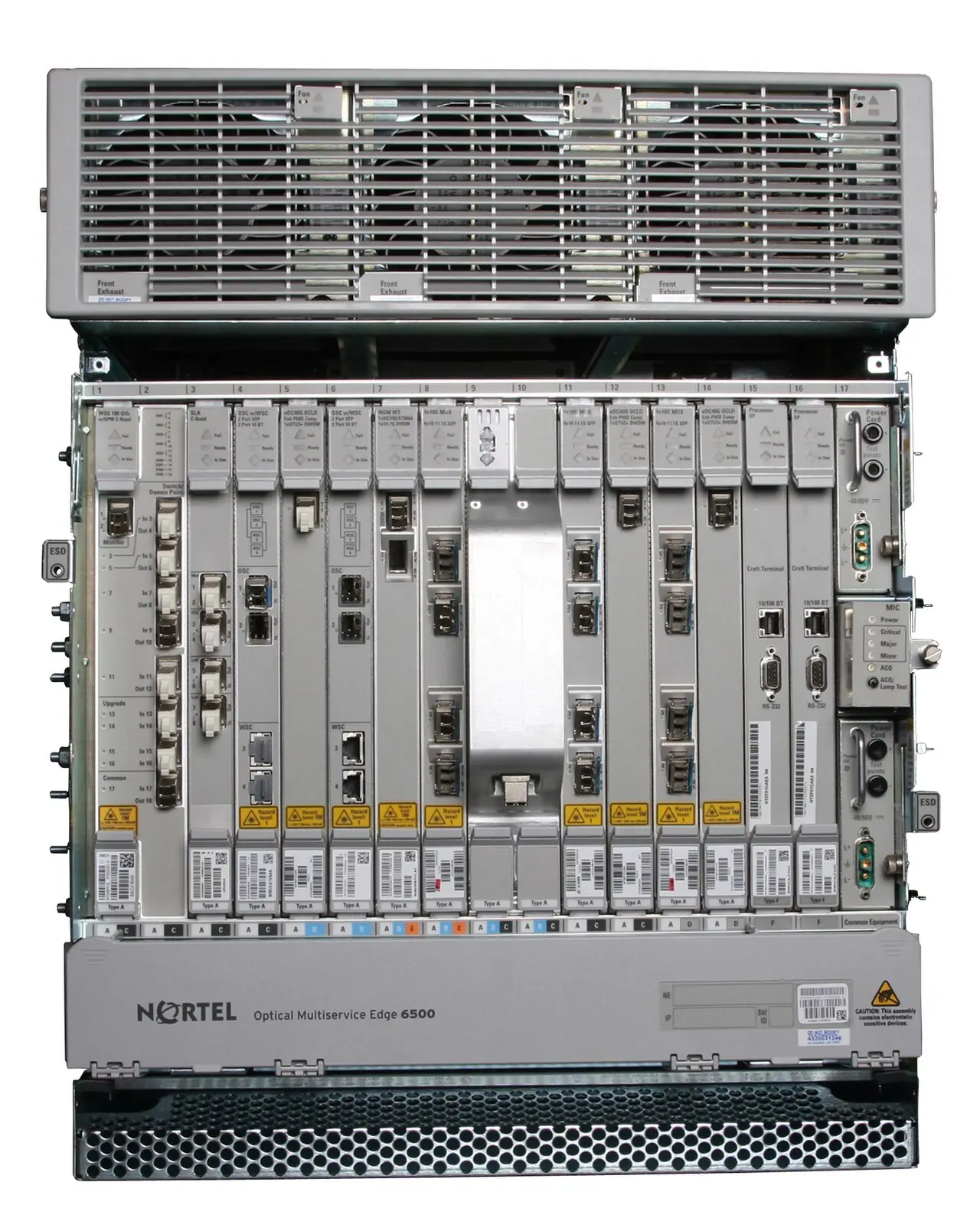
Coherent 100G transmission
Phase-and-polarization modulation read by digital signal processing carries 100 Gb/s per wavelength, ten times earlier channels, and undoes fibre dispersion electronically.
Image: James38 · CC BY-SA 3.0 · Wikimedia Commons
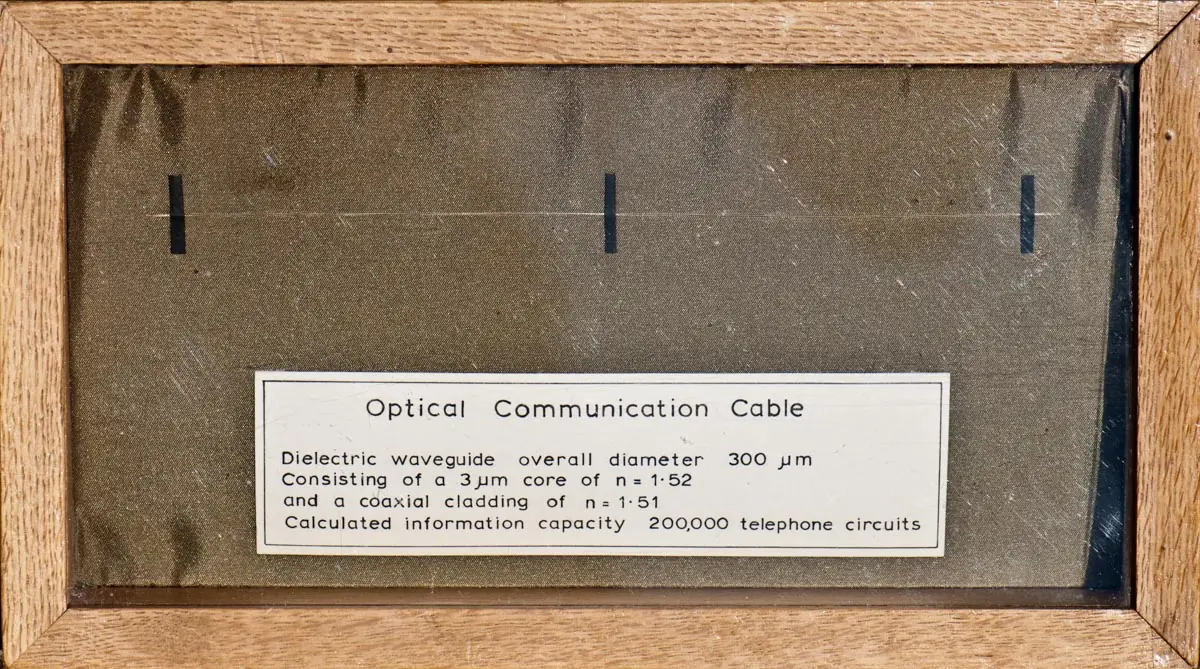
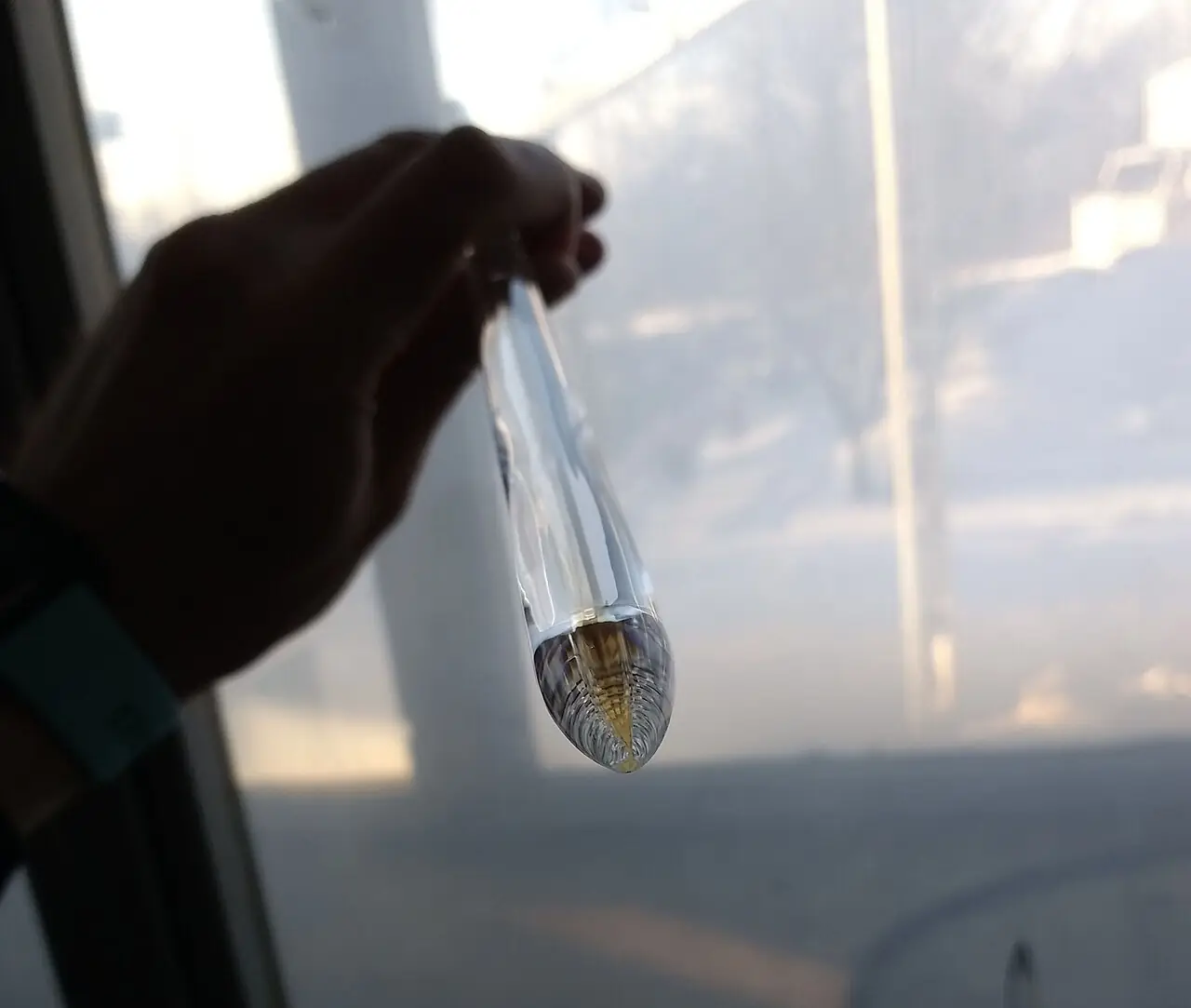



Contested: Kao's 2009 Nobel credits the theory; Corning made the first low-loss fibre, and earlier fibrescope pioneers also claim credit.